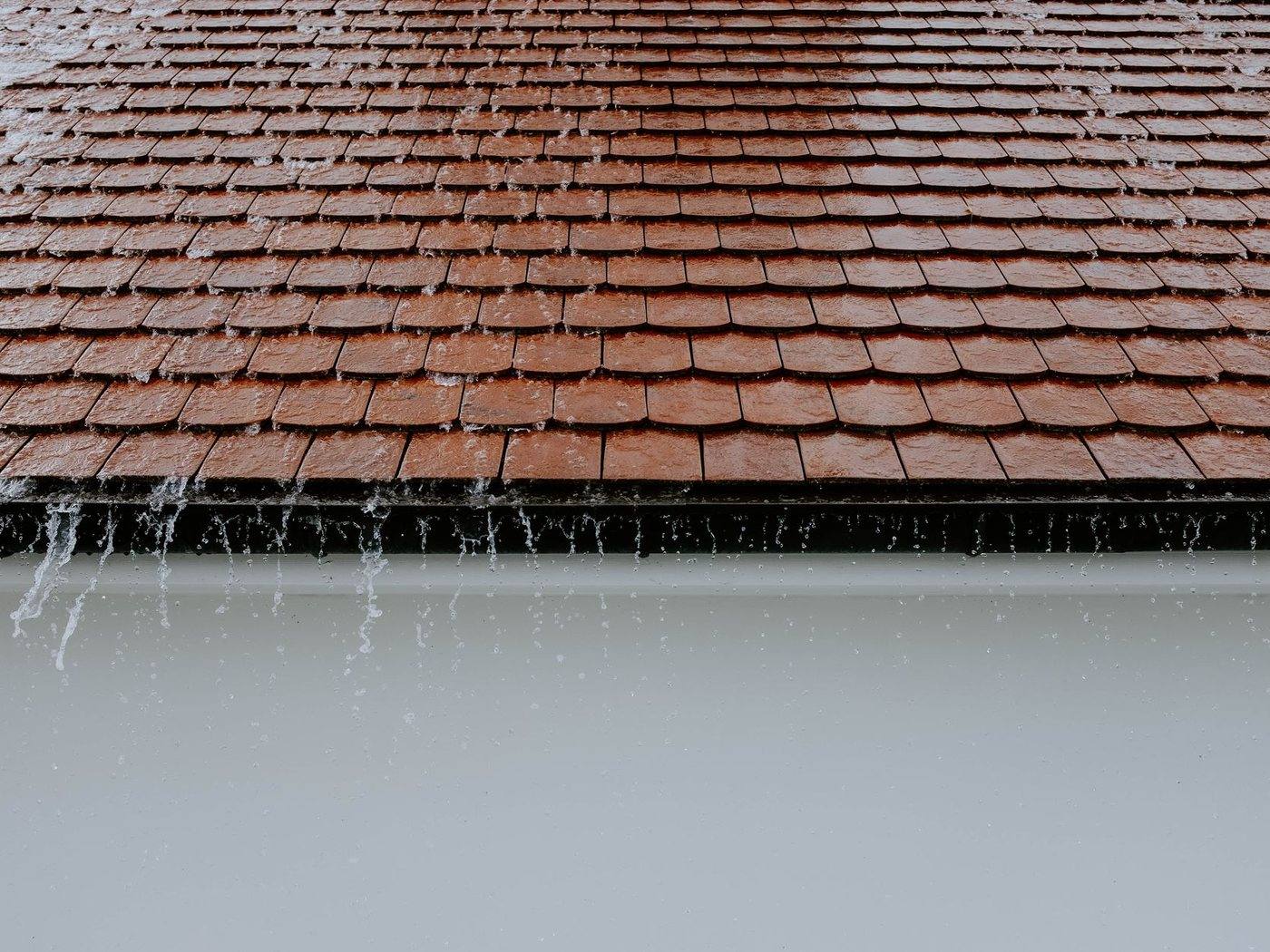
Gutters sized for your roof.
They are a five-inch run taking a valley that dumps four hundred square feet into one corner, or a downspout discharging two feet from a foundation. We form seamless aluminum and copper on site across Bergen County, size it to the roof that actually drains into it, and follow the water all the way to where it leaves your property.
A gutter is a drainage calculation, not a length of metal.
Three numbers decide whether a run works: the roof area draining into it, the pitch of that roof, and how hard it rains here. Get those wrong and the gutter overflows in every heavy rain no matter how clean it is. If that sounds familiar, our guide to gutters overflowing after cleaning helps you record the spill pattern before an assessment.
Drainage area
Not the length of the wall — the plan area of every roof plane feeding that run, including anything a valley concentrates into one point. A dormer valley can put three planes into six feet of gutter.
Pitch factor
A steep roof throws water faster and further, so it behaves like a larger area. Steep Tudors and gambrels routinely need a size up from what the footprint suggests.
Outlet capacity
Gutter capacity is meaningless if the downspouts cannot take it away. Number, size and position of outlets are the actual constraint on most houses.
The five-inch default
Almost all residential gutter in New Jersey is installed as five-inch K-style with two-by-three downspouts, because that is what is on the truck. On a steep roof with concentrated valleys it is simply undersized, and no amount of cleaning or guards will fix an undersized gutter. Six-inch gutter with three-by-four downspouts moves roughly twice the water.
Aluminum or copper
Both are formed on site from coil, with no joints along the run. Seamless aluminum in .032 coil, good for twenty to thirty years, suits most Bergen County houses. Copper, soldered and hung on copper, lasts eighty years at several times the cost, and belongs on slate and shingle-style houses already carrying copper flashing.
Seamless aluminum
The right answer for most houses, in five- or six-inch K-style and half-round.
- Formed on site to the exact length of each run — no seams to open up except at corners and outlets.
- Heavier .032 gauge coil rather than the .027 that dents when a ladder leans on it.
- Hidden hangers screwed into the fascia at close centers, not spikes and ferrules.
- Baked-on finish in a wide color range, matched to trim or to the roof.
Expect 20–30 years where the fascia stays sound and the run is correctly pitched.
Copper
Half-round or K-style, with soldered seams and copper hangers throughout.
- Outlives the roof it drains. Eighty years and more is normal, with no painting ever.
- Weathers from bright to brown to green, which suits shingle-style and older colonial houses.
- Seams soldered rather than sealed, so there is no caulk to fail at the joints.
- All-copper fixings — mixing metals against copper causes galvanic corrosion.
Several times the cost of aluminum, and the last gutter the house needs.
| Side by side | Seamless aluminum | Copper |
|---|---|---|
| Cost band | Lower | Several times aluminum |
| Service life | 20–30 years where the fascia stays sound | 80 years and more; outlives the roof it drains |
| Seams | Formed on site; joints only at corners and outlets | Soldered, so there is no caulk to fail |
| Hangers & fixings | Hidden hangers screwed into the fascia at close centers; .032 coil | All-copper hangers and straps — no dissimilar metals |
| Finish | Baked-on, wide color range, matched to trim or roof | Weathers from bright to brown to green; never painted |
| Best on | Most houses, in K-style or half-round | Shingle-style and older colonials; any house with copper valleys or flashing |
What copper costs installed, and how long it lasts here, is set out in what copper gutters cost in Bergen County. The towns where copper comes up most have their own pages: copper gutters in Ridgewood, copper gutters in Upper Saddle River and gutters in Allendale. On the river, where wind and steep lots set the specification instead, see gutters in Edgewater; for big roofs under heavy canopy, gutters in Franklin Lakes. Steep colonials, capes and Tudors by a brook: gutters in Ho-Ho-Kus. Post-war split-levels and ranches: gutters in Wyckoff. Gambrels and close-set lots around two stations: gutters in Glen Rock.
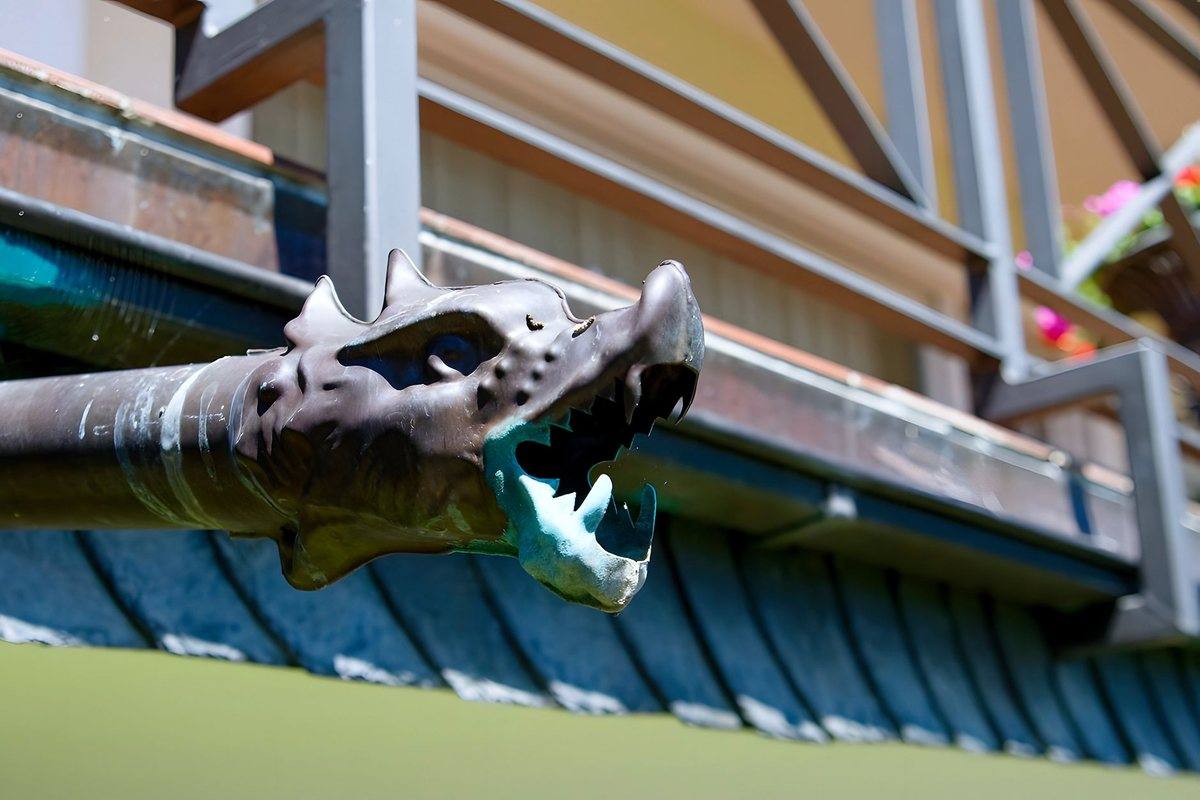
No guard eliminates cleaning. Care depends on the guard and your trees.
Bergen County is oak, maple and pin oak — large leaves in November and fine catkins and helicopter seeds in May. The spring debris is what defeats most guards, because it is small enough to pass a screen and heavy enough to mat.
How often to clean under this canopy, and whether a guard changes that: gutter guards under a heavy tree canopy.
Micro-mesh
Stainless mesh over a rigid frame. The best performer under maple and oak, and the only type that reliably stops seed debris. Needs a periodic brush-down of the mesh surface.
Reverse-curve hoods
Water follows the curve into the gutter and leaves fall past. Effective for large leaves, but on steep roofs in heavy rain water can overshoot the curve entirely.
Foam & brush inserts
Cheap, and they work for a season. Both trap fine debris inside the gutter where you cannot see it, and foam degrades in UV.
No guard, cleaned twice
Under heavy tree cover this is often the most honest answer. We will say so rather than sell you a product that still needs a ladder, and we can do the twice-a-year cleaning ourselves.

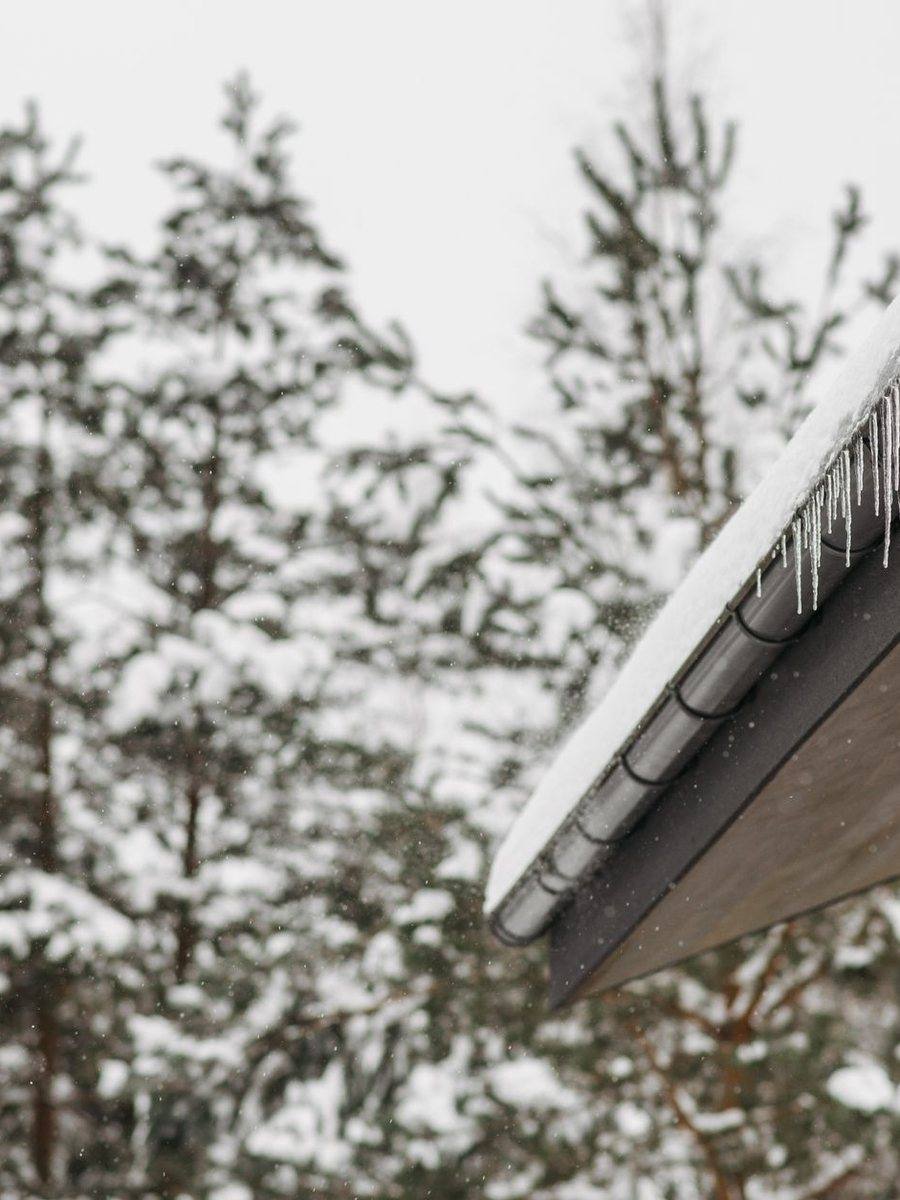
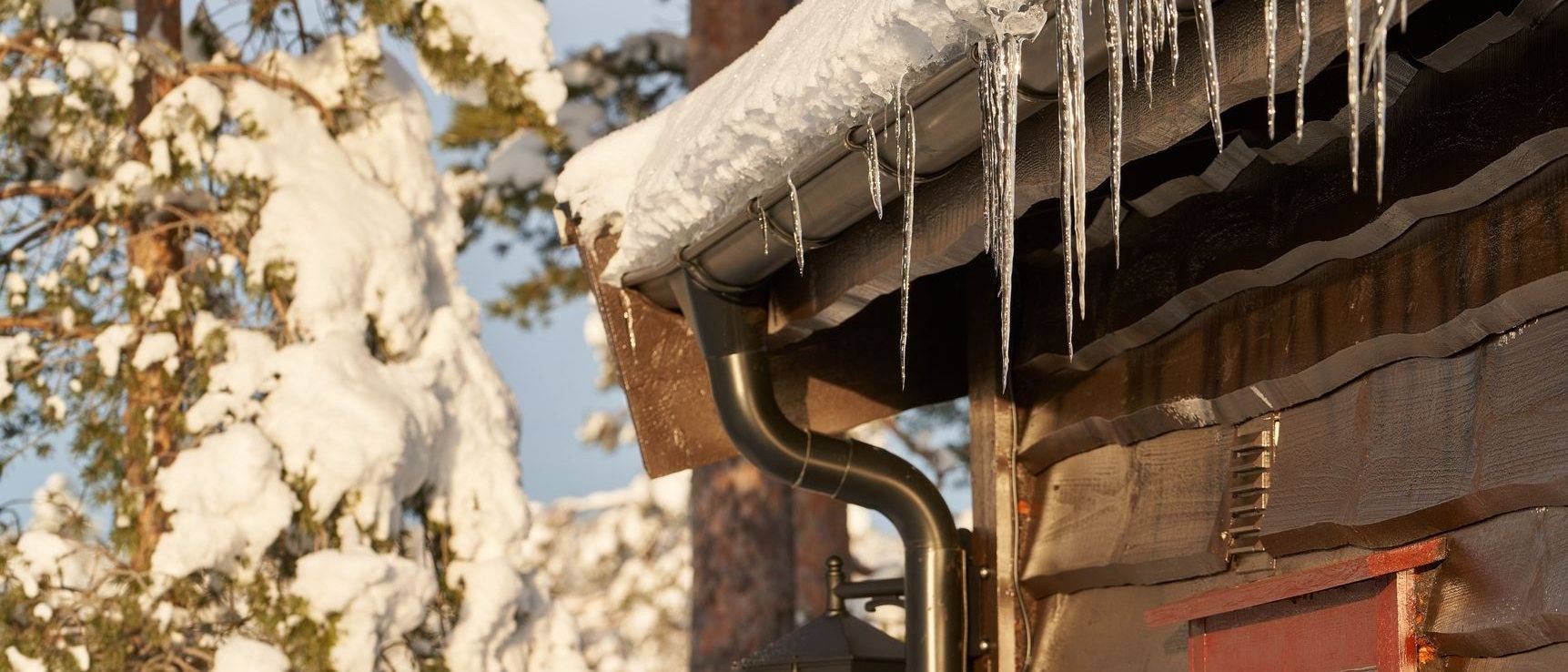
Icicles are pretty. They are also a diagnosis.
A row of icicles along the eaves means heat is escaping into the attic, melting snow on the warm upper roof and refreezing at the cold overhang. The ice ridge that builds there backs meltwater up under the shingles. Heat cable manages the symptom; insulation and balanced ventilation remove the cause.
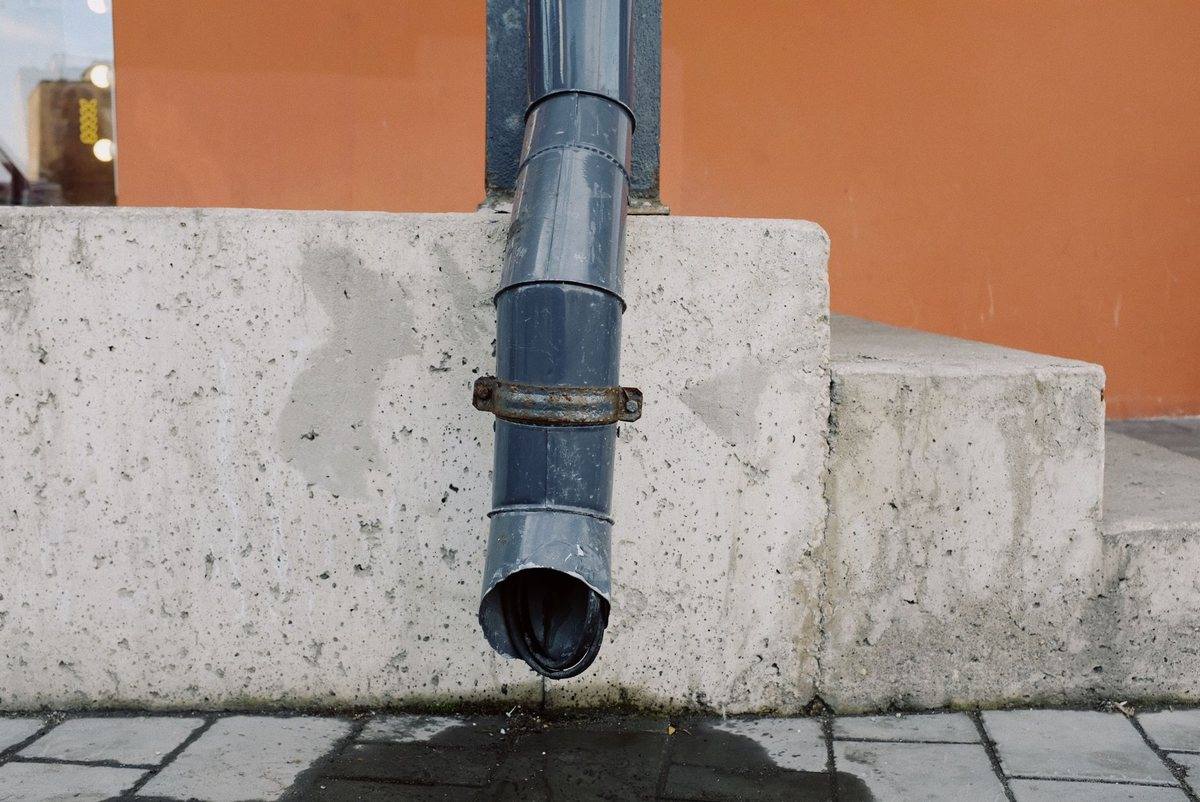
Follow it past the downspout.
A gutter that is perfect up to the elbow and then discharges eighteen inches from the wall has moved the problem from the roof to the footing. This is the part of the job most gutter companies do not price, and it is the part that keeps the basement dry.
Discharge distance
Extensions carrying water at least six to ten feet from the wall, onto ground that falls away from the house.
Piped to daylight
Where the grade allows, solid PVC underground to a discharge point rather than splash blocks that get moved by the lawn crew.
Downspout count
One outlet per thirty to forty feet of run as a rule, and more where valleys concentrate flow into a single point.
Fascia repair first
Gutters hang on the fascia. If it is soft, we replace it before hanging anything — screws into rotten wood are a warranty claim waiting to happen.
What copper gutters cost.
Copper runs several times the price of aluminum and is priced by the foot. Seamless aluminum is priced after we measure the runs and the downspouts.
| Item | Typical range |
|---|---|
| Copper gutter, installed (16 oz standard, 20 oz costs more) | $25–$50 per linear ft |
| A whole house in copper, 150–400 ft with matched downspouts | $6,000–$25,000+ |
Gutters, drainage and winter
What size gutter do I actually need?
It depends on the roof area draining into that run, the pitch, and rainfall intensity. Five-inch K-style covers most simple roofs. Steep pitches, long runs and valleys that concentrate several planes into one point usually need six-inch with three-by-four downspouts. We work it out per elevation rather than fitting the same size all the way round.
Are gutter guards worth the money?
Good ones reduce debris buildup, but they still need inspection and care. Follow the installed product's instructions; how often care is needed depends on your trees, debris and drainage conditions. Micro-mesh performs best under the oak and maple common here. Reverse-curve hoods can overshoot on steep roofs in heavy rain, and foam inserts break down. Under very heavy tree cover, no guard plus two cleanings a year is often the better deal, and we will tell you that.
Why is my basement wet when the gutters are clean?
Almost always the discharge. A single downspout can put several hundred gallons into the ground beside the footing during one heavy rain. Extending discharge well away from the wall, or piping it to daylight, is the first thing to try — it fixes more wet basements than people expect, and it costs a fraction of interior waterproofing.
Can you match copper to the rest of the house?
Yes. If you have copper valleys, flashings or a bay roof, matching the gutter and leaders in copper is worth doing — and we use copper hangers and straps throughout, because dissimilar metals against copper corrode.
Do you clean gutters as a standalone service?
Yes. We offer seasonal gutter cleaning, usually in late spring after the seeds and catkins drop and in late fall after the leaves. While we are up there we check the gutters and downspouts, so you hear about a loose hanger or a leaking joint before it turns into a repair. Guarded gutters are cleaned the way the installed product calls for.
Should the gutters go on before or after the roof?
After. Drip edge and the roof's edge detail go on first so water is directed into the gutter rather than behind it. If you are doing both, doing them together is cheaper and produces a better edge — see how a re-roof runs.
What do copper gutters cost?
Copper gutters typically run $25-$50 per linear foot installed, depending on the gauge, the profile and the downspouts; a whole house of 150-400 linear feet with matched copper downspouts usually lands between $6,000 and $25,000+. Seamless aluminum costs a fraction of that and is priced after we measure.
Let us work out where the water is actually going.
Free assessment of the roof drainage, the gutters and the discharge, anywhere in Bergen County — all three, because they are one system.