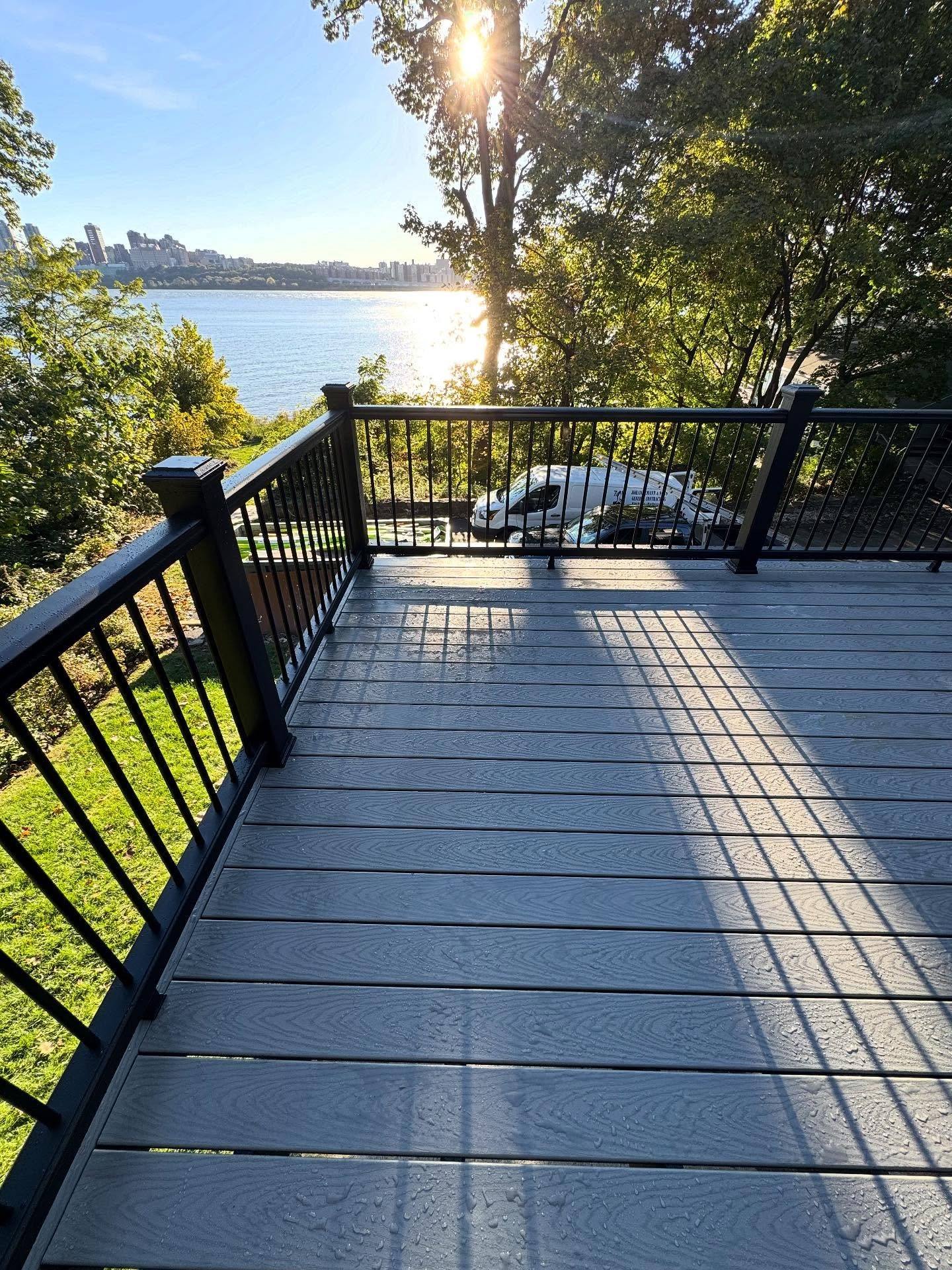
Decks built to the house, not just next to it.
Composite, cedar and hardwood decks across Bergen County, on pressure-treated framing that is through-bolted and flashed to the house — the one detail almost every deck failure traces back to. Rebuilt on the old footprint or new, with the permit filed and the inspection booked as part of the job. The deck above is one of ours, in Edgewater.
Three from the last year, photographed by us.
All three are in the project index. The Edgewater deck above was rebuilt over the Hudson as part of an exterior repaint; the Oradell deck below came out and went back from the framing up; the third went from old deck to finished in four days.
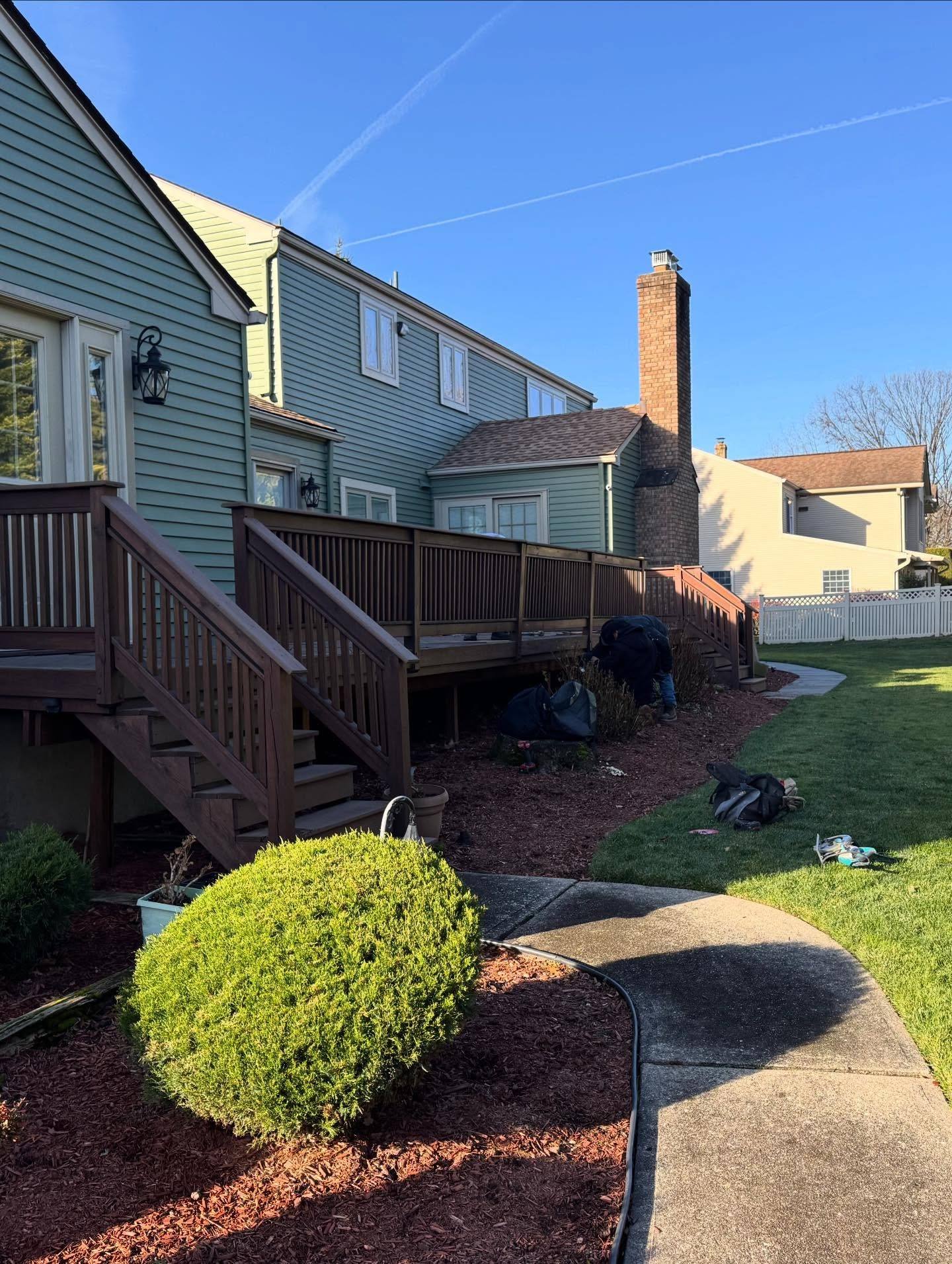
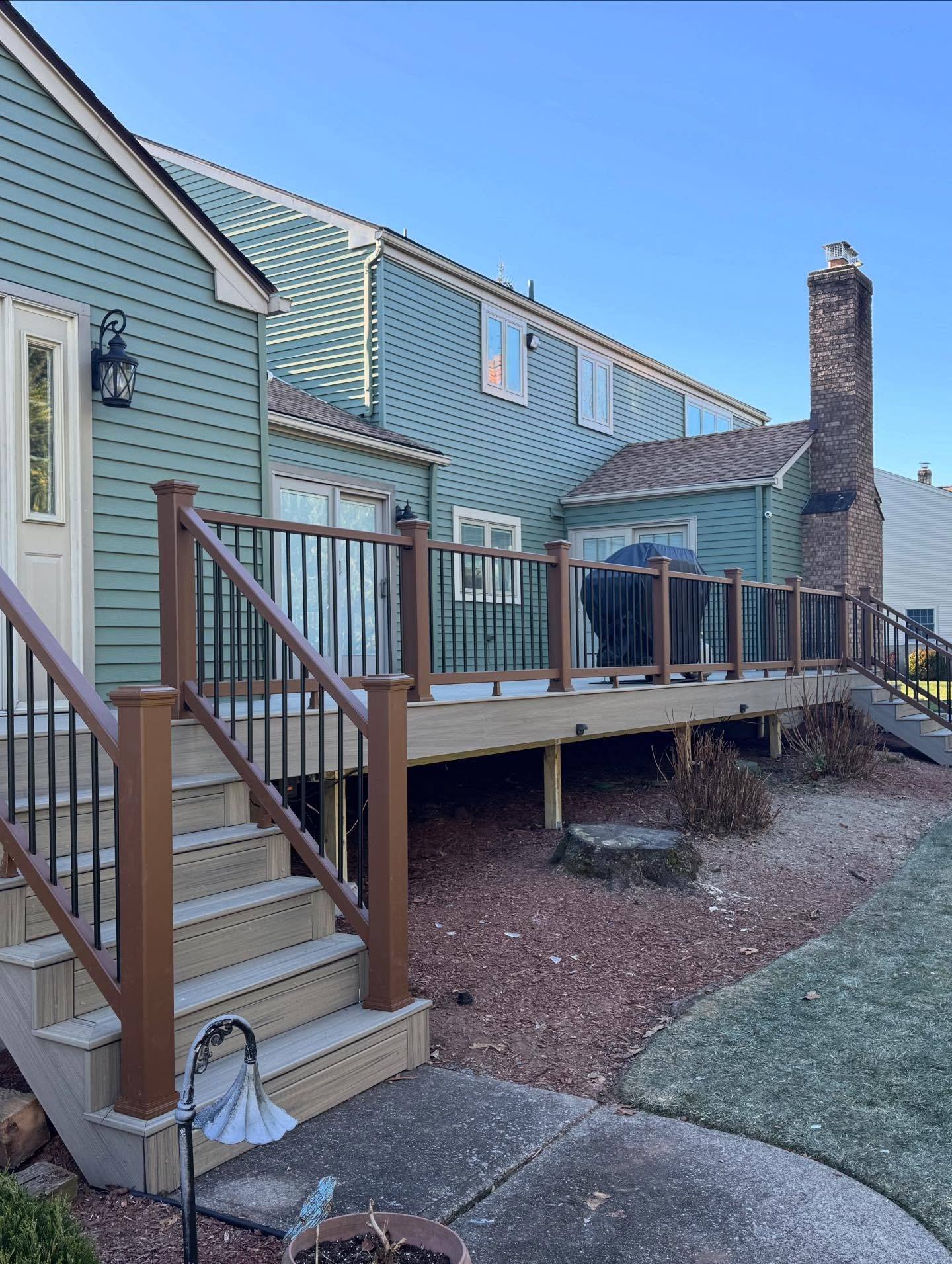
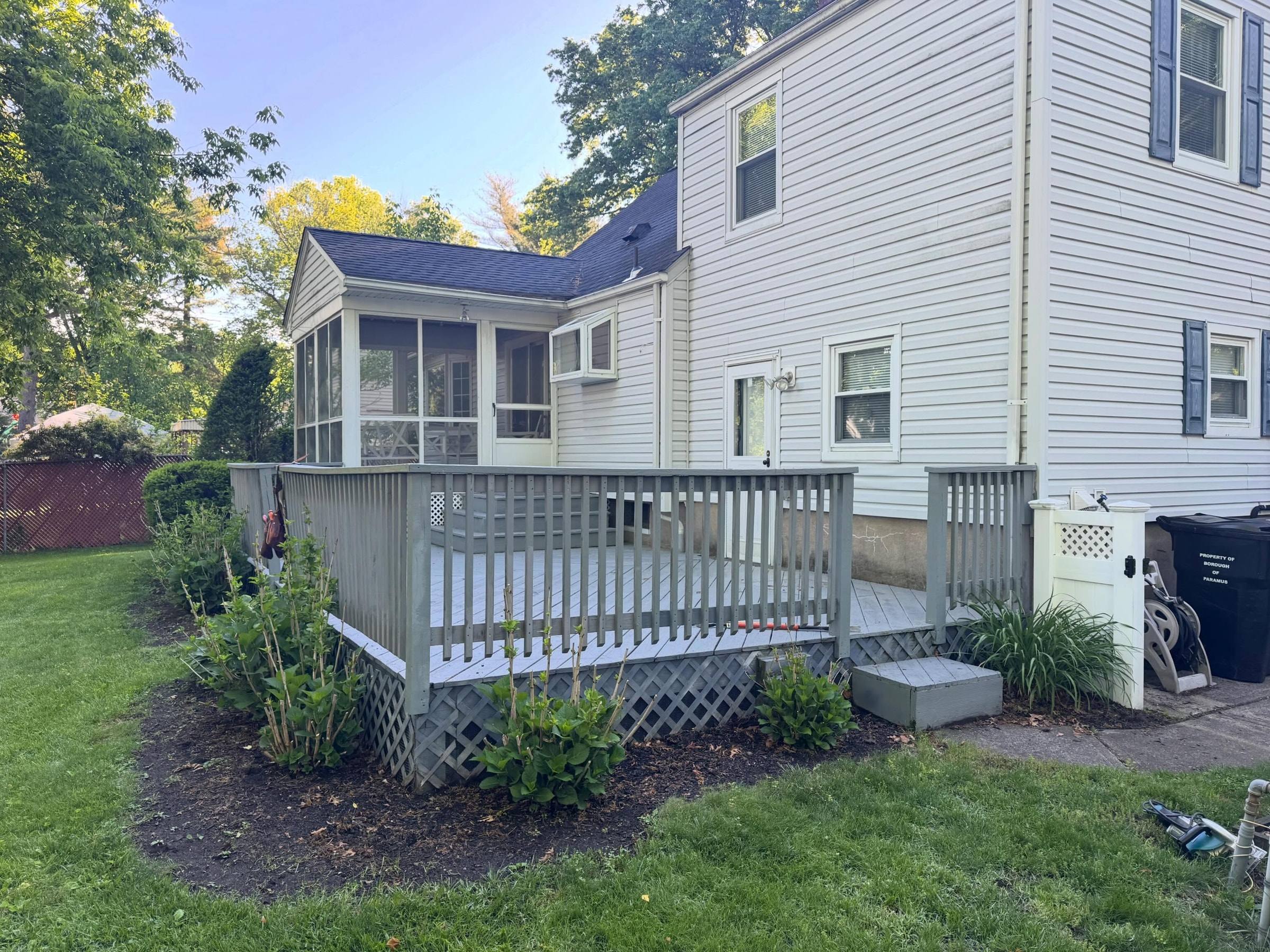
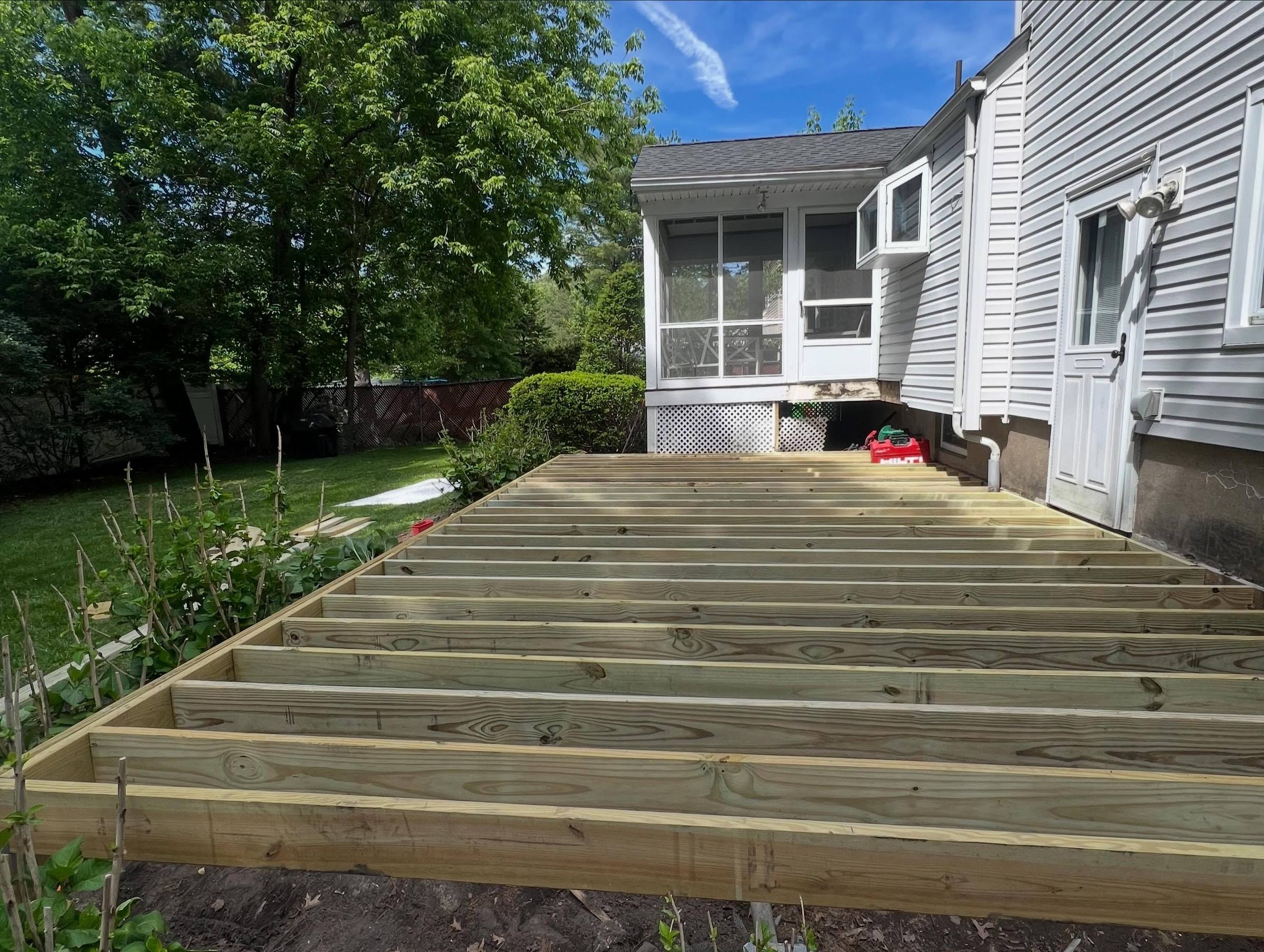
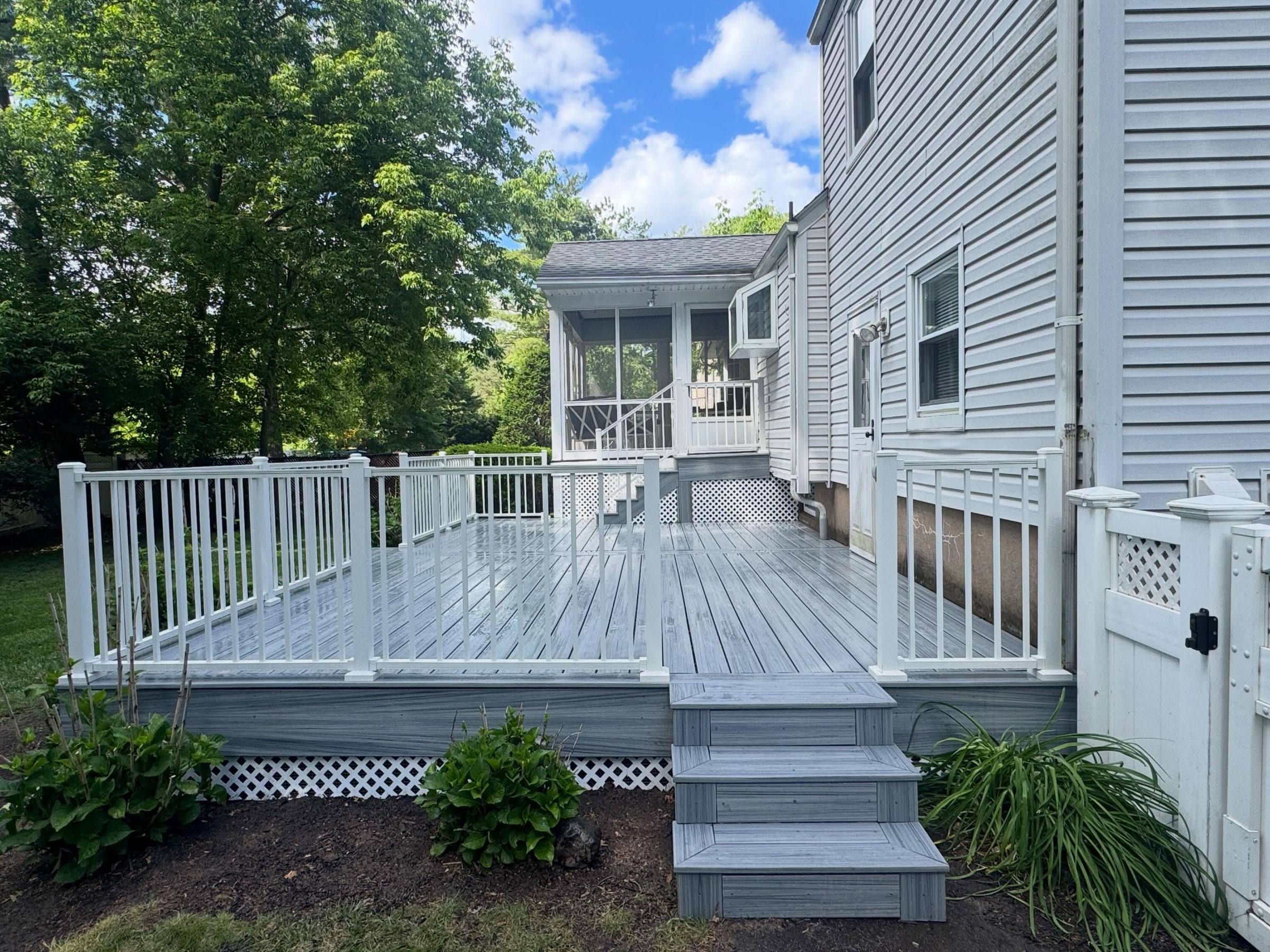
The surface is a preference. The ledger is a safety issue.
Almost every deck collapse traces to the same detail: the connection back to the house. Nailed rather than through-bolted, or bolted straight through siding with no flashing, so the rim joist quietly rots for a decade.
Composite & PVC decking
Capped composite or cellular PVC boards over pressure-treated framing. Trex Select and Transcend are what we install most.
- No staining or sealing, ever — washing is the whole maintenance schedule.
- Twenty-five years and up, with long manufacturer stain and fade warranties.
- Hidden fastener systems give a clean surface with no screw heads.
- Runs hotter underfoot in full sun than wood does, and costs more up front.
Best when: you want to stop maintaining it and plan to stay in the house.
Cedar, hardwood & treated pine
Natural timber over the same pressure-treated structure.
- Looks and feels better than any composite, particularly in cedar and ipe.
- Pressure-treated pine is the cheapest deck surface available and refinishable.
- Repairable board by board with material you can buy anywhere.
- Needs cleaning and sealing every one to three years or it grays and checks.
Best when: appearance matters most, or the budget is doing the deciding.
One: is the ledger through-bolted to the house with proper hardware, or is it nailed? Two: is there flashing over the top of the ledger, or does water run straight down behind it? Three: are the posts held down with galvanized connectors at the beam and the footing, or just toe-nailed? Any of those three being wrong is worth a phone call before the summer.
How a deck job runs
Four stages, in this order, whether the deck is a rebuild on the old footprint or new. The framing photographs from the Oradell deck are stage three.
Permit
Filed with the town before anything is ordered. The drawing shows the ledger connection, the post and footing layout and the railing height, because that is what the inspector checks against. Repairs in kind need none; our guide to deck permits in New Jersey explains which is which.
Footings and ledger inspection
Footings are dug below frost depth and inspected open, before concrete. The ledger is through-bolted to the rim joist with the flashing lapped over it, and photographed before it is covered.
Framing
Pressure-treated joists and beams on galvanized connectors at every post, beam and footing. On a rebuild, existing framing is reused only if it passes the same check.
Surface and rails
Decking goes down — hidden fasteners on composite — then railings and stairs to the drawing, and the final inspection is booked as the last step of the job.
Decks and permits
Do decks need permits in New Jersey?
For a new deck or a complete rebuild, yes: it needs a permit, usually after the town's zoning review, and it is inspected, including the footings before they are covered. Repairing or replacing part of an existing deck, whether boards, railings, stairs or even rotted joists and posts, is ordinary maintenance under New Jersey's code when the materials match, the parts go back in the same place and the deck holds up no roof. A deck built without a permit it needed is a problem at closing, so when one is needed we file it and book the inspections as part of the job.
Can you rebuild on the existing footprint?
Often, and it is usually the economical route: the footings and sometimes the framing are reused if they pass inspection, and only the surface, railings and stairs are new. We check the ledger and the post connections first — if those are wrong, the frame comes off with the boards.
How long does a deck take?
A straightforward replacement on an existing footprint is a matter of days once materials are on site — the four-day job in the index is a real one. New footings, a permit review and a railing order can add two to four weeks of lead time before that.
Composite or wood?
Composite if you want to stop maintaining it and plan to stay; cedar or hardwood if appearance is the point or the budget is doing the deciding. Both go over the same pressure-treated structure, so the choice is about the surface, not the safety.
Often done at the same time
Start with the ledger.
Send us a photograph of where your deck meets the house, anywhere in Bergen County. We will tell you what we see before we talk about boards.