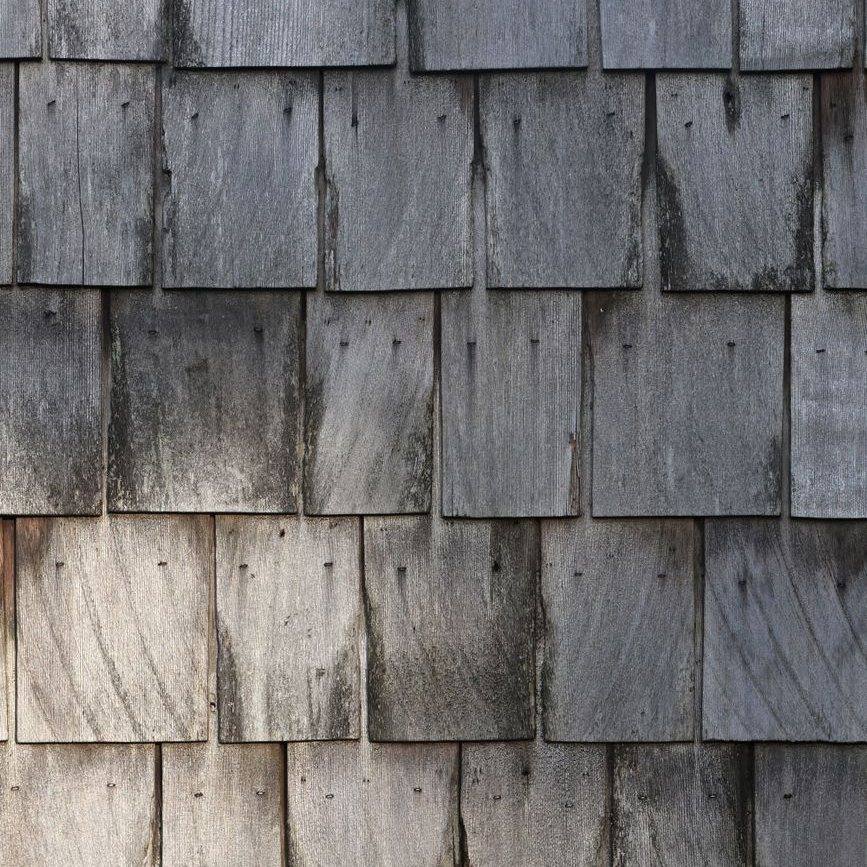
Cedar that weathers silver, not black.
Hand-split and taper-sawn cedar across Bergen County, Class A fire-treated, on a breathable mat with stainless fixings. Cedar does not fail because of the cedar. It fails because it was laid tight to the deck and never allowed to dry — which is the part of the job you cannot see from the street and the part we will show you photographs of.
A cedar roof dries or it rots. There is no third option.
Cedar is a natural material laid in overlapping pieces on a roof that gets rained on. It absorbs water and it has to give it back, from both faces, before the next rain. Everything that determines whether a cedar roof reaches fifty years or twenty comes down to whether it can do that.
Laid straight onto felt, with the underside sealed against the deck, a shake holds water on the face you cannot see. It rots from beneath while the exposed side still looks respectable, which is why cedar roofs so often fail years before anyone thought they would — and why the failure is a surprise.
What we put under it
A breathable mat between the deck and the cedar, so there is an air gap and a drainage path on the underside of every shake. Stainless fixings, because a galvanized nail in wet cedar corrodes and stains, and a shake on a failed nail is a shake on the lawn. Formed metal in the valleys rather than woven cedar, because a woven cedar valley is a dam waiting for a wet autumn.
And what the house has to do
Bergen County's tree canopy is the thing that shortens cedar roofs here. A north-facing slope under a permanent maple never dries fully, grows moss, and holds water against the wood all winter. Cutting the canopy back is not tidiness, it is roof maintenance, and it is the single cheapest thing a cedar roof owner can do.
Hand-split or taper-sawn.
Both are cedar, both last the same, both take the same Class A treatment. The difference is entirely what the roof looks like from the pavement, so it follows the architecture.
Hand-split shakes
Riven along the grain, so the exposed face is irregular and the courses throw a deep shadow line.
- Rugged, dimensional, visibly hand-made
- Right on Tudors, shingle-style and the older estate houses
- Thicker butt, so the shadow survives weathering
Note: the irregularity is the appeal, but it wants a competent installer — a sloppy course line shows more on split cedar than on anything else.
Taper-sawn shingles
Sawn both faces, so the roof reads as an even, quiet texture rather than a rugged one.
- Regular, refined, closer to the original on most colonials
- Flatter face, which sheds a little more readily
- Easier to keep a true course line across a long run
Note: on a house with cedar walls as well as a cedar roof, matching the two is usually the deciding argument.
What a cedar job usually is.
Split or slipped shakes replaced in matched grade, failed metal renewed. The normal maintenance of a roof that is otherwise fine.
Moss and debris off, canopy cut back, preservative where the roof will take it. What buys a cedar roof its last ten years.
Tear-off to the deck, deck repair, breathable mat, Class A cedar on stainless, formed metal at every valley and penetration.
Where the canopy will never allow cedar to dry, we will say so and price the alternative rather than sell you the same roof again.
What homeowners ask about cedar
How long does a cedar roof last in North Jersey?
Thirty to fifty years, and the spread is almost entirely down to installation and airflow rather than the grade of cedar. A shake roof laid on a breathable mat with stainless fixings, under a canopy that gets cut back, reaches the top of that range. The same cedar laid tight to felt with galvanized nails and left under a maple is finished in twenty.
Is cedar a fire risk?
We install Class A fire-treated cedar, which carries the highest fire-resistance rating there is — the same rating as slate. Untreated cedar is a genuinely different proposition, and the treatment is not a cosmetic upgrade. It is also what most insurers ask about.
What is the difference between hand-split and taper-sawn?
Hand-split shakes are riven along the grain, so the exposed face is rough and the roof reads as deep and textured — right on a Tudor or a shingle-style house. Taper-sawn shakes are sawn both sides for a flatter, more regular line that suits a colonial. Both are cedar and both last the same; it is an appearance decision.
Does a cedar roof need maintenance?
Yes, and it is the honest difference between cedar and slate or metal. Debris cleared, moss kept off, and the canopy cut back so the roof dries after it rains. Bergen County's tree cover is exactly what shortens cedar roofs here — a north slope under permanent shade holds moisture and the shakes rot from beneath.
Can you repair a cedar roof rather than replace it?
Often. Individual shakes split and slip, and valleys and flashing fail long before the field does. What cannot be repaired is a roof that is rotting from the underside because it was never allowed to breathe — in that case the shakes are a symptom and the assembly is the problem.
Next to this
Cedar vs asphalt
The cost and lifespan comparison on a Bergen colonial, with the maintenance honestly priced in.
Read →Slate
The other century-material on these streets, and the one that is usually repaired rather than replaced.
Slate →Roofing
Repair versus replacement, the seven layers of a roof, and how a re-roof actually runs.
All roofing →Cedar siding
The same material on the wall, with the same rule about letting it breathe.
Siding →We will show you the underside.
An assessment on a cedar roof means lifting shakes and photographing what is behind them, because that is where the answer is. You get the photographs and a written scope whether or not you use us.