Aluminum
The sensible default on the Hudson waterfront. It does not corrode in salt air, it is light, and it takes a factory finish that holds color. 40–70 years.
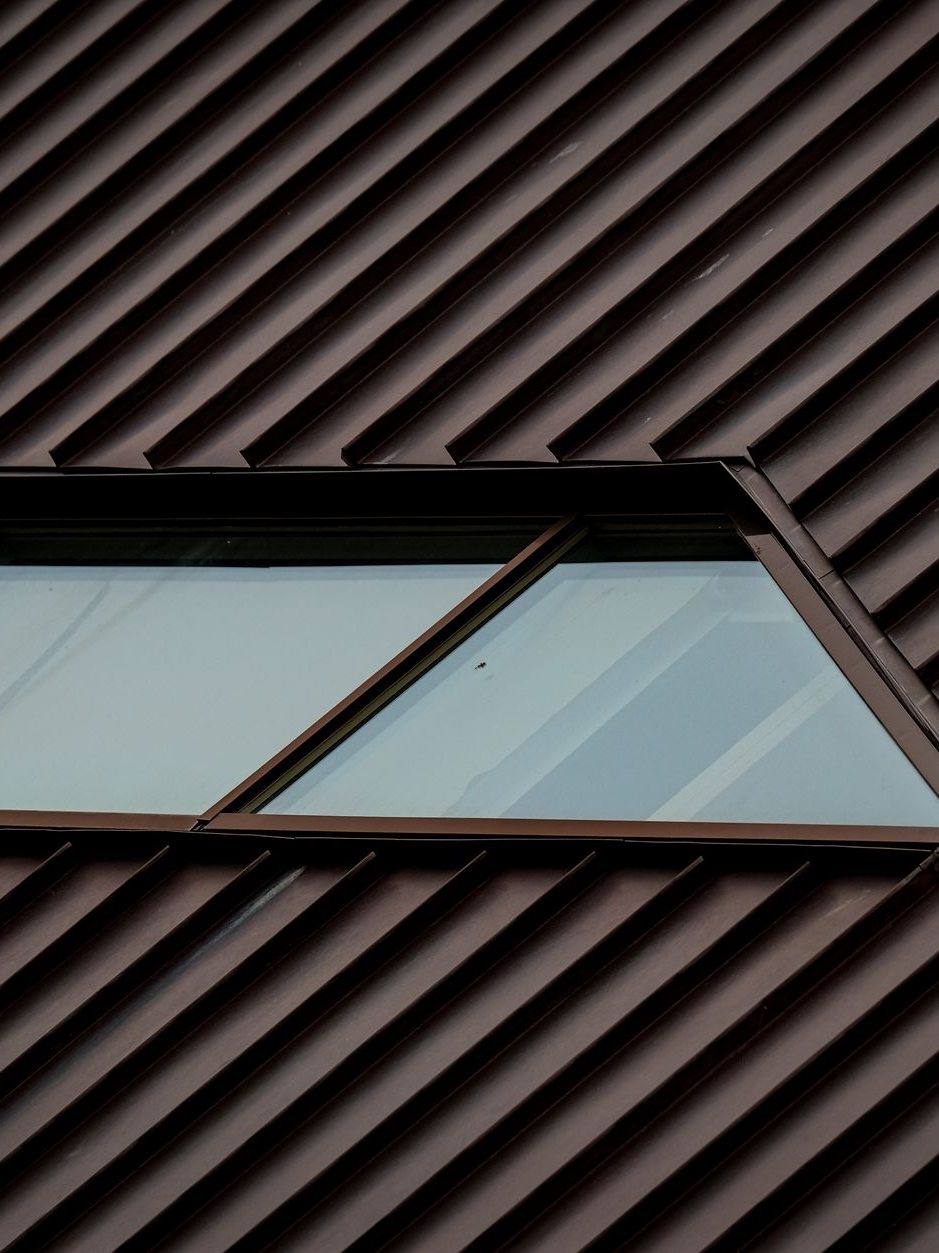
Copper, zinc, aluminum and coated steel, formed on site and fixed on concealed clips across Bergen County. Everything that usually fails on a metal roof — the exposed screw, the rubber washer under it — is simply not there. It is the long-life roof for a house that cannot carry slate.
There are two kinds of metal roof and they have almost nothing in common except the material. Understanding which one you are being quoted is the single most useful thing a homeowner can know here.
Exposed fastener panels are screwed through the face of the sheet, with a rubber washer under every screw head to seal the hole. There are hundreds of them on a roof. Those washers are EPDM, they sit in direct sun, and they harden and shrink at somewhere between fifteen and twenty years. At that point a panel with forty years of life left has several hundred small holes in it that no longer seal. The roof is re-screwed, or it leaks.
Standing seam panels are held by clips that sit under the raised seam, hidden. Nothing penetrates the weather surface at all. The panel also floats on those clips, which matters more than it sounds: metal expands and contracts across a season, and a panel screwed rigidly to a deck fights that movement and eventually elongates its own fixing holes.
That one difference is why the lifespan of a standing seam roof is quoted in the same range as the metal itself, and an exposed-fastener roof is quoted in the life of a rubber washer.
Standing seam versus exposed fastener works through the cost difference and where the cheaper panel is genuinely the right call.
They go on the same way. What differs is what they cost, how long they last and what they look like in twenty years.
The sensible default on the Hudson waterfront. It does not corrode in salt air, it is light, and it takes a factory finish that holds color. 40–70 years.
Galvalume. The value option in the range, stronger than aluminum and heavier, with a very wide color choice. 40–70 years, less happy in salt air.
The permanent one. Goes bright, then brown, then green over decades and is usually chosen for that. 70–100+ years, and it is what we form valleys and flashing from anyway.
Self-healing patina, matte gray, and a lifespan in the same class as copper for rather less money. Increasingly the specification on contemporary houses.
The usual reason a Bergen County homeowner ends up specifying standing seam is that they wanted a roof that would outlive them, and the structure would not take slate. Metal gets to seventy years at a fraction of slate's weight, on ordinary framing, with no reinforcement.
The second reason is architectural. Porch roofs, bay and dormer tops, shed extensions and the curved sections on older houses are all easier to detail well in formed metal than in anything else, and a copper porch roof under a slate main roof is a combination these streets have carried for a century.
The third is snow. A standing seam roof sheds rather than holds, which helps at the eaves in a county that gets real ice dams — though it also means snow guards over a doorway or a driveway, which we price in rather than leave for you to discover in February.
Where it is not the answer: a roof under permanent heavy shade with a lot of leaf fall, where you are paying for a seventy-year material and cleaning it like a twenty-year one. And any pitch under 3:12.
Roof only, per square foot of roof area; tearing off the old roof adds $2–$6. On a 2,500 sq ft roof that is about $30,000 in steel to $125,000+ in copper.
| Metal | Per sq ft | Lasts |
|---|---|---|
| Coated steel (Galvalume) | $12–$18 | 40–60 years |
| Aluminum | $14–$22 | 40–70 years |
| Zinc | $18–$30 | 80–100 years |
| Copper | $25–$50+ | 70–100+ years |
| Snow rails or guards | $2–$5 per ft of eave | — |
Aluminum and coated steel typically run 40 to 70 years. Copper and zinc commonly pass 70 and reach 100 or more. The reason the range is so long is the concealed fastener: there are no screws through the face of the panel and no rubber washers to dry out, so there is nothing on the roof with a fifteen-year service life.
No — not the way people expect. The noise everyone remembers comes from metal over open purlins on a barn, with nothing underneath it. On a house, over a solid deck and underlayment, a standing seam roof is no louder than an asphalt one. This is the single most common objection and it is based on a different building.
Copper, zinc, aluminum and coated steel (Galvalume). They differ in appearance, lifespan and cost rather than in how they are installed. Aluminum is the sensible default near the Hudson because it handles salt air well; copper and zinc are specified where the roof is meant to be permanent and visible.
The opposite. Standing seam reflects solar radiation rather than absorbing it, and with a reflective finish it measurably reduces summer cooling load. A dark asphalt roof is the hot one.
Standing seam hides its fixings under the raised seam — nothing penetrates the weather surface. Exposed-fastener panels are screwed through the face with a rubber washer under each head, and those washers are the failure point: they harden, shrink and start leaking at fifteen to twenty years, on a panel that would otherwise have lasted fifty. It is the cheaper metal roof and it is why metal roofs get a mixed reputation.
Per square foot installed, roof only: coated steel $12-$18, aluminum $14-$22, zinc $18-$30 and copper $25-$50+. On a 2,500 square foot roof that is about $30K in steel to $125K+ in copper, and tearing off the old roof adds $2-$6 per square foot.
What the four metals actually cost against each other, and against a premium shingle.
Read →The other century roof — and the one metal is usually specified instead of, on weight grounds.
Slate →Formed from the same metal, on the same roof, usually in the same week.
Gutters →Repair versus replacement, the seven layers, and how a re-roof actually runs.
All roofing →We measure the pitch, look at the deck and the eaves detail, and put the metal, the finish and the snow guards in writing. If your roof is better served by something else, that is what the assessment will say.