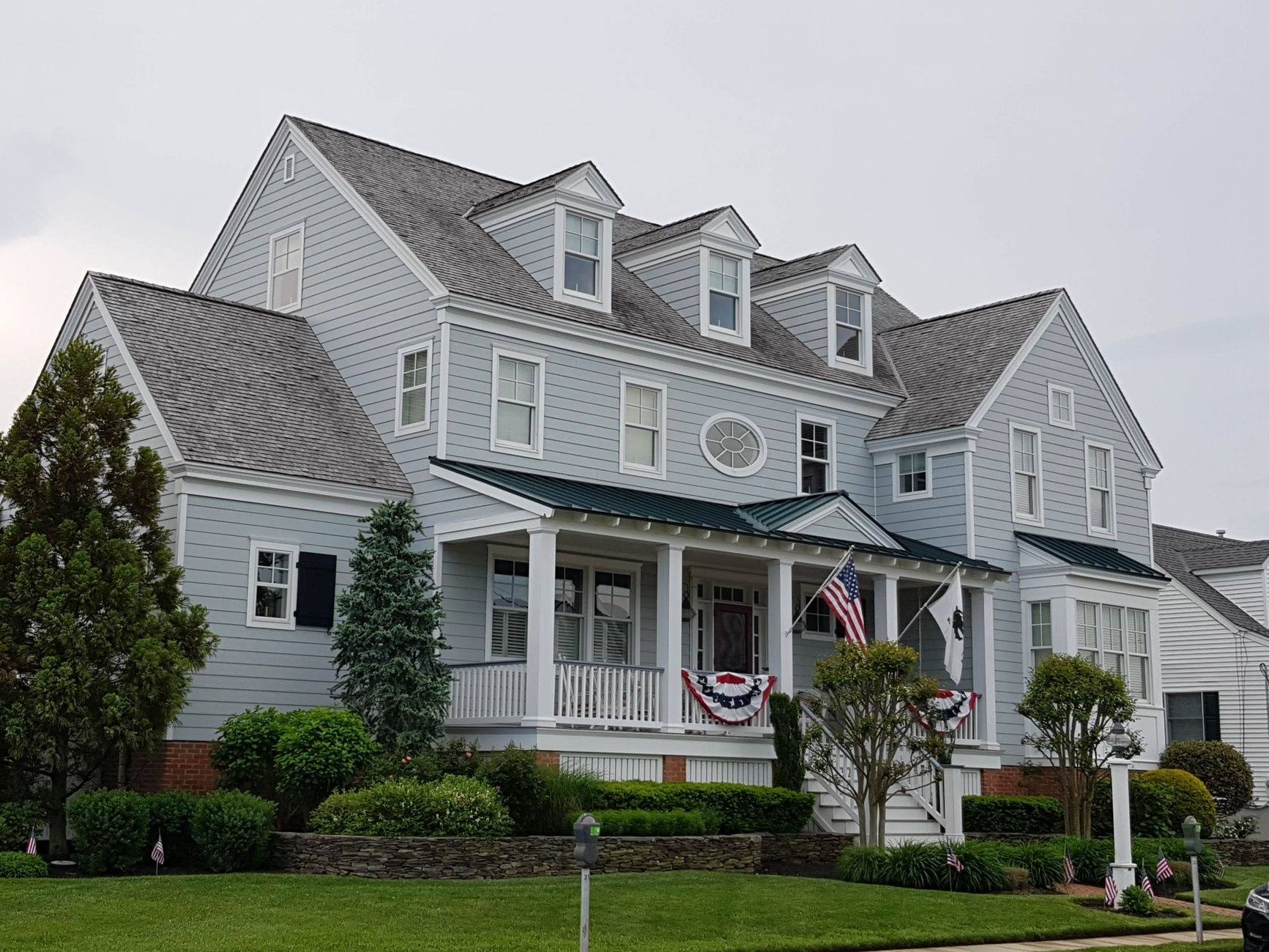
A family firm that builds and roofs Bergen County houses.
Johannemann & Sons is a family-run roofing and general contracting company based in Edgewater, New Jersey, working across Bergen County — more than twenty years in residential and commercial construction. We roof, side, glaze and gutter houses and build decks: slate, cedar, copper, standing seam metal and shingle roofs, siding, windows and doors, seamless gutters, composite and wood decks, installed by our own crews under one contract. We also renovate kitchens, build additions and build new homes from the ground up. We never sell your inquiry to anyone else. Call (201) 446-5941 or email info@johsons.com.
One team, from first drawing to final trim.
Almost every failure we are called in to fix started as a gap between two trades. The roofer finished on a Thursday and the gutter company came the following month, so nobody flashed the transition. The window installer wrapped the openings and the siding crew cut the housewrap short above them.
Nobody was incompetent. There was just no one whose job it was to own the seam.
That is the whole argument for the way we are set up. The whole exterior under one contractor, with one project manager who is accountable for the parts that touch each other. When the roof, the gutters and the fascia are the same company's problem, the transition detail gets done, because there is no one else to hand it to.
Why we do the whole envelope, not just the roof
Roofing, siding, windows and gutters are usually four separate businesses, and homeowners in Bergen County usually end up hiring at least three of them for one house. We went the other way: one company, one office, one schedule for everything on the outside of the building — so the roofer and the siding crew are the same people, and the flashing between them is nobody's excuse. The same thinking runs the additions and new homes, where the roof, the walls and the windows are ours from the start.
It also means we can say something a specialist normally cannot afford to say — that your roof does not need replacing. When roofing is the only thing a company sells, every problem tends to look like a replacement. When it is one of several things we do, an honest repair costs us nothing.
If the field of the roof is sound and the failure is at a flashing, the honest answer is a repair — and that is what you will get in writing.
How we write estimatesWhy we stay inside one county
We work a deliberately tight footprint across Bergen County. Partly it is practical: our crews and our suppliers are close to every job in progress. Mostly it is about knowing the housing stock before we arrive.
The Tudors and center-hall colonials in Ridgewood, Ho-Ho-Kus and Upper Saddle River are eighty to a hundred years old, with steep slate and cedar roofs, deep valleys and chimneys in the wrong places. The waterfront in Edgewater is a different problem entirely — newer construction, wind coming off the Hudson, and roofs that see weather the inland towns do not. Knowing which of those you are standing in front of changes the estimate before we get the ladder off the truck.

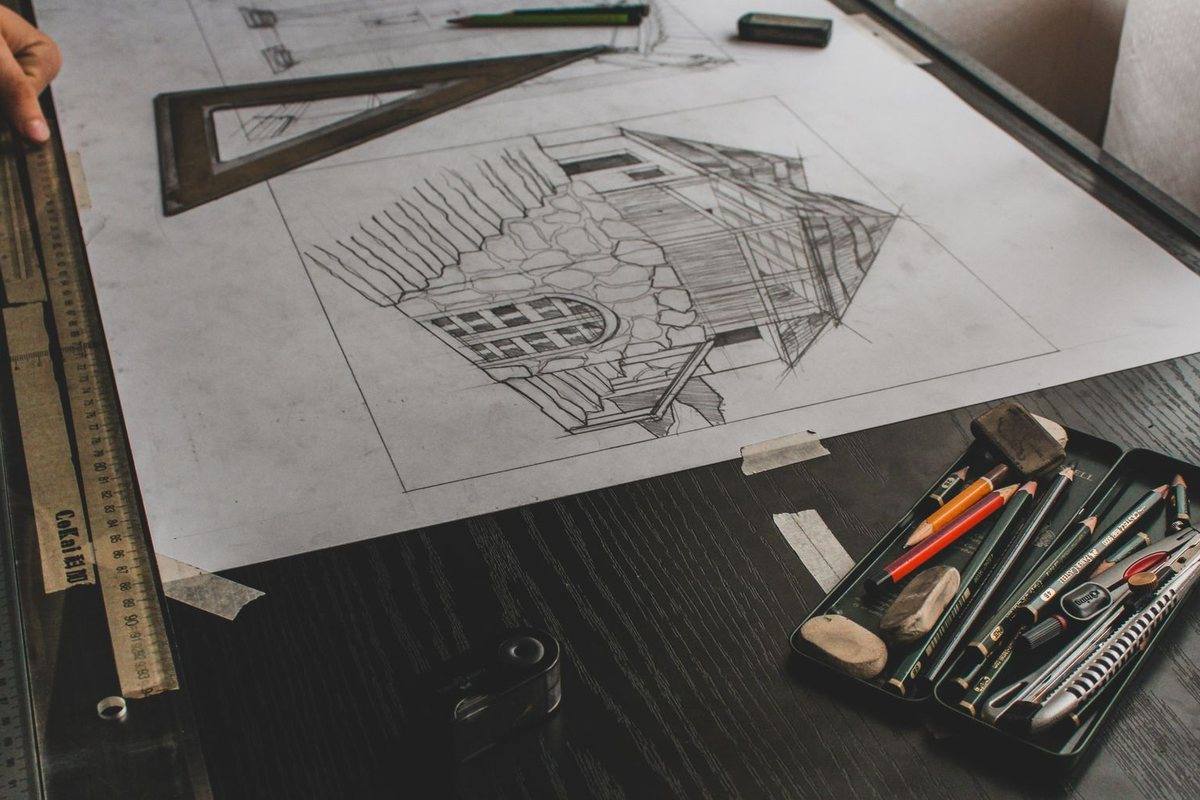
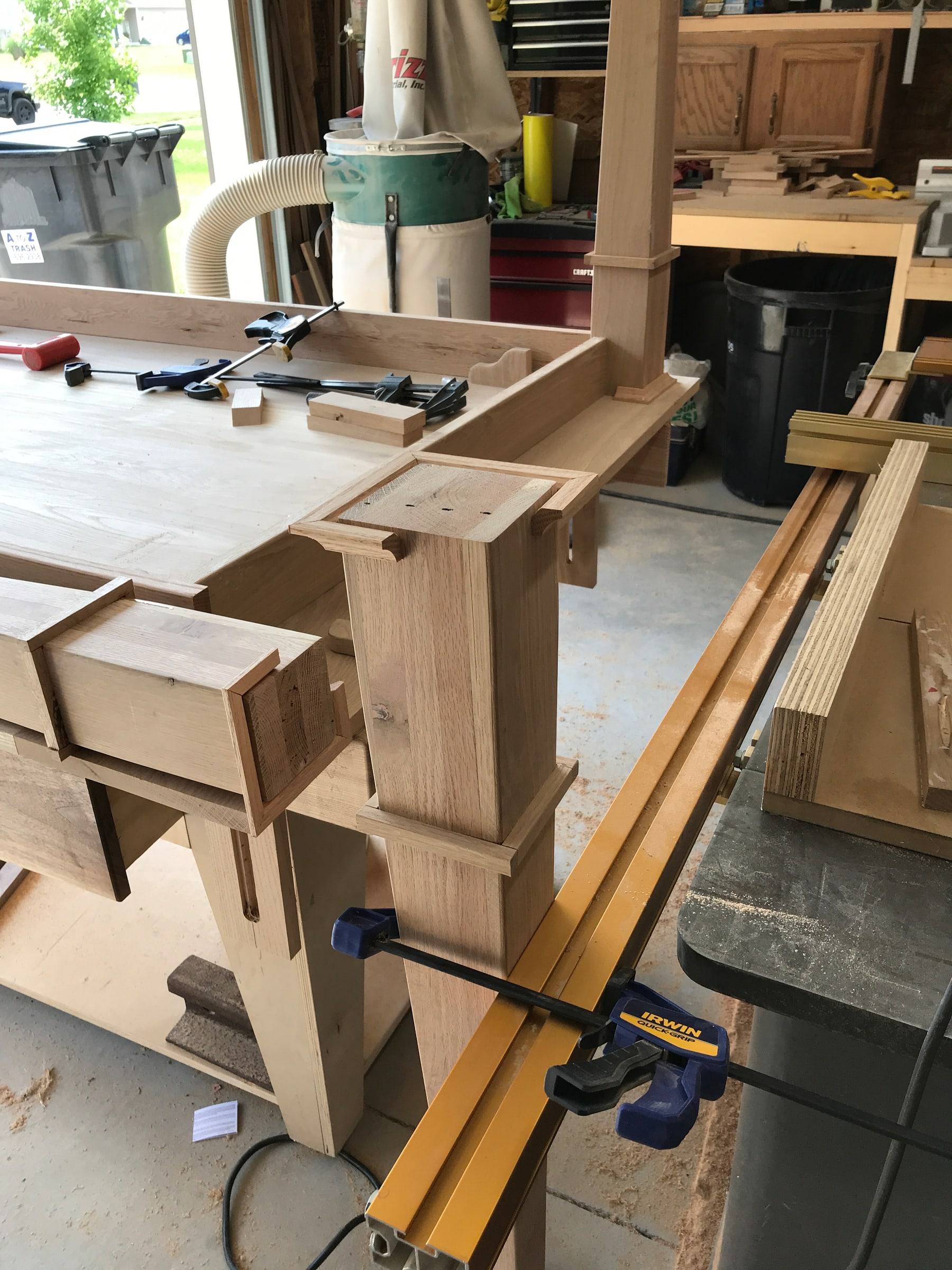
Robert Johannemann, owner and master carpenter.
Rob founded Johannemann & Sons and runs it today. He started working with his hands in his grandfather’s wood shop at twelve. Before the company, he was a member of the New York City Carpenters Union, where he oversaw large-scale commercial projects — the kind of work where sequencing, inspections and paperwork are not optional. That is where the firm’s twenty-plus years in residential and commercial construction come from.
The company is built the way a carpenter would build it. Most of what goes wrong on the outside of a house is carpentry before it is anything else: the ledger a deck hangs from, the sheathing under a roof, the rough opening a window has to sit square in, the fascia a gutter is screwed to. That is why a roofing and construction company here is run by a master carpenter, and why the estimate you receive is a written scope rather than a number. It is also why the firm still builds additions and whole houses: framing is the trade underneath every one of them.
What that means for your home.
Four things change the moment the roof, the walls, the windows and the gutters are the same company's responsibility.
The transitions get detailed
Roof to gutter, window to housewrap, siding to flashing. These are the joints that leak, and they are the joints nobody owns when three companies are involved.
One schedule, not three
Siding goes on after the roof is closed and the windows are set, in that order, because we control all three dates.
One warranty conversation
If something goes wrong in year two, you make one phone call. There is no second contractor to blame and no third one to arbitrate it.
You are not the project manager
Coordinating trades is a job. If you hire separately, it becomes your job. Here it is ours, and it is priced into the work.
How your project runs
The same five steps whether it is a flashing repair, a full re-roof or a new kitchen. What changes is how long step three takes.
We come out and look at it
Free, no obligation, and long enough to be useful. We get on the roof where it is safe to, photograph what we find, and tell you what we think is happening rather than what we would like to sell you.
You get a written scope you can compare
Materials named by manufacturer and product, quantities stated, exclusions listed, photographs attached. It is written so that a second quote is a real comparison instead of a guess about what each contractor meant.
- Line-by-line scope
- Photographs of the problem
- Named products, not "quality materials"
- What is not included
Permits, orders and a date
Where the work is permitted, we file it. Material is ordered against the measured take-off and delivered to the site, not carried in a piece at a time. You get a start date and the sequence the trades will run in.
The work, with the site kept
One project manager, reachable directly. Tear-off goes straight into the dumpster, the ground gets a magnetic sweep at the end of every day, and landscaping is protected before anything comes off the roof.
Walkthrough, then paperwork
We walk the finished job with you and fix the punch list before we invoice the balance. Manufacturer warranty registration is filed on your behalf, and you get the documentation for your own records.
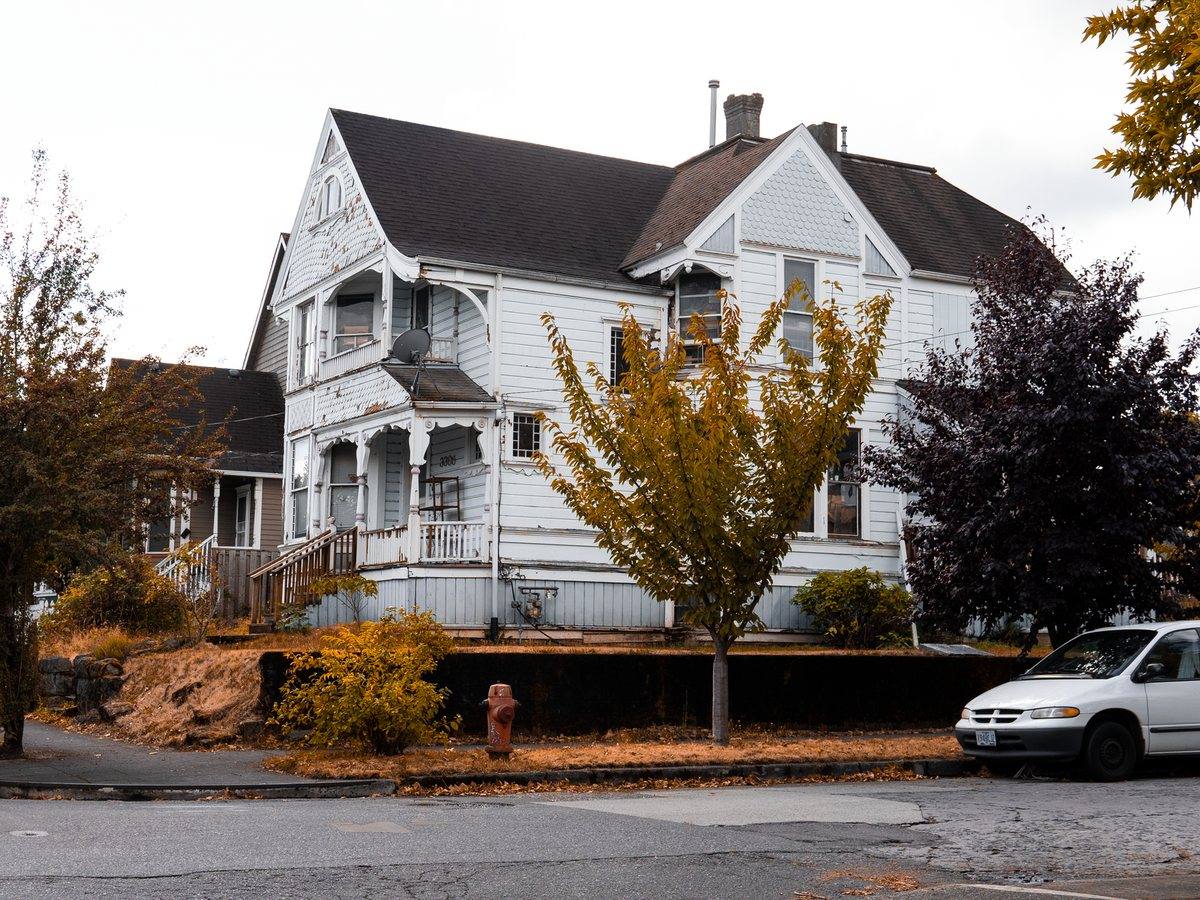
We work where we know the houses.
Ridgewood, Ho-Ho-Kus, Allendale, Upper Saddle River, Franklin Lakes, Alpine, Saddle River, Tenafly, Glen Rock, Closter, Cresskill, Demarest, Englewood Cliffs, Old Tappan and Edgewater.
Licensed, insured, documented
Ask any contractor for these before you let them on the roof. Ours are available on request, and we will hand them over without being chased.
New Jersey registration
Registered as a New Jersey Home Improvement Contractor, as required for residential work in the state: NJ HIC #13VH11045200, printed on every written estimate.
New home builder registration
Registered with the New Jersey Department of Community Affairs as a new home builder, which the state requires before anyone builds a new home for an owner to live in. See new construction.
Insurance that names you
General liability and workers' compensation, both current. We will send certificates directly from the carrier, with your property listed, before work starts.
Manufacturer warranties, registered
Roofing and window warranties only stand up if the installation is registered. We file the registration on your behalf when the job closes and send you the confirmation.
A word on how to compare contractors
The cheapest number on the table is usually the one with the least written down. Before you compare prices, compare what each estimate actually commits to: the underlayment specified, the flashing detail at the chimney, who hauls the debris, and what happens if the deck is rotten underneath. If two quotes differ by thirty percent, that difference is almost always sitting in those four lines.
Let us walk the house with you.
Tell us what the house is and what is worrying you. We will come out, get on the roof if it is safe to, and send a written scope with photographs — free, with no obligation.
Written scope · Photographs · One project manager · Permits filed