Ice Dams in Bergen County: Why They Form and How to Stop Them
Ice Dams in Bergen County and the Fix That Actually Works.
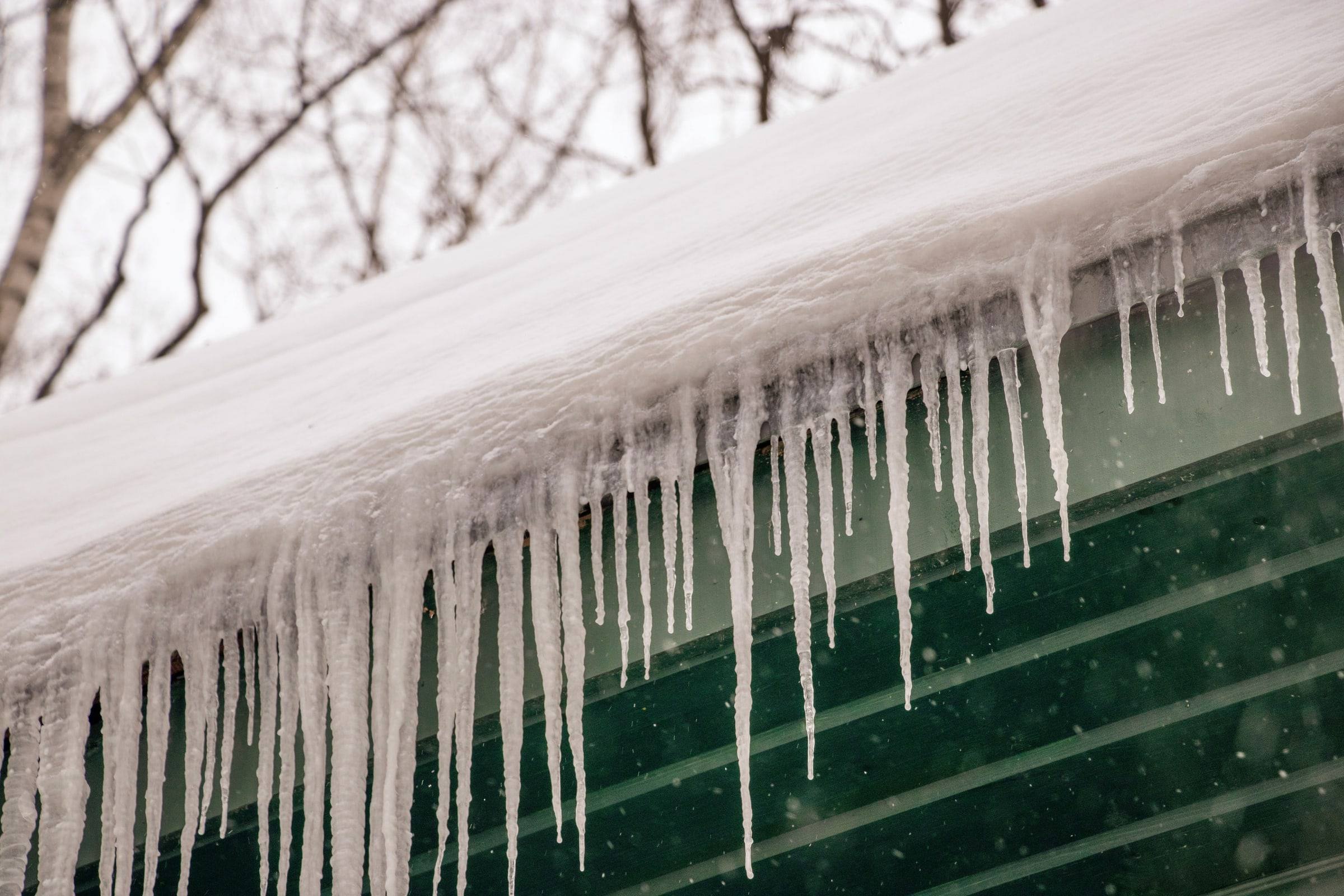
An ice dam is a ridge of ice along the edge of a roof that holds back meltwater. It forms when heat escaping from the house warms the roof, melts the snow on the upper slope, and the water freezes again over the cold overhang. The water ponding behind the ridge backs up under the shingles and comes in at the top of the wall. The lasting fix is a colder roof, not a bigger gutter.
Bergen County winters are built for them: snow, a few days of thaw, then a hard freeze, over and over. Here is how they form, which houses get them, what to do if water is already coming in, and what stops them for good.
How an ice dam forms
A roof should be about as cold as the air above it. When warm air from the rooms below leaks into the attic, it heats the underside of the roof deck. Snow on the warm part of the roof then melts from underneath, even on a day that never gets above freezing, and the water runs down the slope until it reaches the eave: the overhang that sits outside the wall, with no heated space below it. There it freezes again. Every thaw and freeze adds another layer, and the ridge grows until water pools behind it.
Shingles are made to shed water running downhill. They are not made to hold back standing water. The pond behind the dam works its way up under the courses, past the nails and into the roof deck, and comes in over the top of the wall. That is why ice-dam stains appear on ceilings along outside walls and above windows, not in the middle of a room.
An ice dam is an attic problem that shows up at the edge of the roof.
Ice Dams in Bergen CountyWhy so many Bergen County houses get them
It is mostly the houses. A few building types practically make ice dams, and Bergen County has a great many of them.
- Post-war Cape Cods. Towns such as Dumont, Bergenfield and Elmwood Park filled with capes in the decades after the war. The upstairs rooms sit partly inside the roof, behind short knee walls and under sloped ceilings with only a few inches of space for insulation, so the roof over them runs warm.
- Complicated roofs. Valleys, dormers and the multi-plane roofs of the Tudor Revival houses in Ridgewood gather snow and meltwater in exactly the places that are hardest to keep watertight.
- Shaded north slopes. Under the mature tree canopy of Franklin Lakes, Saddle River, Wyckoff and Norwood, north-facing slopes hold snow longer, which leaves more to melt and more time for a dam to build.
- Warm attics. Recessed lights in top-floor ceilings, an unsealed attic hatch, exhaust fans that empty into the attic instead of outdoors, and gaps around chimneys and pipes all let warm air into the roof space.
- Blocked soffit vents. Insulation pushed into the eaves, or soffits painted or covered over, stop the cold outside air that is supposed to wash under the roof deck.
Signs you have one
- A thick ridge of ice along the roof edge, often with heavy icicles hanging from the gutters. Icicles alone are not proof, but big ones with ice built up behind them are a warning.
- Water stains or peeling paint on ceilings and walls along outside walls, especially in top-floor rooms, or around the tops of windows.
- Gutters sagging or pulling away from the fascia under the weight of the ice.
- Ice or water streaks on the siding below the eaves, or ice forming in the soffit.
- In the attic: frost on the underside of the roof deck, or damp insulation near the eaves.
If water is coming in now
Start with safety. Do not climb onto a snowy or icy roof, and do not chip at the ice with a hammer, an axe or a shovel. Chipping cracks shingles, tears gutters loose, and puts someone on a ladder in the worst conditions of the year.
- Catch the water inside, move what you can, and photograph the stains and the ice for your records.
- If you can reach from the ground, pull the snow off the lower few feet of the roof with a roof rake. Less snow above the dam means less water feeding it.
- Call a roofer. Water inside the house is an active leak, and clearing a dam without damaging the roof takes the right equipment: low-pressure steam, not hammers. Once it thaws, the leak still has to be traced to where the water actually got in.
Water coming in? That is what our emergency roof repair is for: (201) 446-5941.
What actually stops ice dams
The lasting fix is a roof deck that stays cold, and it has three parts. The order matters: seal first, because insulation does not stop air moving through it.
| Fix | What it means | Where it is done |
|---|---|---|
| Air sealing | Closing the gaps that let warm air into the attic: top plates, recessed lights, the attic hatch, chimney chases, pipe and wire holes. Usually the single biggest improvement. | Inside the attic |
| Insulation | Enough depth on the attic floor, with baffles at the eaves so it cannot block the soffit vents. | Inside the attic |
| Ventilation | Balanced intake at the soffit and exhaust at the ridge, so outside air runs under the whole deck and carries off heat that gets past the first two. | Roofing work |
| Ice-and-water membrane | Self-adhering membrane under the shingles at the eaves, so water a dam does push back has nowhere to go. | Roofing work, at re-roofing |
Air sealing and insulation are usually done by an insulation contractor, often after an energy audit. Ventilation and the membrane are roofing work, and they are what we check and correct.
Surprisingly, the building code does not require the membrane here. New Jersey amended the residential code so an ice barrier is mandatory only where January's average daily temperature is 25°F or less, and the state's Division of Codes and Standards says that means Sussex County alone (more on what the code does and does not require in roof permits in New Jersey). So in Bergen County the membrane is a choice the roofer makes, and a cheap estimate can leave it out. We treat the model code's rule, from the lowest edge of the roof to at least 24 inches inside the exterior wall, as our minimum, run it further up than that on shaded and shallow slopes, and line every valley.
What does not fix it
- Heat cables. They can keep a channel open at the edge so meltwater drains, but they treat the symptom, use electricity all winter, and only work if they run along the eave, through the gutter and down the downspout.
- Bigger or cleaner gutters. Gutters do not cause ice dams. A gutter packed with leaves and ice does make one worse and adds weight at the eave, so keep them clean and pitched (see gutter guards and seasonal care), but it is not the cure.
- A new roof on its own. New shingles over the same warm attic will dam just like the old ones. What a re-roof can do is add the membrane and correct the ventilation.
- Rock salt on the roof. It corrodes gutters and flashing and kills the plantings below.
What we do on a roof with an ice-dam history
We look at it after the thaw, not in the middle of it. The stains tell us where the water got in, the eaves and the deck tell us how long it has been happening, and the soffits and the ridge tell us whether the roof can breathe.
Then we tell you plainly which part is roofing and which part is not. If the roof has years left, the job is usually repairing the damaged eave and correcting the ventilation (see roof repair). If it is due anyway, the membrane and the ventilation go into the new roof (see roof replacement, and if that falls in the cold months, replacing a roof in winter). Either way it starts with a roof inspection and a written answer.
Ice dams every winter? We will tell you what is causing them. (201) 446-5941 or request an assessment online.
What causes ice dams?
Heat escaping from the house into the attic warms the roof deck. Snow on the upper roof melts from underneath, the water runs down to the cold overhang at the eaves and freezes again. Every thaw and freeze builds the ridge higher until water pools behind it and backs up under the shingles.
Do gutters cause ice dams?
No. A gutter packed with leaves and ice holds meltwater at the edge of the roof and makes an existing dam worse, and the weight of the ice can pull the gutter off the fascia, so clean, well-pitched gutters help. But the cause is heat loss into the attic. See our gutter services.
Should I remove snow from my roof?
Only from the ground. A roof rake can pull snow off the lower few feet of a one- or two-story roof, which leaves less snow to melt into the dam. Never climb onto a snowy or icy roof, and never chip at the ice, which cracks shingles and tears gutters loose.
Do heat cables stop ice dams?
They can keep a channel open at the roof edge so meltwater drains, but they do not stop the dam from forming, they use electricity all winter, and they only work if they run along the eave, through the gutter and down the downspout. The lasting fix is a colder roof: air sealing, insulation and balanced ventilation.
Will a new roof stop ice dams?
Not on its own. New shingles over the same warm attic will dam just like the old ones. What a new roof can do is put self-adhering ice-and-water membrane under the eaves, so backed-up water cannot get in, and correct the soffit and ridge ventilation. The heat loss that causes the dam is fixed from inside the attic.
When should I call a roofer about an ice dam?
Straight away if water is coming inside, because that is an active leak. Otherwise, have the roof looked at after the thaw: stains, soft or rotted eaves, loose gutters and blocked soffit vents tell you whether the fix is a repair, better ventilation or a new roof. See emergency roof repair.