Compact lots, close neighbors
Houses here stand a driveway's width apart. Siding and gutter work means protecting the property next door and routing downspouts so they do not discharge onto it. We plan that before the first section is hung.
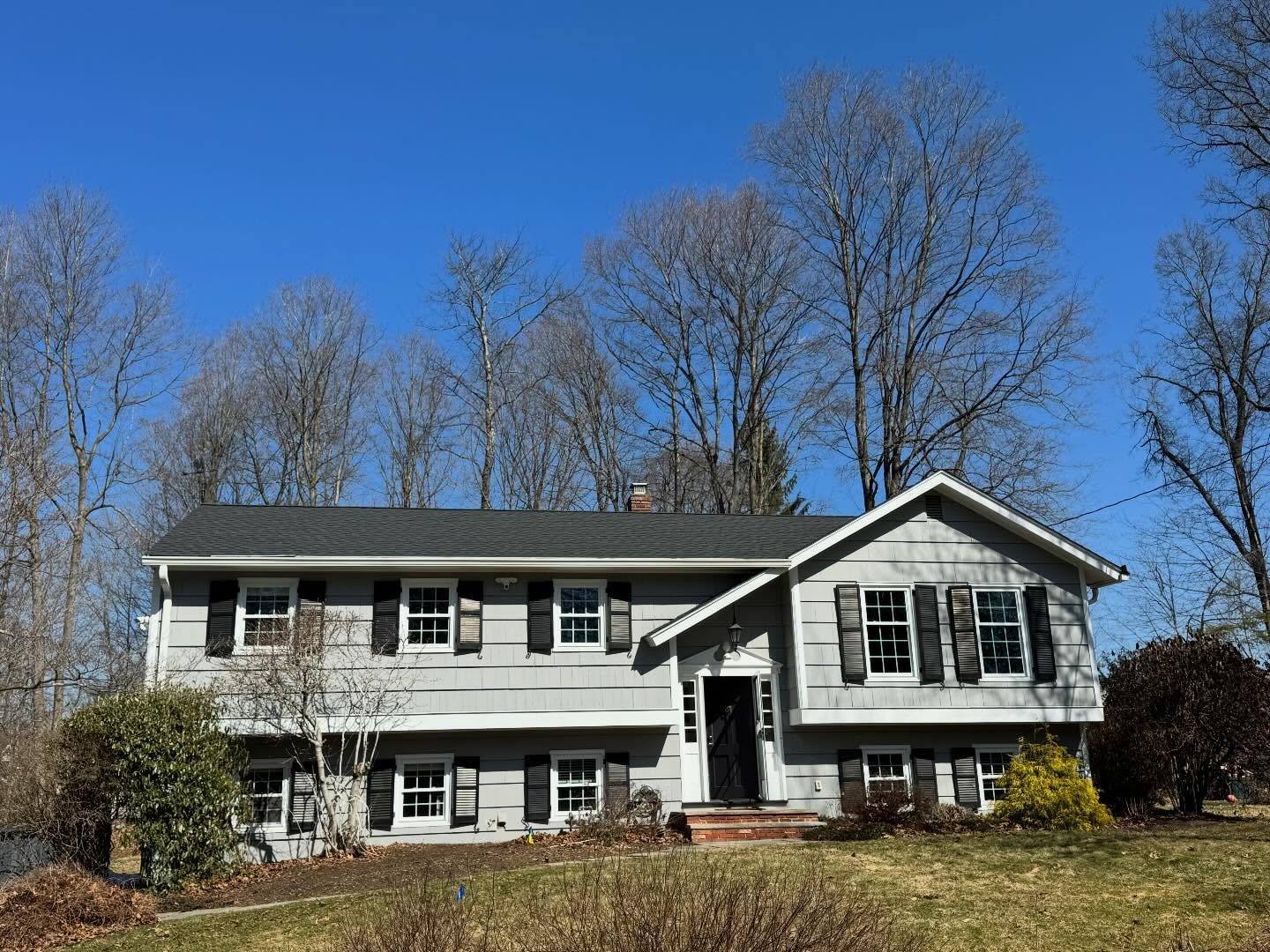
Elmwood Park was East Paterson until 1973 and ninety-five percent built out by 1970, so its streets are post-war capes, small colonials, splits and bi-levels on compact lots between the Passaic and Saddle rivers. Simple gable roofs under asphalt, aluminum or vinyl over the original siding, five-inch gutters on flat ground: that is the work here.
The borough sits on the western edge of Bergen County, with the Passaic River as its boundary and Paterson and Clifton on the far bank. It incorporated in 1916 as East Paterson, a mill-worker town of 2,440 people, and grew slowly until the 1940s, when defense-worker housing and then large subdivisions pushed the population toward 16,000. A golf course and country club along Broadway gave way to houses and about a thousand garden apartments, and the streets still show it.
For an exterior contractor that means consistency. Most roofs are simple gables and hips on one-and-a-half and two-story frames, now on their second or third asphalt roof, over attics finished into bedrooms with little thought for ventilation. Walls were re-clad in aluminum and later vinyl, usually straight over the original wood or asbestos-cement boards. Gutters are five-inch aluminum on lots where the downspout has nowhere to go but the driveway.
Nearer the river, in the pre-1916 core around Dundee Lake and Broadway, the stock is older: frame houses from the mill years, with steeper roofs, wood windows and a century of patched flashing. The Van Houten–Hillman House of about 1782 shows what was here first. We approach each era on its own terms — roofing, siding, windows & doors, gutters — and write up what we find before anything is priced.
Houses here stand a driveway's width apart. Siding and gutter work means protecting the property next door and routing downspouts so they do not discharge onto it. We plan that before the first section is hung.
Aluminum and later vinyl were hung over the original cladding on much of the post-war stock, and the sheathing underneath has not been seen in decades. We open a test section before quoting a re-side, so the price reflects the wall you actually have.
The Garden State Parkway, Interstate 80, Route 46 and Route 4 all cut through the borough. Houses along those rights-of-way sit in the open, not under street trees, and take full sun and wind. We specify shingles by wind rating and nail pattern, not by color chart.
Elmwood Park lies in the Passaic valley and the land is flat, so water leaving a downspout goes nowhere on its own. We extend leaders to daylight, set splash blocks where grading allows, and on the riverfront blocks ask about flood history before recommending anything below grade.
A heavy laminated shingle with a high wind rating, ice-barrier membrane at the eaves, and intake plus ridge ventilation — the piece earlier roofs skipped. A finished attic with no airflow is where ice dams and curled shingles begin; we explain why.
Bi-level entries, porch roofs and attached garages are often near-flat and were shingled anyway; shingles on a low slope leak at the laps. Those sections get a fully adhered membrane, flashed into the main roof.
Fiber cement or insulated vinyl over a fresh water-resistive barrier, sheathing repaired where it has failed, and every opening re-flashed. It is also the right moment to replace tired 1950s and 1960s windows and doors, so the two trades leave no seam for water to find.
Five-inch gutters were the default here and overflow in a heavy rain where two roof planes meet in one corner. We size gutters and downspouts to the actual roof area and route the leaders so water leaves the foundation.
Central Bergen is among the county's most closely built parts: capes, splits and colonials from one building boom, on flat river-valley lots where the neighbor is a few steps away. The job here is getting water off the roof and away from two foundations at once, before the finishes are chosen.
ZIP code served: 07407.
Elmwood Park response, anywhere in 07407. Call (201) 446-5941 or request a free written estimate online.
Yes — all of Elmwood Park, ZIP 07407, from the Passaic riverfront blocks near the old Marcal site to the streets around Broadway and Market Street. The borough was ninety-five percent built out by 1970, so most of what we see is post-war: capes, small colonials, split-levels and bi-levels on compact lots. We replace and repair shingle roofs, re-side over or in place of aluminum and vinyl, replace windows and doors, and size gutters to the roof that drains into them. Every estimate is written, with photographs.
Usually, yes. Aluminum and vinyl were often hung straight over the original wood or asbestos-cement cladding on Elmwood Park's 1950s and 1960s houses, and what is underneath has been out of sight for decades. We open a test section at a window sill and a bottom course first. If the sheathing is sound, a full strip lets us add a proper water-resistive barrier, flash every window correctly and get the walls flat. If we find rot, you want to know before it is covered again.
For a simple gable under asphalt: a heavier architectural shingle with a high wind rating, ice-barrier membrane at the eaves and valleys, and real intake and ridge ventilation. Capes of this era often have finished attics with almost no airflow, which is where ice dams and premature shingle wear start. A low-slope porch, breezeway or garage roof gets a membrane, not shingles. We specify the whole assembly in writing so you can compare quotes line by line.
A free written estimate with photographs and the materials named by product, from a Bergen County exterior crew based in Edgewater.