Do You Need a Permit to Replace a Roof in New Jersey?
Usually not, on a detached house. But the exceptions are the expensive part.
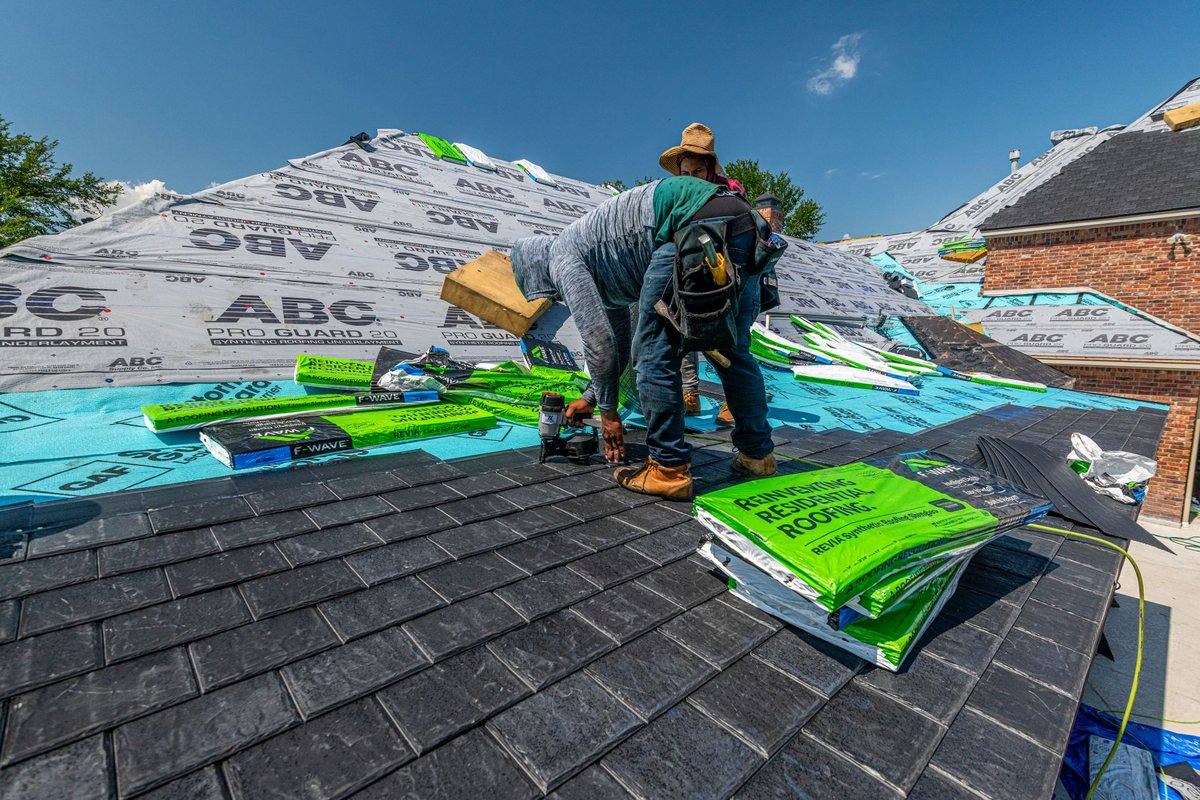
If you own a detached one- or two-family house in New Jersey, replacing the roof covering does not need a construction permit. The state's Uniform Construction Code lists it as ordinary maintenance, which needs no permit, no inspection and no notice to the town. That changes the moment the roof sheathing has to be replaced, the building is a townhouse or a condominium, or the work touches the structure. Those need a permit, and on an older house you often cannot tell which job you have until the old roof is off.
What follows is what the code says, where it says it, and what it means for a re-roof in Bergen County. It is general information about the state rules as they stand in September 2026, not legal advice: your town's construction office decides how they apply to a particular job.
What New Jersey's code says
The rule is in the state's administrative code at N.J.A.C. 5:23-2.7, the section on ordinary maintenance. It opens by saying that ordinary maintenance may be done without a permit application or any notice to the construction official. The list of building work that counts includes, word for word, “the repair or replacement of existing roof covering on detached one- and two-family dwellings.”
The state's Division of Codes and Standards, which writes and interprets the code, has spelled out the practical meaning in its newsletter for code officials. For an existing detached one- or two-family house, no permit is needed for the roof covering, and that includes garages, sheds and pool houses that go with the house. Stripping the roof down to the existing sheathing does not need one. Neither does putting a second layer over the first. In a 2025 issue the Division repeated the point for houses with solar panels: re-roofing is still ordinary maintenance, and the only permit that can come into it is an electrical one, if the panel rails are taken off and the grounding is disturbed.
The same section of the code also carries a limit that matters: ordinary maintenance never includes “any work affecting structural or fire safety.” That line is where most of the exceptions come from.
When a re-roof does need a permit
| The work | Permit? |
|---|---|
| Tear-off and new roof covering, down to the existing sheathing | No permit, no inspection, no notice |
| A second layer over one existing layer | No permit, but the code limits when it is allowed (below) |
| Replacing roof sheathing (plywood or boards) | Permit required, always |
| Rafters, framing or other structural repair | Permit required |
| Townhouse, condominium, apartment or commercial roof | Permit required |
| Removing and reinstalling rooftop solar | Electrical permit only, if the rails come off and grounding is disturbed |
| Gutters and leaders | No permit |
| Siding in wood, vinyl or aluminum | No permit; polypropylene, stucco, stone and brick need one |
| Windows and doors in the same opening | No permit, if the opening and framing are not altered |
| Deck boards, railings, stairs, joists or posts replaced in kind | No permit, if the deck holds up no roof; a new deck or a full rebuild needs one (see our deck permit guide) |
The one that catches homeowners out is the sheathing. The Division's own wording is that replacing sheathing “will always require a permit,” on a house where the rest of the job needs none.
The sheathing question on an older house
Much of Bergen County was built before plywood. A house from the first half of the last century usually has a roof deck of individual boards, and after several re-roofs some of them are split, soft, or so full of old nail holes that they no longer hold a fastener. Houses that once wore wood shingles may have boards laid with gaps between them, which suited a wood roof and does not suit asphalt or slate.
Nobody can see any of that from the ground or from the attic with the old roof still on. So the honest estimate for an older house has two parts: the re-roof, which needs no permit, and a per-sheet price for new sheathing if the deck turns out to need it, with a clear statement that sheathing work means a permit and an inspection. If a quote has no sheathing line at all, ask what happens when the boards come up soft. More on what the deck of an older house looks like is on our roof replacement page.
No permit does not mean no rules
Ordinary maintenance skips the paperwork, not the code. New Jersey's rehabilitation rules for existing houses apply the whole roofing chapter of the residential code to work like this (N.J.A.C. 5:23-6.8), and with no inspector coming, meeting it falls to the owner and the contractor. Two parts of that chapter matter most on a re-roof.
How many layers. The code does not allow a new roof over the old one when the existing roof already has two layers of any kind, when it is slate, clay, cement or asbestos-cement tile, or when it is water-soaked or deteriorated to the point that it is not a sound base. Over a single sound layer a layover is allowed, and needs no permit. We do not do them: a second layer hides the deck you are paying to have checked, holds heat against the new shingles, and makes the next replacement more expensive.
Ice barrier. This one surprises people. The model code calls for self-adhering ice-and-water membrane at the eaves, but New Jersey amended it to apply only where January's average daily temperature is 25°F or less, and the state says that means Sussex County. In Bergen County the membrane is not a code requirement. It is still the most useful few rolls on the job, because this county's houses get ice dams, so get it in writing: at the eaves to at least two feet inside the wall, in every valley, and around chimneys, skylights and walls. If the re-roof falls in the cold months, the season changes the method but not the paperwork; see replacing a roof in winter.
Townhouses, condominiums and associations
The roofing exemption is written for detached houses only. An attached townhouse, a condominium building, a garden apartment or a commercial property needs a roofing permit, even for the same shingles on the same deck. If there is an association, it will usually have its own approval process as well, which is separate from the construction code and sits alongside it, not in place of it. The larger low-slope roofs on those buildings are a different job again; see flat and low-slope roofs.
Separately, if your house is in a locally designated historic district, the town may want to review a change of roofing material or color through its historic preservation process. That is a local land-use approval, not a construction permit, and your town's zoning office can tell you whether it applies.
What to ask a roofer
- Their New Jersey registration number. Home improvement contractors in New Jersey must be registered with the Division of Consumer Affairs, and the number belongs on the contract. Ours is 13VH11045200.
- Tear-off or layover, and how many layers are on the roof now.
- What happens if the sheathing is bad: the per-sheet price, and who files the permit if sheathing is replaced.
- Ice-and-water membrane in writing: where it goes and how far up, since the code will not insist on it here.
- Who is responsible for code compliance on work that no inspector will see.
On a detached house the usual answer is that there is no permit to pull, and anyone who charges a “permit fee” for a straightforward re-roof should be able to tell you what it is for. When a job does need one, whether for new sheathing, a deck or a townhouse roof, we file it and book the inspection as part of the work. An addition is the other end of the scale, with zoning first and a full permit after it; that process is in our guide to addition permits. A free roof inspection will tell you which kind of job you have before anything is priced, and what a new roof costs here is in our roof replacement cost guide.
Sources
- N.J.A.C. 5:23-2.7, Ordinary maintenance, including (c)1x on roof covering (text).
- New Jersey Division of Codes and Standards, Construction Code Communicator, Fall 2019, “Ordinary Maintenance/Minor Work, Continued” (PDF), and Spring 2025, “Solar and Reroofing: Detached One- and Two-Family Dwellings” (PDF).
- N.J.A.C. 5:23-6.8(h)7, applying the residential roofing chapter to existing houses; 2021 International Residential Code, Section R908.3.1.1, roof recover not permitted.
- N.J.A.C. 5:23-3.21, amending Section R905.1.2, and Division of Codes and Standards Bulletin 07-3, Ice Dam Membrane/Ice Barrier, revised June 2015 (PDF).
Do I need a permit to replace my roof in New Jersey?
Not on a detached one- or two-family house. New Jersey's Uniform Construction Code lists the repair or replacement of existing roof covering on those houses as ordinary maintenance, which needs no permit, no inspection and no notice to the town. A permit is needed if the roof sheathing is replaced, for townhouse and condominium roofs, and for structural work.
Do I need a permit to replace roof sheathing?
Yes. The state's Division of Codes and Standards says replacing sheathing always requires a permit, even on a house where the rest of the re-roof needs none. On an older house nobody knows until the old roof is off, so a good estimate says what happens if the sheathing has to go.
Can I put new shingles over my old roof in New Jersey?
Sometimes. The code allows a new layer over a single existing layer, and that needs no permit on a detached house. It does not allow a new layer where there are already two layers, over slate, clay, cement or asbestos-cement tile, or over a roof that is water-soaked or deteriorated. We tear off anyway, because a layover hides the deck and shortens the life of the new roof.
Is ice and water shield required by code in New Jersey?
Only in Sussex County. New Jersey amended the residential code so an ice barrier is required where January's average daily temperature is 25°F or less, and the state says that is Sussex County. In Bergen County it is the roofer's choice, so ask for it in writing: at the eaves, in the valleys and around penetrations.
Does a townhouse or condominium roof need a permit?
Yes. The ordinary-maintenance exemption for roofing is written for detached one- and two-family houses, so an attached townhouse, a condominium or any other building needs a roofing permit. An association may have its own approval process as well, separate from the construction code.
Do I need a permit for new siding or gutters?
Gutters and leaders, no. Siding in wood, vinyl or aluminum on a one- or two-family house, no. Polypropylene siding, stucco, stone and brick do need a permit, and so does any framing repair that turns up behind the old siding.