Roofing & exteriors in Washington Township, NJ
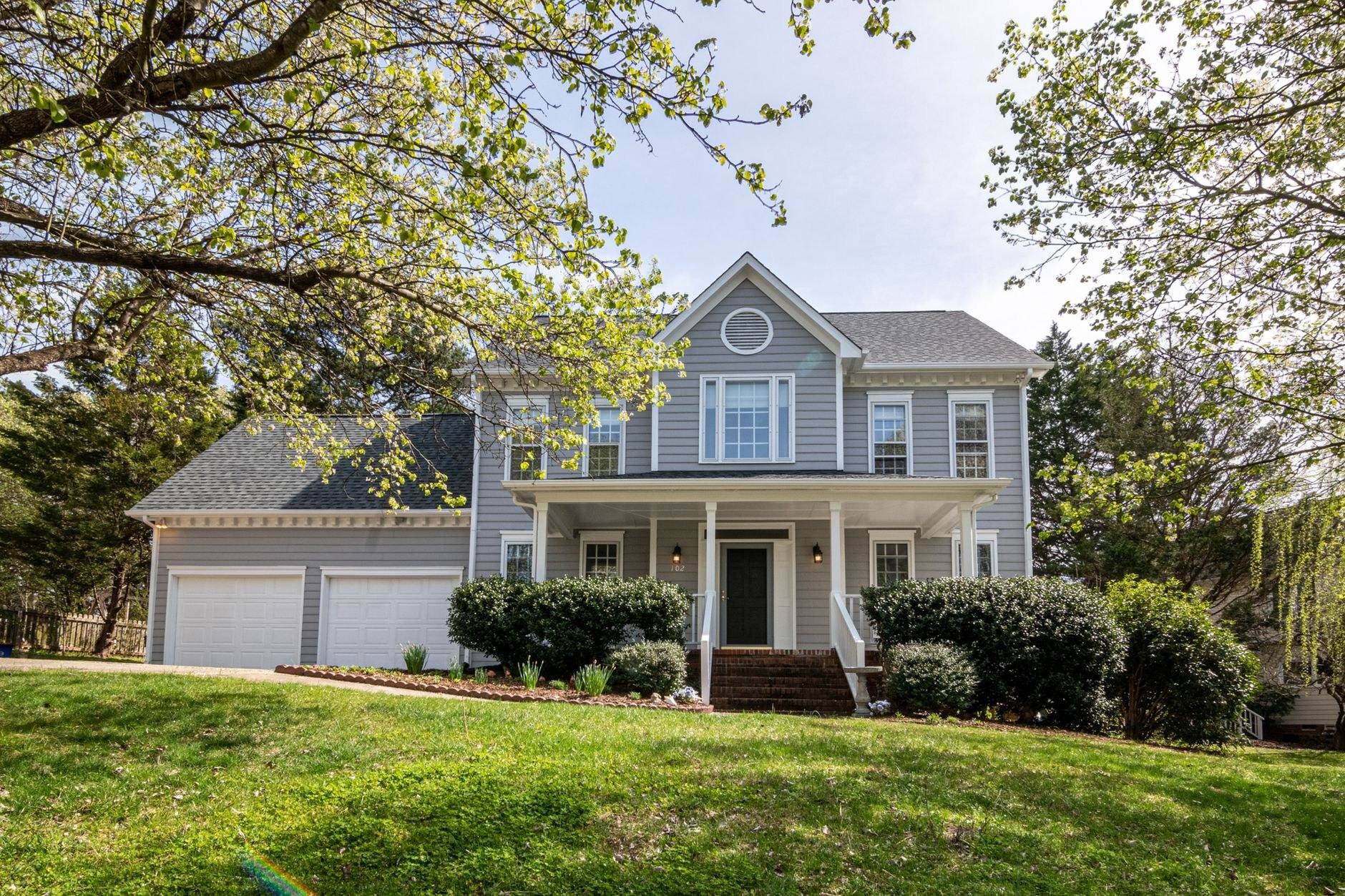
The Township of Washington never got a railroad station, so it stayed farmland while Westwood, Hillsdale and Emerson grew up around theirs. Most of its houses came after the Parkway did: split-levels, ranches, capes and center-hall colonials on quarter-to-half-acre lots between the Pascack and Musquapsink brooks. Those roofs are on their second or third shingle, and the low ground near the brooks makes every downspout a drainage decision.
Washington Township is 2.95 square miles and about 9,300 people at a mean elevation of about 89 feet, between the Pascack Brook on its Westwood side and the Musquapsink Brook, which runs toward the Oradell Reservoir. Officially the Township of Washington, incorporated in 1840, it was once the parent of eight of its neighbors. When the railroad came through the Pascack Valley after the Civil War, the stations went to Westwood, Hillsdale and Emerson; those boroughs broke away in 1894 and 1898, and the township kept the farms. Seven Chimneys, built between 1745 and 1750 and on the National Register, is what that era left behind.
For a roofer the consequence is housing that mostly arrived after the Garden State Parkway cut through in the mid-1950s: split-levels, ranches, capes and center-hall colonials. Houses of that vintage have shallow attics, long low eaves and barely any insulation, so heat leaves through the ceiling, snow melts on the upper slopes and the meltwater freezes again over the unheated overhang. A new roof that ignores the attic beneath it will do what the old one did.
The other consequence is groundwater. Between the two brooks and Schlegel Lake, inside the Oradell reservoir watershed, the low streets stay damp after rain, and a leader that dumps at the foundation wall is the usual cause of a wet basement. If the ceiling has stains, begin with roofing; if the basement is the complaint, begin with gutters.
Where Washington Township houses fail first
Three roof planes on one house
A split-level's upper gable sheds onto the roof below it, and snow off the high slope piles against the wall at the low one, where the pitch is shallowest and the room behind is a heated half-story. That corner is where the leaks start. We run ice-and-water membrane the full length of that lower roof, vent the half-story, and fit a diverter where the upper eave dumps onto it.
Ranch hip roofs with almost no ridge
A hip roof has a few feet of ridge and a long run of eave, so a ridge vent alone moves little air, and a 1960s ranch usually has no intake at all. A warm attic in winter is what builds the dam. We work out the net free area the attic needs, cut baffled soffit intake in every rafter bay, and match it at the top.
Where the leaders go, on brook-side lots
Nearest the Musquapsink, the Pascack and Schlegel Lake the water table is high, so a downspout that stops at a splash block sends the roof straight to the footing. Where the grade allows, we bury the leader in solid pipe and carry it to daylight downhill of the house; where it does not, a dry well sized for the roof it serves. See gutters.
Aluminum siding that has done its time
Aluminum went over the original clapboard on many of these houses in the 1960s and 70s, often on a foil-faced backer and no housewrap. It chalks, it dents, and the backer holds water against the sheathing at every window head. We do not add a third layer: we strip both, open one window head to read the wall, and quote siding on new wrap with taped openings.
What goes on a Washington Township house
Shingle roofs, ventilated from the deck up
Tear-off to the sheathing, soft boards replaced, an ice barrier reaching two feet inside the warm wall, synthetic underlayment, and an architectural shingle with a published wind rating. Venting is in the roof price, not an extra. Roofing →
Membrane where the pitch is under 3:12
The garage and rear wings on a split or a ranch rarely reach the pitch shingle needs. There we install a fully adhered single-ply membrane, carried up under the shingle course above so the transition is lapped, not caulked. Low-slope roofing →
Fiber cement or vinyl on a rebuilt wall
New housewrap, flashing tape at every opening, head flashing over each window and door, and a kick-out where a roof edge dies into a wall, before any cladding goes on. On the scattered farmhouses, sound wood clapboard stays. Siding →
Gutters routed, windows fitted, ledgers bolted
Seamless aluminum in the width the roof area calls for; replacement windows and doors set into the existing opening and taped to the wrap; decks whose ledger is through-bolted and flashed before a board goes down. Gutters →
Eight towns on one brook, and the water always wins.
The Pascack Valley towns share a brook, a chain of reservoirs and a rail line that made some of them boroughs while the others were still farming. The station towns carry older frame houses; the ones the railroad missed filled in after the war. Both sit on ground where roof water has to be routed, not just shed.
Neighborhoods and streets we work in Washington Township
ZIP code served: 07676.
- Pascack Road — the north–south spine and commercial strip, with the Washington Town Center at its center and post-war houses on the side streets behind it
- Washington Avenue — the east–west road across the township, the same post-war stock on either side
- Ridgewood Road — the route out toward Ridgewood and Ho-Ho-Kus
- Hudson Avenue — the streets around the municipal building at number 350
- Along the Musquapsink Brook and Schlegel Lake — the low ground where downspout routing and grading decide whether a basement stays dry
- The Pascack Brook side toward Westwood — the shared eastern boundary near Westwood Regional High School
- Around Seven Chimneys and the older farmhouses — the scattered pre-war survivors of the farming era, where original wood windows are usually worth restoring
Washington Township response, anywhere in 07676. Call (201) 446-5941 or request a free written estimate online.
Adjacent Bergen towns
Does Johannemann & Sons serve Washington Township, NJ?
Yes — the whole Township of Washington, ZIP 07676: the side streets off Pascack Road and Washington Avenue, the low lots along the Musquapsink Brook and Schlegel Lake, and out along Ridgewood Road toward Ho-Ho-Kus. Roof replacement and repair, low-slope membranes, siding, windows and doors, gutters and decks, all run from our Edgewater base. You get a written estimate with photographs, and each material in it is named by brand and grade.
Why does my split-level in Washington Township leak where the garage roof meets the house?
Because three things meet there and none of them was designed for the others. The upper roof drains onto the lower one, the lower one is usually pitched too shallow for shingle, and the heated half-story behind that wall keeps the corner warm enough to melt snow that refreezes at the edge. Caulk buys a season. The lasting fix is a membrane rated for the low pitch across the whole wing, an ice barrier under it, a counter-flashing let into the siding above, and venting the half-story so the ice stops forming.
My lot backs onto the brook. Does that change how the gutters should be done?
Mostly it changes where the leaders end. Ground near the Musquapsink and Pascack brooks holds water, so a downspout that stops at a splash block beside the foundation puts the whole roof into the basement wall. We extend each leader in solid pipe to daylight on the downhill side, or into a dry well sized for the roof it drains, and we look at the grading against the house while we are there. Gutter width follows the roof area; on a large ranch roof that means 6-inch.
Do I need a permit to replace a roof or siding in Washington Township?
For a straight replacement of roof covering or siding on a one- or two-family house, where nothing structural changes, New Jersey's code treats the work as ordinary maintenance and no permit is required. A permit is required as soon as framing is altered, a window opening grows or a deck is built; those go through the township's construction office at the municipal building, 350 Hudson Avenue. We check the classification with the office before the job is scheduled and file the application ourselves when one is needed.
Roofing for the homes of Washington Township, NJ.
Photographs, every material named by brand and grade, and a fixed price, in writing and free, from an exterior crew covering the Pascack Valley from Edgewater.