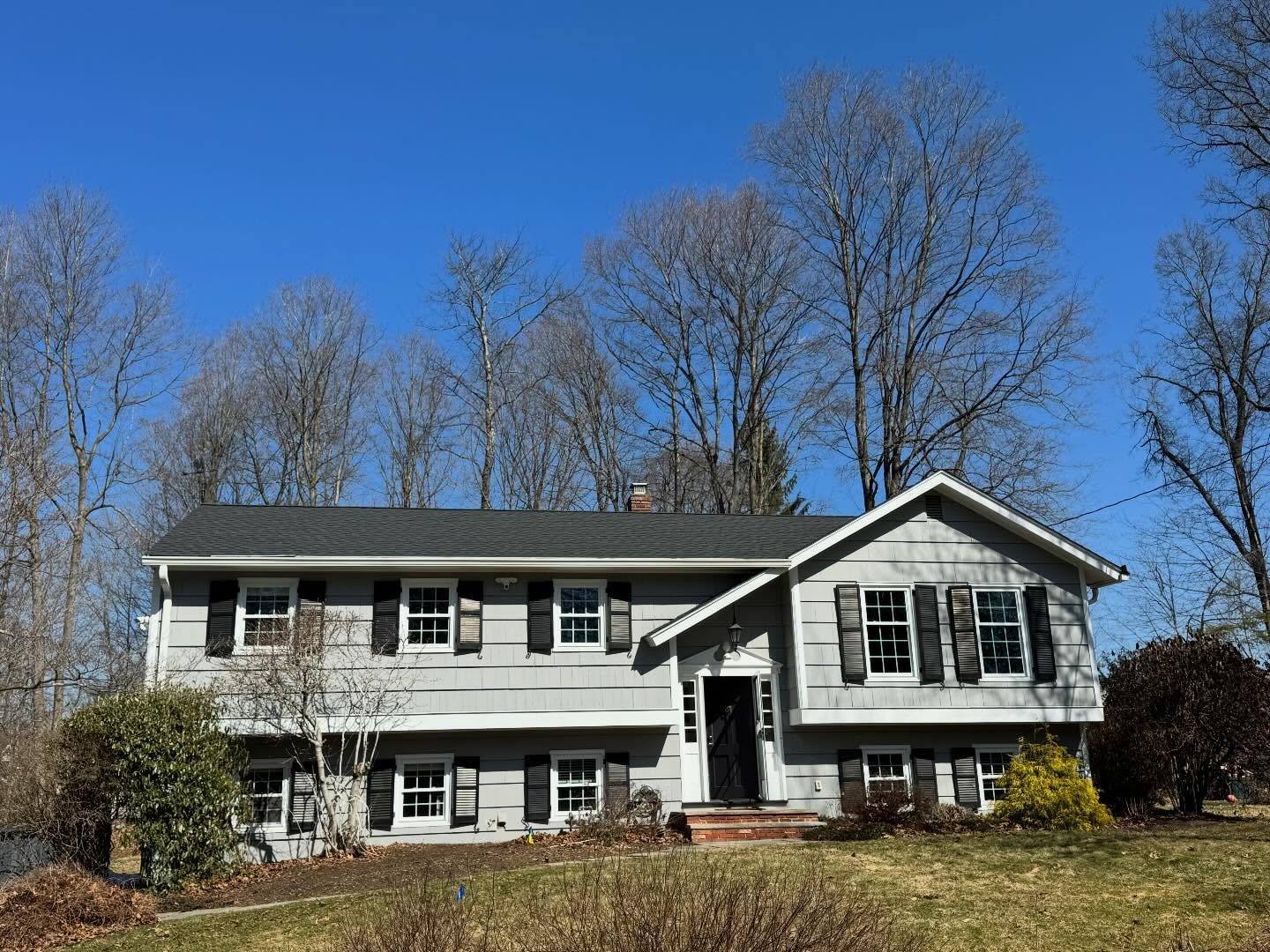
New Milford is a small, low-lying borough on the east bank of the Hackensack River, about 30 feet above sea level, with nearly 17,000 people on a little over two square miles of land. That means houses close together, roofs replaced more than once since the borough was incorporated in 1922, and gutters that have to put water somewhere on ground the river has reached.
In detail
The Hackensack sets the terms here. It forms the borough's whole western edge, facing River Edge and Oradell, with Bergenfield and Dumont to the east and Teaneck to the south. New Milford shares the historic New Bridge Landing crossing with River Edge and Teaneck, and its named sections — New Bridge, Old Bridge and Peetzburgh — go back to the river settlement that came before the borough did. When Hurricane Irene came through on August 28, 2011, the river crested at 11.84 feet, the second-highest level on record, in a town that sits only about 30 feet above sea level.
The borough was incorporated on March 11, 1922, from what remained of Palisades Township, and it is fully built out: roughly 7,400 people per square mile of land and no new lots to open. What a homeowner here owns is, in the main, a twentieth-century house on a small lot, and a house of that age has had its roof replaced at least once, often over the one before. Siding is often aluminum or vinyl laid decades ago over the original wood. Gutters are the five-inch stock size and drop water beside a foundation on flat ground that does not carry it away.
We replace and repair roofs, reside, replace and restore windows and doors, hang and resize gutters, and build decks across the borough. Every estimate comes with photographs and named materials. Start with roofing or call (201) 446-5941.
What is different here
Four things a New Milford roof has to deal with
Thirty feet above sea level
On ground this flat and this near the river, where the water goes after the gutter matters as much as the roof itself. We size gutters to the roof area, extend downspouts to the street, a dry well or daylight rather than a splash block at the foundation. See gutters.
Nearly 17,000 people on 2.28 square miles
Houses this close together decide where the dumpster goes, where tear-off lands, how we protect the siding next door and how we flash the wall where a lower roof meets a taller one. We plan the staging on the estimate visit.
Roofs laid over roofs
A house standing since the borough was young has usually been reroofed more than once, sometimes without a tear-off. Before we quote we find out how many layers are up and what the deck looks like. Where two are up we strip to the deck: the code caps it there, and a third layer hides the rot that caused the leak.
Walls that have seen high water
Where the river has reached a yard, the bottom courses of siding and the sheathing behind them have been wet from the outside in. We open the wall at grade, replace what is soft, wrap and flash it, and close it with fiber cement or insulated vinyl that can take a wetting. More under siding.
Architectural shingle with ice-and-water membrane at the eaves and valleys, synthetic underlayment over an inspected deck, and new step flashing at every wall and chimney. Leaks get traced to the source, not patched at the stain — see where roof leaks actually start.
Six-inch seamless aluminum where a five-inch trough overflows, downspouts routed to the street, a dry well or daylight, hangers set for the load. The downspout's last three feet decide whether the basement stays dry.
Fiber cement or insulated vinyl over a stripped, wrapped and flashed wall, and window replacement that keeps the full original opening (what that costs in Bergen County). Decks get a ledger bolted through the rim and flashed.
Central Bergen
Flat ground, tight lots, and water that has to be sent somewhere.
The towns of central Bergen sit low along the Hackensack, the Saddle and the Passaic, and their houses stand a driveway apart. The work here is rarely steep slate. It is getting a shingle roof right the second or third time, replacing cladding laid over the original wood, and giving gutters somewhere to discharge on ground that does not drain itself.
Yes — all of 07646, the borough on the east bank of the Hackensack River, with River Edge and Oradell across the water, Bergenfield and Dumont to the east and Teaneck to the south. We replace and repair roofs, reside, replace and restore windows and doors, hang gutters and build decks on the borough's closely spaced houses. We work across Bergen County from our Edgewater base.
My house is on low ground near the Hackensack. What should a roofer do differently?
Get the water off the house and away from it. The borough sits about 30 feet above sea level and the river crested at 11.84 feet during Hurricane Irene in 2011. A downspout that drops onto a splash block beside the foundation is not enough here. We size gutters to the roof area, run downspouts to the street, a dry well or daylight. If water has ever reached the bottom courses of your siding, we open the wall there and check the sheathing before we close it up again.
Do I need a permit for a new roof, new siding or a deck in New Milford?
The borough's construction office decides, and it depends on the scope. Like-for-like reroofing and residing usually count as ordinary maintenance under the New Jersey Uniform Construction Code; structural work such as replacing rotted rafters or sheathing needs a permit and inspections, and so does a new or completely rebuilt deck; repairing part of an existing deck in kind does not. Because the borough lies along the Hackensack, we also ask whether the property sits in a mapped flood hazard area, which can bring extra requirements. We confirm with the borough before we start and file the paperwork ourselves.
Free assessment
Roofing for the homes of New Milford, NJ.
A free written estimate with photographs and named materials, from a Bergen County exterior crew based in Edgewater.