Roofing & exteriors in Park Ridge, NJ
Park Ridge is a Pascack Valley borough, a rail-commuter village since the late 1800s. It has a station core along Park Avenue and Kinderkamack Road, five Dutch-era farm buildings on the National Register, and mostly postwar capes, splits and colonials around them. That means asphalt roofs on their second or third cycle, aluminum over original clapboard, 5-inch gutters under maturing trees, and a few steep old roofs that deserve slate or metal.
The borough takes its name from its location, and it is small: 2.63 square miles, 8,883 people at the 2020 census, almost no water beyond Mill Pond and Electric Lake. Kinderkamack Road, County Route 503 and once a Lenape trail, runs north to south. The Pascack Valley Line cuts the borough in two, with the National Register station at Park and Hawthorne Avenues and borough hall at 53 Park Avenue.
This was Dutch farmland in the 1700s, and the Frederick Wortendyke House, the Wortendyke Barn and three more farmhouses survive from it. From 1835 to 1866 the Campbell brothers ran a wampum manufactory here that supplied John Jacob Astor's fur trade. The borough incorporated on May 15, 1894, by which time the railroad had already made it a commuter village, with the late-1800s houses along Park Avenue to show for it.
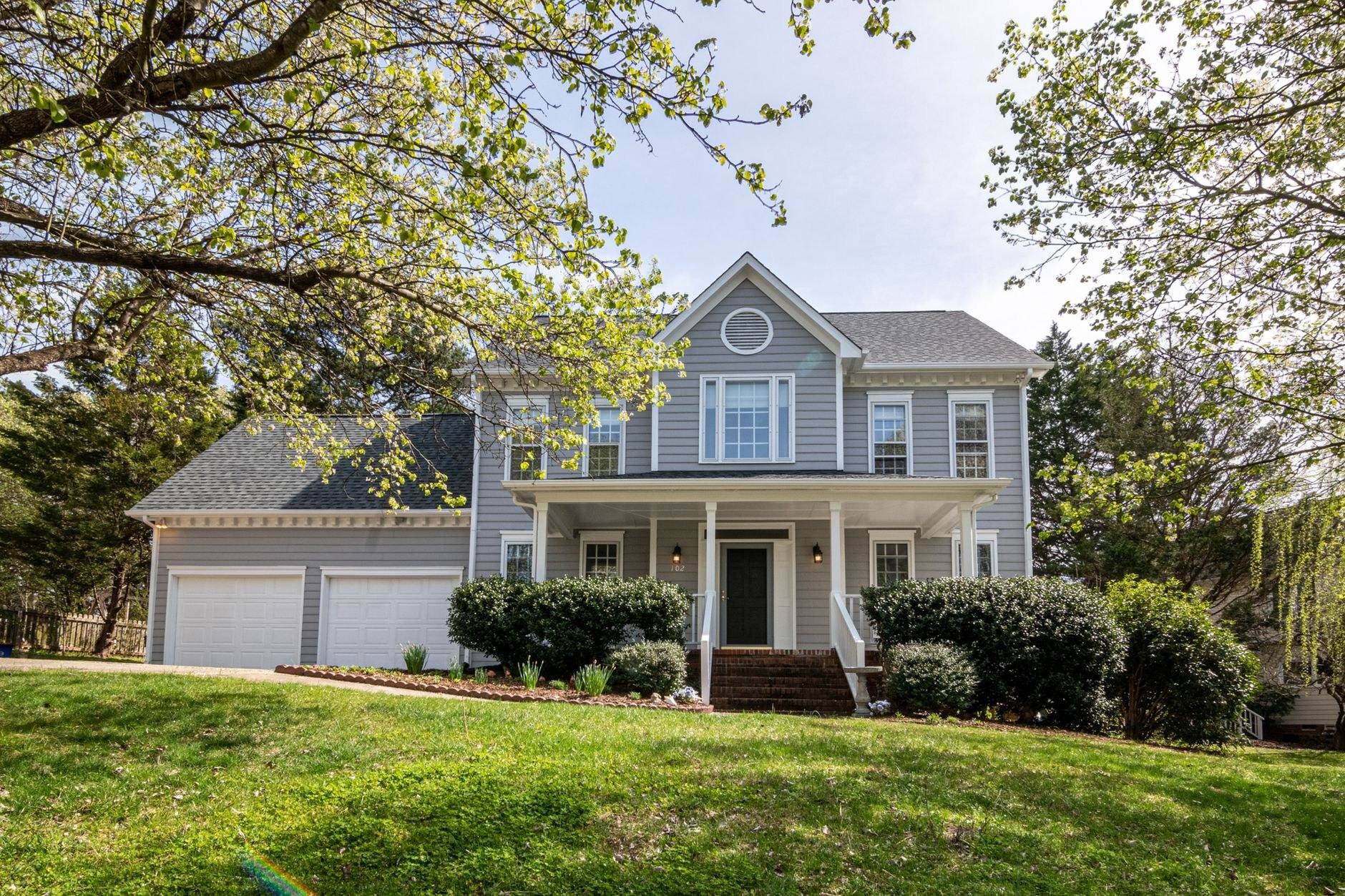
Most of the housing came in the 1950s-to-1970s buildout of the Pascack Valley: capes, split-levels, ranches and colonials on quarter- to half-acre lots, joined since by custom and subdivision colonials. Those are houses on their second or third asphalt roof, with original 5-inch gutters and aluminum or vinyl over the first clapboard. The village core and the farmhouses ask for something else: steep old framing, sandstone and wood walls, roofs where slate, cedar or standing seam belong. Start with roofing, or read how long a roof lasts in New Jersey.
Four Park Ridge conditions that set the scope
A village core as old as the borough
The houses around the station have steep gables, wood clapboard, original sash and roofs re-covered more than once. We count the layers before quoting, restore sound sash rather than replace it, and put slate-profile shingle or standing seam on the steep faces.
Postwar roofs at the end of a second cycle
A 1950s cape or split has usually been re-roofed once, over the first layer. Code allows two, so the next job is a full tear-off: soft sheathing replaced, ice-and-water membrane at eaves and valleys, soffit intake balanced with ridge venting these attics never had.
Ridge above, low ground below
The name says it: the land rises and falls, and rain that sheds off a house on the high ground collects at the foot of the lot below, toward Mill Pond and the valley floor. On low lots we run leaders to daylight or a drain; on exposed ground we specify wind-rated shingles. Gutters →
Dutch-era farmhouses that want in-kind work
A sandstone or frame farmhouse from the 1700s is a different job: cedar shingle or wood clapboard walls, hand-hewn rafters checked before they take a new load, eaves where only a half-round gutter looks correct. We match what is there. Siding →
What we install on Park Ridge houses
Architectural shingle, to the deck
For the postwar streets: full tear-off, sheathing repair, synthetic underlayment, ice-and-water at eaves and valleys, a shingle with a real wind rating. Roofing →
Slate, cedar and standing seam on the old core
For the station-era houses and farmhouses: natural or slate-profile roofing on steep faces, cedar where it was original, standing seam on low runs. Restore or replace slate →
Siding and windows as one envelope
Under the aluminum on a 1950s cape is the first clapboard, usually with no housewrap. We strip to sheathing, add a drainage plane, and plan window replacement with the siding. Siding →
Small boroughs, old trees, the same low ground.
The Pascack Valley is a run of small boroughs along one rail line and one brook, incorporated within a few years of each other and built out in the same postwar decades. The houses repeat from town to town, and so do their failures: gutters undersized for seventy-year-old trees, shallow roofs on split-level wings, attics never vented.
Neighborhoods and streets we work in Park Ridge
ZIP code served: 07656.
- Park Avenue and the station. The late-1800s village core, borough hall and the National Register station at Hawthorne Avenue.
- Kinderkamack Road. County Route 503 and the postwar capes and splits on the streets off it.
- Both sides of the Pascack Valley Line. The 1950s-to-1970s colonials, ranches and splits that make up most of the borough.
- Mill Pond and Electric Lake. The low ground around the borough's two named waters, where drainage sets the scope.
- Around the Wortendyke Barn and the National Register farmhouses. The borough's oldest houses, Dutch-era sandstone and frame, where materials go back in kind.
- Memorial Field and Davies Field. The streets around the recreation fields and the East Brook and West Ridge schools.
Park Ridge response, anywhere in 07656. Call (201) 446-5941 or request a free written estimate online.
Adjacent Bergen towns
Does Johannemann & Sons serve Park Ridge, NJ?
Yes — all of Park Ridge, ZIP 07656, from the station core at Park and Hawthorne Avenues and the length of Kinderkamack Road to the postwar streets on both sides of the rail line. We work across the county from our Edgewater base and handle the full exterior: roof repair and replacement, siding, windows and doors, gutters and decks. Every estimate is written, photographed and priced by named material.
My split-level has a low-slope section over the garage that leaks every spring. Do I just need new shingles there?
Usually not. Shingles need pitch to shed water, and the shallow wing on a split-level often has less than they are rated for, so meltwater sits and backs up under the laps. We treat that section as its own roof: a single-ply membrane lapped under the shingle field above, and new step flashing where it meets the higher wall. We also check the attic venting behind it, since a warm attic melts the snow that refreezes at the joint.
Do I need a permit in Park Ridge for a roof, siding or deck project?
It depends on the work. Replacing roofing or siding in kind on a one- or two-family house is ordinary maintenance under New Jersey's construction code and needs no permit. A new or rebuilt deck, an enlarged window opening, or structural work to the roof framing does, filed with the borough, whose offices are at 53 Park Avenue. Where a permit is required we prepare and file it, schedule the inspections and hand you the closed permit.
Roofing for the homes of Park Ridge, NJ.
A free written estimate with photographs and every material named, from a Bergen County exterior crew working the Pascack Valley from its Edgewater base.