Northern Valley & the Palisades · Bergen County · 07641
Roofing & exteriors in Haworth, NJ
Haworth is a small Northern Valley borough where nearly a fifth of the ground is water. The Oradell Reservoir lies along its western edge and two golf courses take much of the rest. About 1,150 houses fill the grid between Schraalenburgh Road and the shoreline — the oldest around the 1872 station, the rest built through the twentieth century. Low, wooded and quiet: long roof lives, hard-working gutters.
In detail
Haworth sits low — about 39 feet above sea level — between Schraalenburgh Road (County Route 39) on the east and the reservoir shoreline on the west, with the former Northern Railroad line through the middle. Seventeen percent of the borough's 2.34 square miles is water: the Oradell Reservoir is the Hackensack River impounded, mostly in Oradell but spilling across Haworth's western edge. Water leaving a roof here has a short drop and a slow way out.
The houses come in three generations. Dutch colonial farmers settled the land in the early 19th century, and a half-dozen of their stone farmhouses still stand. The railroad arrived in 1872 and the station took its name from the Bronte sisters' English hometown. The Haworth Land Improvement Company began building in 1888, so the streets around the station and the modest downtown date from the 1890s to the 1910s. Growth after incorporation in 1904 was gradual; the single-family homes filling the rest of the grid are later twentieth-century work.
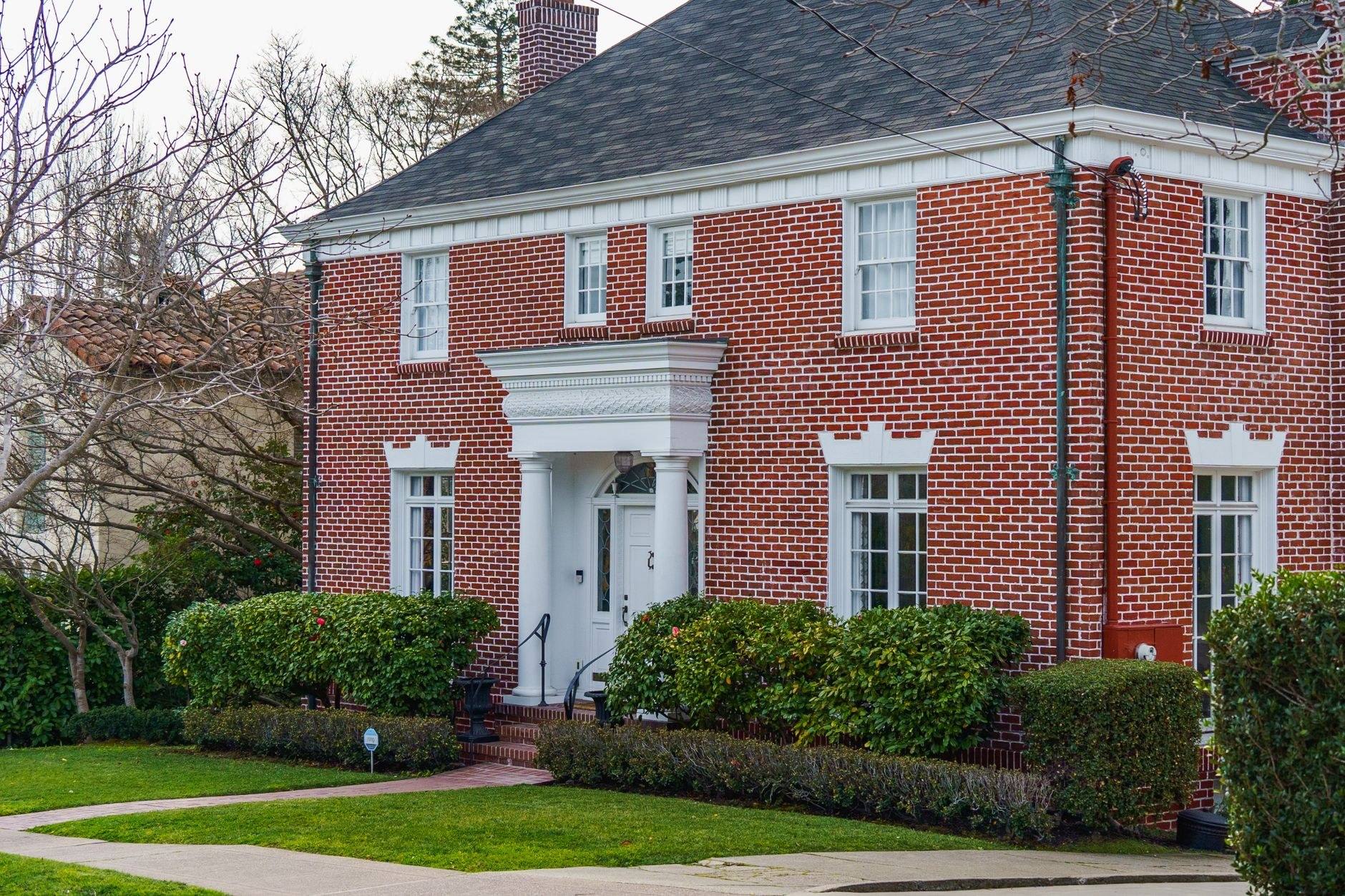
Each generation fails in its own way. A stone farmhouse has masonry walls that later roofs were flashed against badly. A railroad-era house typically has steep pitches, dormers and valleys, original slate or cedar under later asphalt, and wood sash worth saving. A later colonial or split has a lower pitch, 5-inch gutters never sized for its roof, and an attic insulated but not ventilated. What they share is the canopy: leaves in the gutters every fall, moss on north slopes, ice dams at cold eaves. We inspect the roof first and read the gutters and trees as one system.
Conditions
What is different about exterior work in Haworth
Low ground beside a reservoir
At 39 feet of elevation with the Oradell Reservoir on the west edge, the streets nearest the water drain slowly, and a downspout ending at the foundation is a wet basement waiting to happen. We route discharge clear of the house and check the FEMA flood map before writing a gutter scope.
Canopy from two golf courses and a shoreline
White Beeches, Haworth Country Club and the Oradell Reservoir Trail wrap the borough in mature trees. Gutters fill by November, valleys hold wet leaves, shaded slopes grow moss. We fit guards where they earn their keep.
Three eras on one small grid
Stone farmhouses, railroad-era houses and later single-family homes sit within blocks of each other; the right roof differs for each. We match the material to the house — slate and copper where it was, architectural shingle where the framing calls for it — and say why.
Original wood sash near the station
The oldest streets still carry wood double-hung windows with true divided lights. Most can be restored, weatherstripped and paired with storm panels for far less than a full replacement. Where a sash is past saving we match the profile.
Slate repair and copper flashing on the railroad-era houses, cedar shake where the original was wood. Architectural shingle with ridge and soffit ventilation on the later colonials. Leak repair and inspections on all of them.
Six-inch seamless aluminum on steep, deep-eaved roofs; copper where it suits a farmhouse or an older street. Oversized outlets, guards under heavy canopy, downspouts that discharge well away from the house.
Sash restoration and storm panels on the pre-1920 houses; insert or full-frame replacement on the later stock, with the choice explained. Entry doors sealed against damp air off the reservoir.
Fiber cement or cedar clapboard over tired aluminum, housewrap and flashing in the right order. Composite or wood decks on reservoir-facing lots, the ledger flashed so the frame stays dry.
Northern Valley & the Palisades
Old trees, old roofs and a valley that holds water.
The Northern Valley runs from the Palisades ridge down to the Hackensack's floodplain, and its towns share mature canopy, pre-war housing and a habit of slate, cedar and copper. On the ridge the work is wind and freeze-thaw; on the valley floor it is drainage. Roof, gutters and ground get specified together.
Around the old railroad station, the one-lane railroad bridge and the downtown — the 1890s–1910s railroad-suburb houses, the borough's oldest: steep roofs, dormers, wood sash.
Schraalenburgh Road (County Route 39) and the blocks off it — the main north-south road, houses of every era along it.
Sunset Avenue — the other main through-road, single-family blocks on both sides.
The reservoir edge and the Oradell Reservoir Trail — the low lots along the water, where downspout discharge and grading decide whether a basement stays dry.
White Beeches and Haworth Country Club — houses backing onto the fairways, under mature tree cover.
Yes — every street in 07641, from the railroad-suburb blocks around the old station and the modest downtown to the low lots along the Oradell Reservoir and the houses off Schraalenburgh Road. We handle roofing, siding, windows and doors, gutters and decks across the county from our Edgewater base, and every estimate is written, photographed and priced by material before any work starts.
Does living near the Oradell Reservoir change what my gutters need to do?
It changes where the water has to go. Haworth sits about 39 feet above sea level and 17 percent of the borough is water. On the streets nearest the reservoir the ground drains slowly, and a downspout that ends at the foundation keeps a basement damp. We size gutters to the roof area and place outlets where the pitch wants them. Downspouts run to extensions or drain lines that carry water clear of the house, and we check the lot on the FEMA flood map before writing the scope.
Should a Haworth railroad-era house keep its slate or switch to shingle?
Usually keep it. Houses of the 1890s–1910s were commonly roofed in slate or cedar. A slate field that has lost a few pieces is a repair, not a replacement — the slate itself can outlast two asphalt roofs. What fails first is the flashing at chimneys, valleys and dormers, which we rebuild in copper. We recommend a change of material only when the deck or most of the slates are gone, and we show you the photographs that led to that call.
Free assessment
Roofing for the homes of Haworth, NJ.
A free written estimate with photographs, named materials and a fixed scope, from a Bergen County exterior crew based in Edgewater.