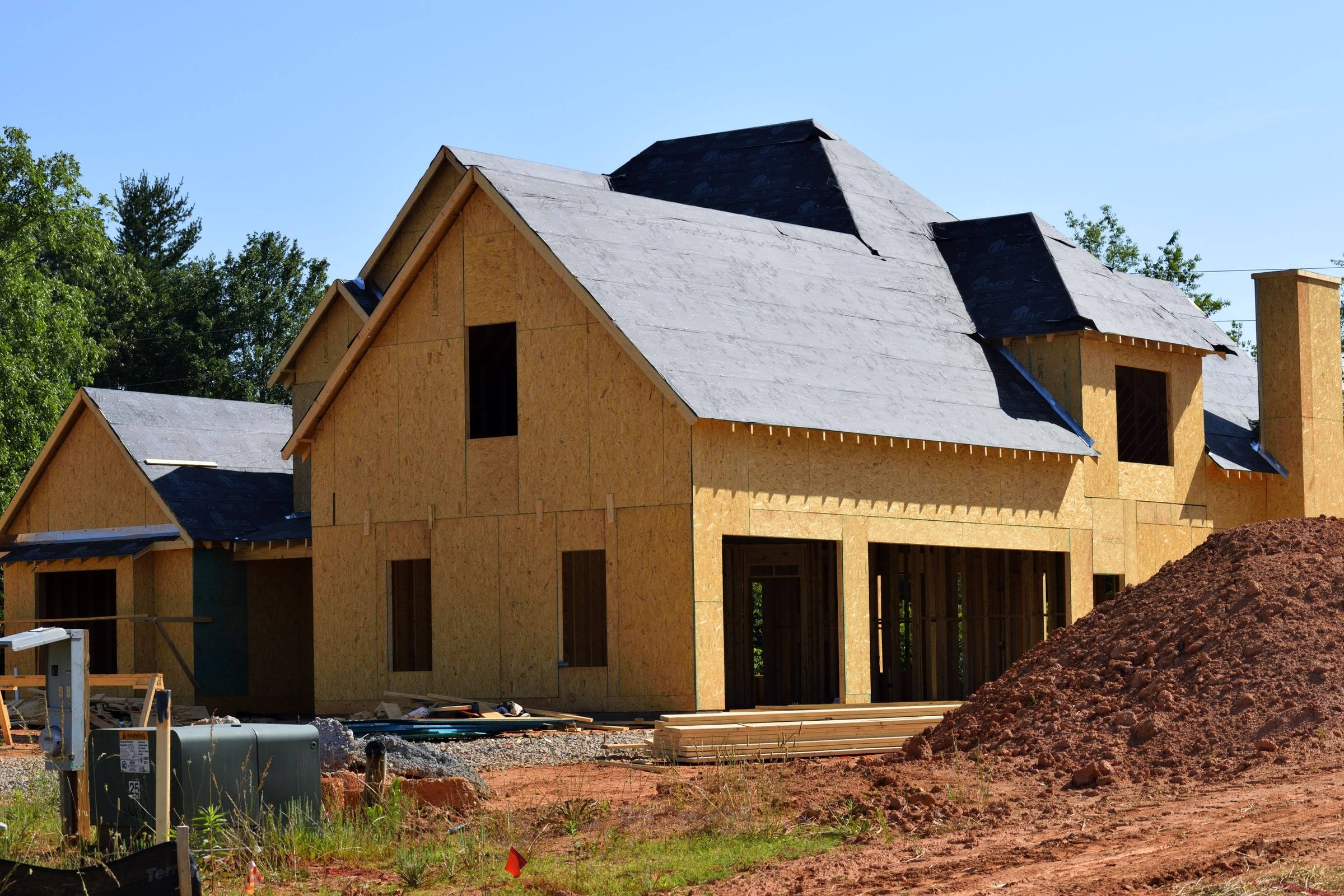
Tearing Down a House and Building New in Bergen County: What Comes First
A teardown is two projects: a demolition with its own permit, then a new house with its own approvals. The order matters, because once the old house is gone, so is any right it had to sit where it sat.
Sometimes the lot is worth keeping and the house is not. It may be too small to add to, too tired to fix, or laid out in a way no renovation will solve. Taking it down and building new is a real option, but the first step can close off choices you had before it started, so it pays to know what comes first.
This article sets out what New Jersey requires, what Bergen County towns add to it, and where the surprises are. It is general information as of November 2026, not legal advice. Your zoning officer and your construction official decide how the rules apply to your lot.
The order of work
Towns differ on the details, but a teardown and rebuild usually runs like this:
- Survey and zoning. Find out exactly what you can build on the lot before anything else.
- Design, and any variance. Get the drawings done and the zoning relief granted while the old house is still standing.
- Site checks. Asbestos, wells, oil tanks, and how much land the work will disturb.
- Soil certification, if the disturbance is over 5,000 square feet.
- Utilities out. Each one is disconnected, and sewer and water are capped.
- Demolition permit. Notices go to the neighbors, and the house comes down.
- Construction permit for the new house, then the inspections as it goes up.
- Warranty and certificate of occupancy. You cannot move in without both.
Tear down, or add on?
Start by asking what you would be keeping. A sound foundation, a layout that mostly works and a house that fits its lot are all worth keeping, and an addition or a second story keeps them. A teardown starts to make sense when too little of that is left: the foundation needs major work, every system needs replacing, and the plan cannot be fixed without rebuilding most of the house anyway.
Zoning can cut either way. An addition to an older house can need a variance because of where the house already sits. A new house starts clean, but it has to meet today’s rules in full, which can mean a different footprint from the one you took down. Check both options against your zone before you decide.
Zoning first: the old house loses its protection
Many older houses sit closer to a property line than today’s ordinance allows. That is usually legal: the law calls it a nonconforming structure. Under N.J.S.A. 40:55D-68 it may stay, and it may be restored or repaired after partial destruction. But that protection belongs to the structure that is there. Take the house down by choice, and the new one has to meet the current setbacks, height and coverage, or get a variance.
This can also happen by accident. In Motley v. Seaside Park (2013), an owner took a nonconforming building down to its foundation and footings, going beyond his permit. New Jersey’s Appellate Division held that this was more than partial destruction, and that he could not rebuild without a variance. If you plan a big renovation that keeps only part of a house, ask the zoning officer what has to stay standing before anyone starts.
So settle these before the demolition:
- The survey. You need a current one, showing where the house and the lot lines actually are.
- The limits. Setbacks, coverage, height and any floor area cap, from the page of the ordinance for your zone. If the lot is smaller or narrower than the zone now requires, ask whether that alone calls for a variance.
- Any variance. Apply while the old house still stands. Our guide to New Jersey addition rules explains the process and its deadlines, which work the same way for a new house.
- Historic status. If the house is a designated landmark or sits in a historic district, ask first. Towns with a preservation ordinance, such as Ridgewood, can have a say in what happens to it.
The demolition section of the state code does not make you get a permit for the new house first. Oradell’s checklist even covers the lot left empty when no building permit has been issued: it has to be graded and seeded. Getting the order right is up to you.
What the demolition permit needs
The state code makes it unlawful to demolish a structure without a permit, and one section of it, N.J.A.C. 5:23-2.17, sets out what has to happen first. Towns add to that. The table combines the state rule with the published checklists of two Bergen boroughs, Harrington Park and Oradell. Your own town’s list may differ, so ask the building department for it.
| Item | What you hand in |
|---|---|
| Required by the state, in every town | |
| Utilities | A release from every utility that served the house, saying its connections and meters are removed or safely sealed |
| Abandoned well | A licensed well driller’s certification that it has been sealed |
| Neighbors | Written notice to the owners of adjoining lots |
| Asbestos | Documentation that the federal asbestos rule is met, and notice that friable material has been or will be abated first |
| Site plan | A plan showing what comes down and what stays |
| Soil | Soil Conservation District certification, if the work disturbs more than 5,000 square feet |
| Added by Harrington Park, Oradell or both | |
| Sewer | Both: a plumbing permit and inspection for the cap |
| Rodents | Both: an exterminator’s letter or certification |
| Fire department | Both: contact the department before work starts. In Oradell, the fire and police departments may want to train in the house |
| Oil tank | Oradell: a professional’s statement. An existing tank comes out first, under its own permit |
| Trees | Harrington Park: a tree removal application, if trees come out for the demolition |
Three lines on that list tend to set the pace:
- Utilities. The permit waits until every release is in, and each one depends on that utility doing its part.
- Sewer. In Harrington Park, the plumbing permit for the sewer cap has to be issued, inspected and closed out before you can apply for the demolition permit at all.
- Asbestos. The permit cannot be issued until the owner or agent tells the town that all friable asbestos, and any material that will become friable during demolition, has been or will be properly abated first. Older pipe insulation, floor tile and siding can all contain it, so have the house surveyed early.
The soil certification people miss
A single new house on an existing lot is often outside New Jersey’s soil erosion law. A teardown is different, and this catches owners out. The law covers any disturbance of more than 5,000 square feet of land for the demolition of one or more structures, and the state’s rules apply that to demolition plus any associated new work, including building one single-family house.
The state’s 2026 manual uses this exact case. Demolishing a building to make way for a single-family home needs certification for both the demolition and the construction that follows, until the home is finished and a Report of Compliance is issued. In this county the certification comes from the Bergen County Soil Conservation District, and it has to be in hand before the project starts.
Five thousand square feet is less than it sounds. It is under half of a quarter-acre lot, and it counts all the land needed to do the work, not just the footprint of the house. Have your engineer measure it, and do not assume you are under the line. Harrington Park asks for the district’s approval or waiver letter with the demolition application.
Neighbors, trees and the empty lot
On a close-set Bergen County street, the house next door is part of the job. The state code says owners doing demolition or construction must protect adjoining properties and public rights of way from damage. If that means going onto a neighbor’s land, you ask in writing, and if the neighbor refuses access, the work does not proceed unless a court grants it. The protective measures go in with the permit application. Talk to the neighbors early, and before the written notice arrives.
Trees are local. Harrington Park wants a tree application if trees come out for the demolition, and other towns have their own rules: our page on additions in Franklin Lakes gives one example.
Once the house is down, the lot is still your responsibility. The state code requires it to be kept free of hazards, with the grades restored and any retaining walls and fences put up. Oradell’s list goes further: dust controls, a temporary fence around the site, an inspection before the hole is filled, and clean, certified compactable fill.
Building the new house
From here the job follows the same path as any new house, built to New Jersey’s 2024 codes unless a complete application goes in by February 17, 2027. The permit application has to state that the local, county and state approvals have been given, the plans have to be sealed by an architect or engineer, and the construction official has 20 business days to act on a complete application.
Inspections follow the work: footings, then foundations before they are backfilled, then rough electrical and plumbing, framing, insulation and finals. One step applies to new houses and not to additions. A New Jersey licensed land surveyor prepares a foundation location survey, showing every corner of the foundation and the elevation of the top of the wall, and it goes to the construction official as soon as possible after the wall is in. Work does not have to stop while that happens. On a lot in a flood hazard area, elevation documentation goes to the floodplain administrator as well.
The new home warranty
New Jersey treats a new home differently from a renovation. Under the New Home Warranty and Builders’ Registration Act, a builder has to register with the state before starting construction, and has to show the registration card when the construction permits are obtained. The registration number goes on the permit.
The warranty itself is limited, and it narrows over time:
| Period | What is covered |
|---|---|
| Year 1 | Workmanship, materials, and plumbing, electrical and mechanical systems, plus major structural defects |
| Year 2 | Plumbing, electrical and mechanical systems, plus major structural defects |
| Years 3 to 10 | Major structural defects only |
No certificate of occupancy is issued until the builder shows the home is enrolled in a warranty plan. So before you sign, ask to see the builder’s registration card, and ask which warranty plan the house will be enrolled in.
Our guide to the new home warranty covers what is excluded, what counts as a major structural defect and the claim deadlines.
The exception is the owner who acts as builder. Work done by you, or by a subcontractor under you, is not covered. You sign an affidavit saying so, and you have to disclose it to anyone who buys the house from you within ten years.
How we run a new house
We build new homes across Bergen County as a registered New Jersey new home builder. We start where this article starts, with the survey and your zone, and we would rather tell you early if an addition is the better answer. From there we work with your architect, or help you find one, and we file the permits. Roofing and siding are our own trades, and we schedule and run the licensed plumbers, electricians and heating contractors under one contract.
You can see how that looks on our custom home in Edgewater, on a hard lot, and on our new house in Wyckoff.
Sources
- N.J.A.C. 5:23-2.14 (permits), 2.15 (applications, site plans, sealed plans), 2.16(a) (review time), 2.17 (demolition), 2.18(b) (inspections and the foundation location survey), 2.24 (certificate of occupancy and the warranty) and 2.34 (adjoining properties), in the Division of Codes and Standards’ own copy of the regulation (PDF).
- N.J.S.A. 40:55D-68 (nonconforming structures), and Motley v. Seaside Park Bd. of Adj., 430 N.J. Super. 132 (App. Div. 2013) (case summary).
- Soil Erosion and Sediment Control Act, N.J.S.A. 4:24-41 (text); N.J.A.C. 2:90-1.7 (PDF); and the State Soil Conservation Committee’s 2026 policy and procedures manual (PDF).
- New Home Warranty and Builders’ Registration Act, N.J.S.A. 46:3B-1 et seq., as described by the Department of Community Affairs.
- Borough of Harrington Park, Structure Demolition Permit Checklist; Borough of Oradell, Demolition Requirements.
Do you need a permit to demolish a house in New Jersey?
Yes. The state construction code makes it unlawful to demolish a structure without a permit. Before one is issued, every utility has to release its connection, any abandoned well has to be sealed, the owners of adjoining lots have to be notified in writing, and asbestos has to be dealt with. Your town will usually add items of its own.
Can I rebuild in the same spot if the old house was too close to the property line?
Not automatically. An older house that breaks today's setbacks may stay, and may be repaired after partial destruction, but a house you take down by choice loses that protection. The new house has to meet the current ordinance or get a variance. Settle this before the demolition, not after.
Does a teardown need Soil Conservation District approval?
If the demolition and the work that follows will disturb more than 5,000 square feet of land, yes. A single new house on an existing lot is often outside the soil erosion law, but demolition changes that. In Bergen County the certification comes from the Bergen County Soil Conservation District, and the state's manual says it covers both the demolition and the new house until the house is finished.
Should I tear down or add on?
It depends on what you would be keeping. A sound foundation and a layout that works are reasons to add on or go up. A foundation that needs major work, systems that all need replacing and a plan that cannot be fixed without rebuilding most of the house are reasons to start again. Check both options against your zoning before you decide.
Is a new house covered by a warranty in New Jersey?
Yes, when a builder builds it. The law provides a limited ten-year warranty: workmanship, materials and systems in the first year, plumbing, electrical, mechanical and major structural defects in the second, and major structural defects only in years three to ten. If you act as your own builder, work done by you or by subcontractors under you is not covered.
How long does a teardown and rebuild take?
There is no fixed answer, and the approvals come first. A construction official has 20 business days to act on a complete application, and a zoning board has 120 days from a complete application, but utilities, abatement and the soil certification all run on their own timing. Ask for a schedule that shows the approvals as separate steps.
Tell us about the lot.
The town, the lot and whether you have plans yet. We will tell you where to start. We work across Bergen County and the Hudson waterfront.