Roofing & exteriors in Hasbrouck Heights, NJ
Hasbrouck Heights is 1.53 square miles of tight residential grid on a rise above the Meadowlands, built out by the 1960s. Two-thirds of its houses are postwar Capes and ranches, a fifth are pre-war Foursquares, bungalows and colonials, and most wear vinyl or aluminum over the original wood. Modest gable and hip roofs, dormers and small lots set the terms for every exterior job here.
Hasbrouck Heights sits on a low rise, about 112 feet, above the Meadowlands flats. The Pascack Valley Line tracks form its eastern boundary with Teterboro, and Teterboro Airport sits directly against that edge. Route 17 runs along the west side, U.S. Route 46 crosses the borough, and the residential grid lies between the two. At roughly 8,000 people per square mile it is dense for Bergen County: 4,715 housing units, about two-thirds single-family detached on small lots, with two-family stock nearer the highways.
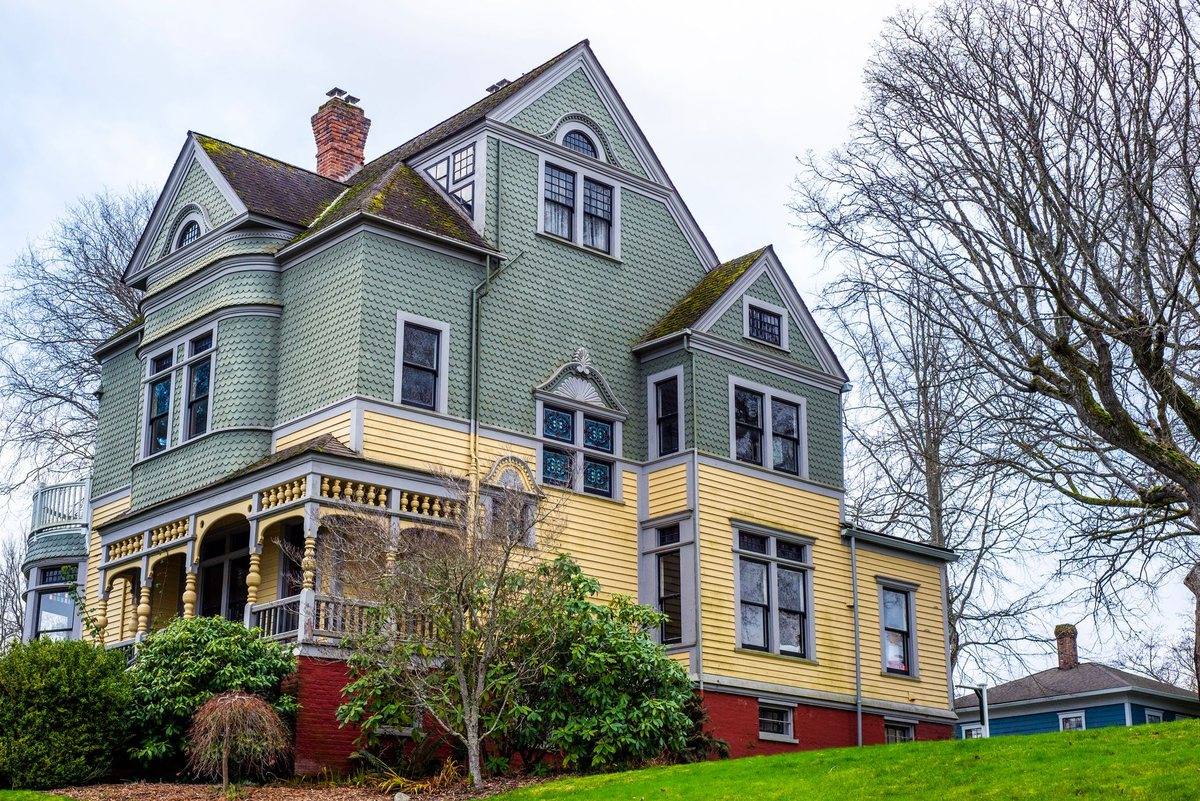
Known as Corona from the mid-1800s, the town grew up around two railroad stations, took its present name in 1889 and incorporated in 1894. About a fifth of its houses predate 1939: American Foursquares with boxy hipped roofs, bungalows and early colonials. Around two-thirds went up in the 1940s-to-1960s wave of Capes and ranches, and only a tenth was added after 1970. The borough is fully built; exterior work here is repair and replacement, not new construction.
The first failures are predictable. On the postwar houses: shingle on its second layer, Cape dormers whose sidewall flashing was never stepped, 5-inch gutters undersized for the roof feeding them. On the Foursquares and bungalows: hipped roofs shedding water four ways into gutters that must run continuous around every corner, and original wood clapboard still under aluminum or vinyl put on decades ago. We look under the cladding before we quote anything over it. A roof inspection is the place to start.
What is different about working in Hasbrouck Heights
Houses a few feet apart
Tear-off debris, ladders and the dumpster all have to be planned around a neighbor's driveway and siding. We protect adjacent property before the first shingle comes off and sweep for nails on both sides of the line.
Aircraft over the town
Teterboro Airport borders the eastern edge. On the blocks nearest the tracks, window replacement is as much about sound as heat: laminated or dissimilar-thickness glazing in a foamed, flashed opening. See windows & doors.
Two highways at the edges
Route 17 on the west and Route 46 across the middle put road film on the nearest siding and grit in the gutters. The two-family houses along them often carry low-slope sections and shared-wall flashing that a single-family gable never has.
Upland, not riverfront
The borough stands on the rise; the Meadowlands flood plain lies east in Teterboro and Moonachie. Drainage here means getting water off the roof and away from a foundation that may be a few feet from the neighbor's: extensions, splash blocks, gutters pitched to the right outlet. See gutters.
What this housing stock actually needs
Architectural shingle on gable and hip roofs
Capes and ranches have simple roofs of modest span, which keeps a tear-off affordable. We strip to the deck, replace soft sheathing, run ice-and-water membrane at eaves, valleys and dormer cheeks, and add the ridge and soffit ventilation postwar attics were built without. Lifespan: our guide.
Siding and what is under it
Most houses here wear vinyl or aluminum over original clapboard or wood shingle. We open a section first. Sound wood takes a proper housewrap and new fiber cement or insulated vinyl; rotted sheathing gets replaced, not covered. Brick fronts stay, re-flashed where roof meets masonry.
Windows & doors
Dormer windows on Capes, original double-hung sash on Foursquares and bungalows. Insert replacement where the frame is sound, full-frame where it is not, and storm windows over restored originals when the house deserves them. Costs in our 2026 guide.
Seamless gutters, sized right
A hipped Foursquare needs gutter on all four sides with an outlet at every low corner; a Cape with dormers concentrates water into short runs. We size 5-inch or 6-inch to roof area and pitch, and place downspouts to discharge away from both foundations.
Small lots, low roofs, and wind off the Meadowlands.
South Bergen is the county's railroad-era working suburb: boroughs on tight grids, pre-war two-families beside postwar single-families, and open marsh to the east with nothing to slow the wind. Roofs here want sealed starter courses and every shingle nailed to spec; gutters want to move water fast on flat ground.
Streets and blocks we work in Hasbrouck Heights
ZIP code served: 07604.
- The Boulevard and Central, around the Municipal Building: the commercial spine, with the grid running off it.
- Williams, Kipp and Burton avenues and streets like them: Capes, ranches and older Foursquares on small lots.
- The Route 17 side, near the Bendix Diner: where two-family and small multi-family houses are most common.
- The Route 46 corridor, where the highway crosses the grid.
- The eastern edge by the Pascack Valley Line tracks and Teterboro Airport, where glazing matters most.
- The school blocks around Euclid and Lincoln elementary schools, the high school and Corpus Christi School.
Hasbrouck Heights response, anywhere in 07604. Call (201) 446-5941 or request a free written estimate online.
Adjacent Bergen towns
Does Johannemann & Sons serve Hasbrouck Heights, NJ?
Yes — all of 07604, from the Route 17 side to the Pascack Valley Line tracks on the Teterboro edge, across the county from our Edgewater base. Here that mostly means roof replacement and repair on 1940s–60s Capes and ranches, re-siding and window work on the pre-war Foursquares and bungalows, 6-inch seamless gutters sized to the roof, and decks. Every estimate is written, with photographs and named materials.
My Cape already has two layers of shingles. Can a third go on top?
No. The building code allows at most two layers of asphalt shingle, and a second layer on a modest-span 1950s roof is already more weight than the rafters were sized for. The right job is a full tear-off to the deck, replacement of any soft sheathing, ice-and-water membrane at the eaves and around the dormers, and one new layer of architectural shingle with ridge ventilation. It is also the only way to redo the dormer sidewall flashing, where most Cape leaks start.
Do I need a permit to replace a roof or siding in Hasbrouck Heights?
In New Jersey, replacing roofing or siding like for like on a one- or two-family house is classed as ordinary maintenance under the state Uniform Construction Code and does not need a permit. A new deck, a change to the roof structure, an enlarged window opening or work on a multi-family building does. We confirm the specifics with the borough construction office before work starts and pull any permit the job requires.
Roofing for the homes of Hasbrouck Heights, NJ.
A free written estimate with photographs and named materials, from a Bergen County exterior crew that works the county from Edgewater.