Roofing & exteriors in Englewood, NJ
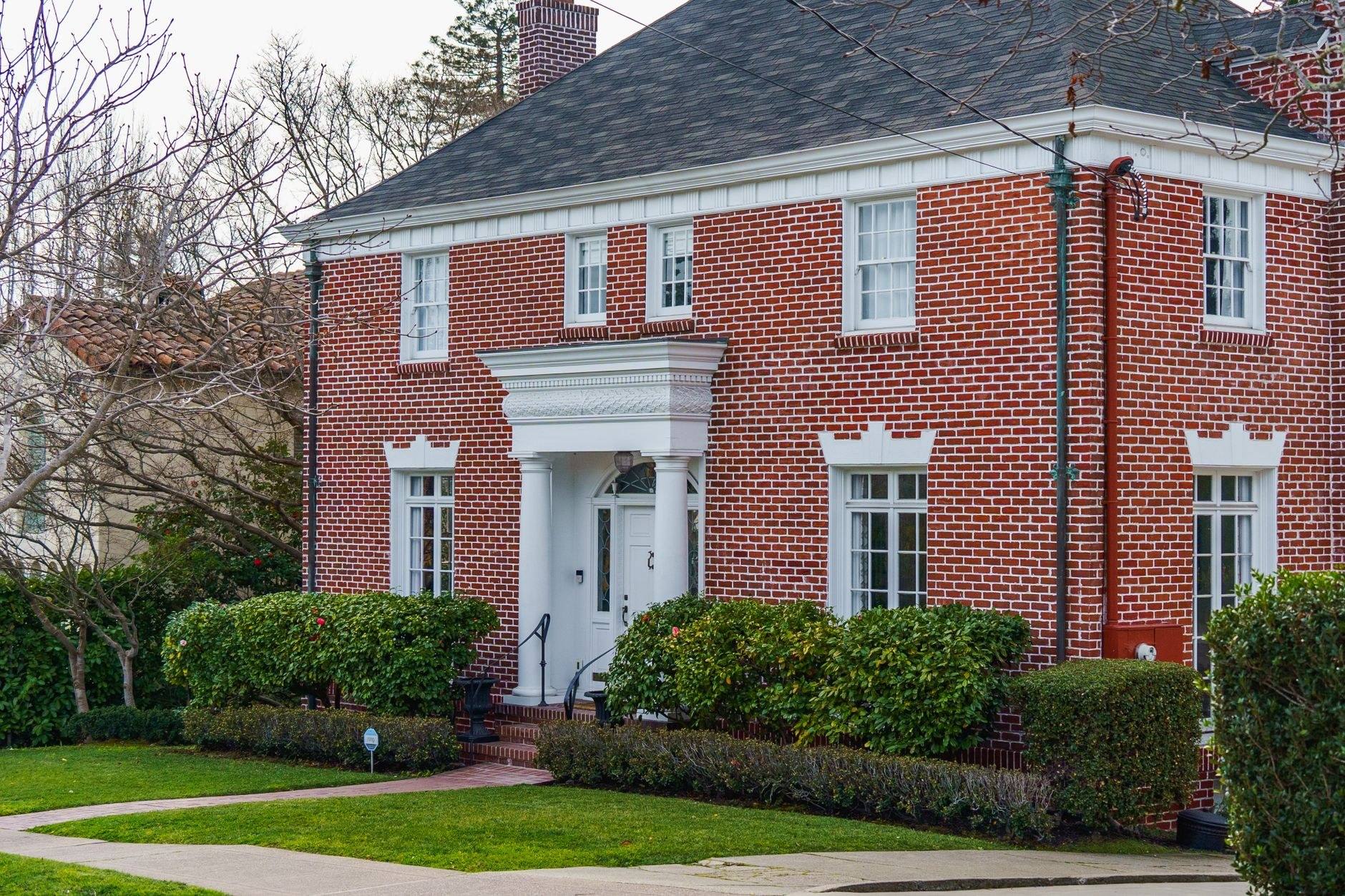
Englewood is a city, not a borough: about 29,000 people in under five square miles. It runs from the Victorian and Tudor estates on the East Hill down through the pre-war two-families and apartment blocks around Palisade Avenue to the post-war capes and splits toward Teaneck. That is steep slate under heavy tree cover at one end of town and flat membrane roofs at the other.
The city sits at the foot of the Palisades, rising eastward toward Englewood Cliffs, with Flat Rock Brook draining the hill back west toward the Overpeck Creek lowlands. Dutch, English and Huguenot farm families settled the English Neighborhood after 1664, and their names are still on the street signs: Brinckerhoff, Van Brunt, Lydecker, Demarest, DeMott. The Northern Branch railroad arrived in 1859 and the commuter town grew out from Depot Square; the decades to the 1920s produced the East Hill estates and the denser blocks along Palisade Avenue. Route 4 brought the post-war building, and 1960s and 70s urban renewal rebuilt much of the Fourth Ward.
Each layer fails in its own way. On the East Hill it is original slate and wood shingle on steep, many-planed roofs: flashing that has outlived its metal, slates cracked by limbs, gutters that cannot keep up with the canopy. Around downtown and along Grand Avenue and Dean Street it is the low-slope roofs on two-families and apartment buildings: seams, parapet caps, drains, the flashing at a shared wall. On the post-war capes and splits to the west it is asphalt shingle at the end of its life, aluminum or vinyl over the original wall, and five-inch gutters on roofs that need six.
We work on all of it: slate, cedar, shingle and membrane roofing, siding, windows and doors, gutters, and decks.
One city, three kinds of roof
In 1664, after the Dutch surrendered all of New Netherland to England, the rate of settlement picked up.
City historyAn age spread of two centuries. The 1808 Garret Lydecker House, the East Hill estates, pre-war two-families, 1970s garden apartments and new condominiums along Route 4 all sit inside 07631. A Victorian on the East Hill wants slate or cedar matched to what is there; a 1970s apartment block wants a properly drained membrane. On slate, start with restoration against replacement.
Trees over big roofs. The East Hill carries mature canopy over large, complex roofs, remnants of the same Palisades forest that Flat Rock Brook preserves. That means leaf load in every valley, limbs on slate, and ice dams wherever a full gutter freezes under a warm attic. Gutter guards earn their keep here.
Height, and the wind that comes with it. The hill takes more wind than the flat western blocks. Exposed roofs get high-wind fastening and sealed starter courses.
A dense city with flat roofs. More than 11,500 housing units, a full downtown, the hospital campus on Engle Street and commercial along Route 4 add up to a lot of low-slope roof. There the leak is almost never in the middle of the membrane; it is at a drain, a seam, a curb or a wall, and that is where we look first.
What this housing stock actually needs
Slate and cedar on the East Hill
Repair and re-flashing of original slate with matched stone and copper, partial replacement of a failed slope, cedar shake where the house was built for it. Full replacement is the last option, not the first.
Low-slope membrane on two-families and apartments
TPO or EPDM over tapered insulation, with drains, scuppers, parapet coping and shared-wall flashing priced by name. A flat roof is a drainage system with a membrane on top.
Gutters sized for the canopy
Six-inch gutters on the big East Hill roofs, guards under the heaviest trees, copper where the house calls for it, and downspouts that discharge away from the foundation on the tight downtown lots.
Big roofs under big trees, with the ridge at their back.
From Englewood north through Tenafly, Cresskill, Closter and Alpine, the valley towns share one brief: large pre-war houses with slate, cedar and copper still on them, and mature canopy over every roof. The ground climbs east to the Palisades ridge, where wind and freeze-thaw work harder than on the valley floor. We specify for that, not for the county average.
Neighborhoods and streets we work in Englewood
ZIP code served: 07631.
- The East Hill — the First and Second Wards toward Englewood Cliffs: Victorian, Tudor and Colonial Revival estates on large wooded lots
- Palisade Avenue and downtown — the east-west spine: pre-war two-families, small colonials and apartment buildings
- Grand Avenue and Dean Street — west-side corridors of pre-war frame houses and apartment blocks
- The Fourth Ward — south of Palisade Avenue: older frame houses alongside 1970s garden apartments and Rock Creek Terrace south of Route 4
- Engle Street and North Van Brunt Street — the north-south streets through the center, hospital campus to Depot Square
- The western and southern blocks — post-war capes, splits and ranches toward Teaneck and Leonia, and newer condominiums along Route 4
Englewood response, anywhere in 07631. Call (201) 446-5941 or request a free written estimate online.
Adjacent Bergen towns
Does Johannemann & Sons serve Englewood, NJ?
Yes — all of 07631: the East Hill estates up toward Englewood Cliffs, downtown around Palisade Avenue, Grand Avenue and Dean Street, the Fourth Ward, and the post-war blocks toward Teaneck and Leonia. We repair and replace steep slate, cedar and shingle roofs, and flat and low-slope membrane roofs on two-families and apartment buildings. We also handle siding, windows, doors, gutters and decks on every era of house in the city. Our base is in Edgewater, on the other side of the Palisades.
My East Hill house still has its original slate roof. Does it need to be replaced?
Usually not all of it. Slate from the 1880s through the 1920s often has decades left in the field; what fails is the copper or steel flashing in the valleys and around chimneys, the nails, and individual slates cracked by falling limbs. We walk the roof, count the broken and slipped slates, and check the flashing and the underside of the deck from the attic. The written result is one of three scopes: repair and re-flashing, partial replacement of one failing slope, or full replacement where the fasteners have gone.
What kind of roof goes on a flat-roofed two-family or apartment building in Englewood?
A single-ply membrane, most often TPO or EPDM, fully adhered or mechanically fastened over tapered insulation so water actually reaches the drains. The membrane is the easy part. The roof lives or dies at the details: open drains and scuppers, parapet caps and coping, the flashing where it meets a shared wall or a taller neighbor, and every pipe and vent curb. We price those details by name in the estimate, because that is where the leaks on these buildings start.
Do the trees on the East Hill really matter to a roof and gutters?
Yes. Heavy canopy over a steep, complex roof means leaves in every valley, moss on shaded north slopes, fast-filling gutters each fall, and ice dams where a clogged gutter freezes under a warm attic. We size gutters to the roof area feeding them and fit guards on the runs under the worst trees. We also check attic insulation and ventilation at the eaves, which stops ice dams better than heat cable. Limb damage to slate is repaired slate by slate.
Roofing for the homes of Englewood, NJ.
A free written estimate with photographs, named materials and a fixed scope, from a Bergen County exterior crew based in Edgewater.