Roofing & exteriors in Midland Park, NJ
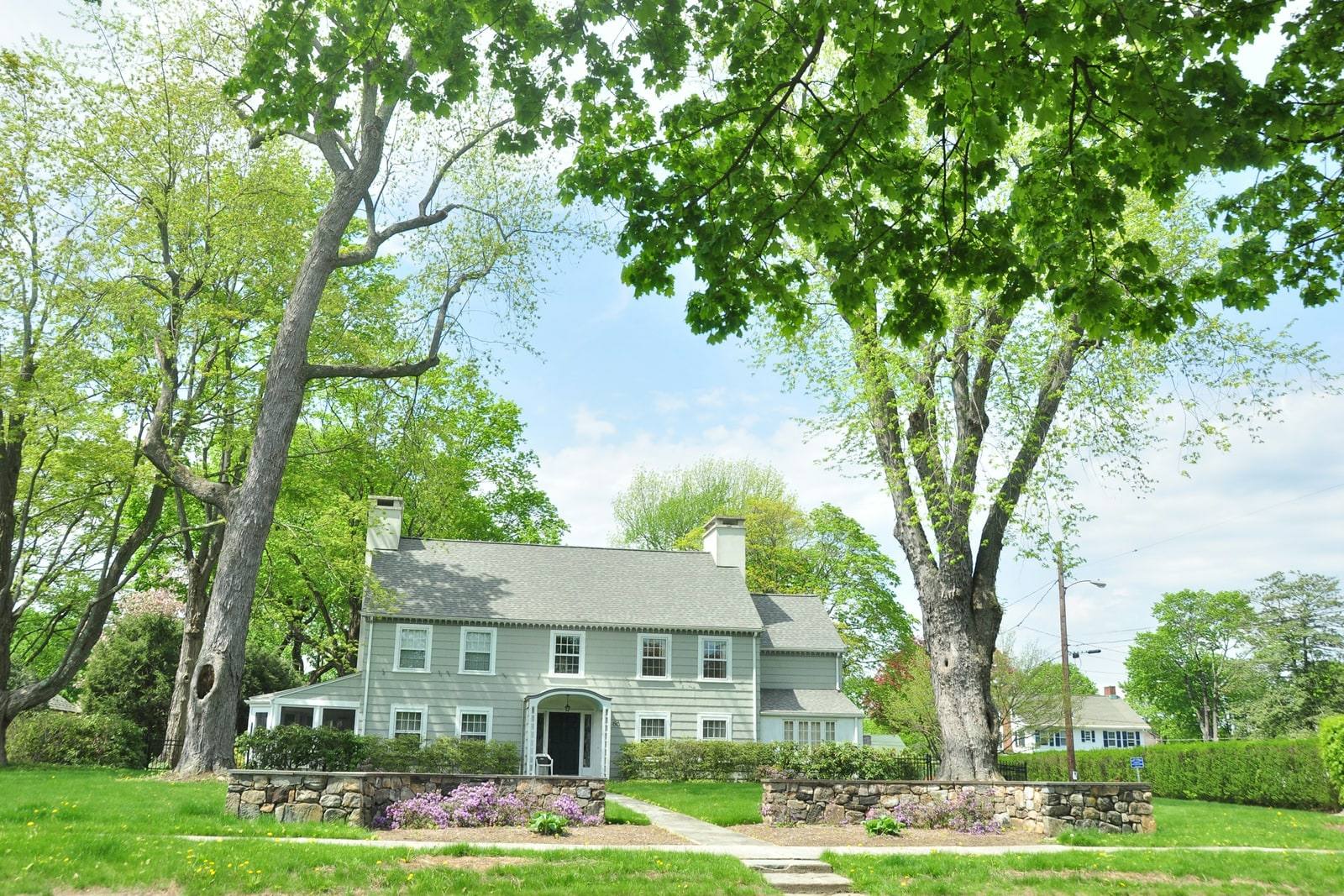
Midland Park is a compact borough of about a square mile and a half, split down the middle by Prospect Street and built around an old mill settlement at Wortendyke. Its houses are modest and close together: older frame houses near Goffle Brook, capes, splits and small colonials on the rest, with asphalt roofs, layered siding and gutters on short, steep eaves.
The name comes from the New Jersey Midland Railway, which ran through in the 1870s, but the town is older than the railroad. Dutch settlers built mills along Goffle Brook in the 1700s. Cornelius Wortendyke opened a cotton mill in 1812, and in 1875 his grandson added the largest silk mill in New Jersey, employing more than 500 people. The borough incorporated in 1894, out of Franklin and Ridgewood townships. That left a mill-and-railroad core in the south, along the brook and the New York, Susquehanna and Western line, with small lots around it.
The footprint tells the rest: about 7,000 people on a square mile and a half, with home values below the towns around it. That means small lots and modest single-family houses rather than the Tudors of Ridgewood next door. Around Wortendyke and the brook are the older frame houses of a mill town, with porches and rear wings under low-slope roofs. The Northside and the streets off Godwin Avenue read as commuter housing that filled in alongside Waldwick and Wyckoff: capes, splits and small colonials, now on a second or third roof.
What fails first is predictable. A cape that was never stripped takes a third layer of shingle, a 5-inch gutter drowns under a steep gable, aluminum siding hides a rotted sill, and a porch roof dies into the wall. We handle roof replacement and leak repair, siding, windows and doors, gutters and decks across the borough, with the scope in writing first.
What we check first on a Midland Park house
How many roofs are already up there
A small cape or colonial that has changed hands a few times is often carrying two layers of shingle, sometimes a third. We count them at the rake, probe the deck at the eaves, and price a tear-off to bare sheathing.
Where the water goes on a small lot
With neighbors a few yards away, a downspout that dumps beside the foundation is a basement problem for you or for them. We trace every outlet to where it lands, and on the low ground along Goffle Brook we plan extensions and grading so the water leaves the lot.
Porch roofs on the older frame houses
The mill-era houses around Wortendyke tend to carry low-slope roofs over porches and back wings, and shingles do not belong on a slope that shallow. We look for a membrane, a kick-out where the low roof meets the wall, and flashing lapped up behind the siding, because that joint is where the ceiling stain comes from.
What is under the siding
Much of the borough's aluminum and vinyl went on over original wood clapboard. We open a corner at a window to see the substrate and flashing, check the sills, which rot quietly behind a second skin, and say whether the original can stay.
What Midland Park's houses call for
Architectural shingle roofing
Steep, simple gables on capes and colonials suit a heavyweight architectural shingle over synthetic underlayment, stripped to the deck first, with ice-and-water barrier at eaves, valleys and walls. See how long a roof lasts in New Jersey.
Siding over the original walls
Vinyl replaced in kind, or fiber-cement lap where the owner wants the clapboard look back. The job that matters is underneath: housewrap, flashing at every window head, a sill pan where the old one rotted.
Windows & doors
Wood double-hungs on the mill-era houses are often worth repairing and weatherstripping. The capes and splits carry aluminum or early vinyl units usually past saving; those get replacements sized to the existing opening. See what window replacement costs in Bergen County.
Gutters for short, steep eaves
A steep gable sheds water fast onto a short run of gutter, so we size to 6-inch seamless aluminum with oversize outlets and extensions clear of the foundation. Guards that work under a Bergen canopy go on where trees overhang.
Small boroughs that expect a careful, quiet crew.
North-west Bergen grew along the old rail lines out of Ridgewood: village centers first, then the post-war streets between them. The lots are wooded and winter puts ice on every eave. It asks for a contractor who reads each house before pricing it.
Neighborhoods and streets we work in Midland Park
ZIP code served: 07432.
- Wortendyke: the quiet old downtown around the former station on Greenwood Avenue, and the borough's oldest frame houses, close to the street
- Northside: around Midland Park High School and Nativity Church, mostly post-war single-family houses
- South Central: the old industrial strip along Goffle Brook and the railway, houses on the low ground beside it
- Southeast: the blocks behind the Midland Park Shopping Center on Godwin Avenue
- Prospect Street: the north–south spine that divides the borough, houses facing the main road on both sides
- Wortendyke-Demund House (1797) and Lozier House and Van Riper Mill (1775): the National Register survivors of the Dutch farm era
Midland Park response, anywhere in 07432. Call (201) 446-5941 or request a free written estimate online.
Adjacent Bergen towns
Does Johannemann & Sons serve Midland Park, NJ?
Yes — all of Midland Park, ZIP 07432, from the Northside down to Wortendyke and the streets along Goffle Brook. The borough is about a square mile and a half of modest single-family houses on small lots. So the work is mostly asphalt shingle roofs on capes and small colonials, siding over the original walls, and gutters on short, steep eaves. We repair windows on the older frame houses and replace them on the post-war stock, and we reach Midland Park across the county from our Edgewater base.
My cape already has two layers of shingles. Can you put a third on top?
No, and nobody should offer to. New Jersey's construction code allows at most two layers of asphalt shingle, and a third would void the manufacturer's warranty in any case. On a small cape the extra weight matters too. We strip to the deck, replace any soft sheathing at the eaves, run ice-and-water barrier well past the warm wall line and lay one new layer over synthetic underlayment. You get a roof that can be inspected and repaired, not one that hides the last two.
Do I need a permit to re-roof or re-side a house in Midland Park?
Usually not. New Jersey's Uniform Construction Code treats like-for-like roof and siding replacement on a one- or two-family house as ordinary maintenance, and the same applies to replacing a window in its existing opening. A new deck, an enlarged window opening or structural repair to rafters does need a permit from the borough's construction office. We tell you which applies in the written estimate, before any work starts, and we handle the paperwork when a permit is required.
Roofing for the homes of Midland Park, NJ.
A free written estimate with photographs and the materials named by brand, from a Bergen County exterior crew based in Edgewater.