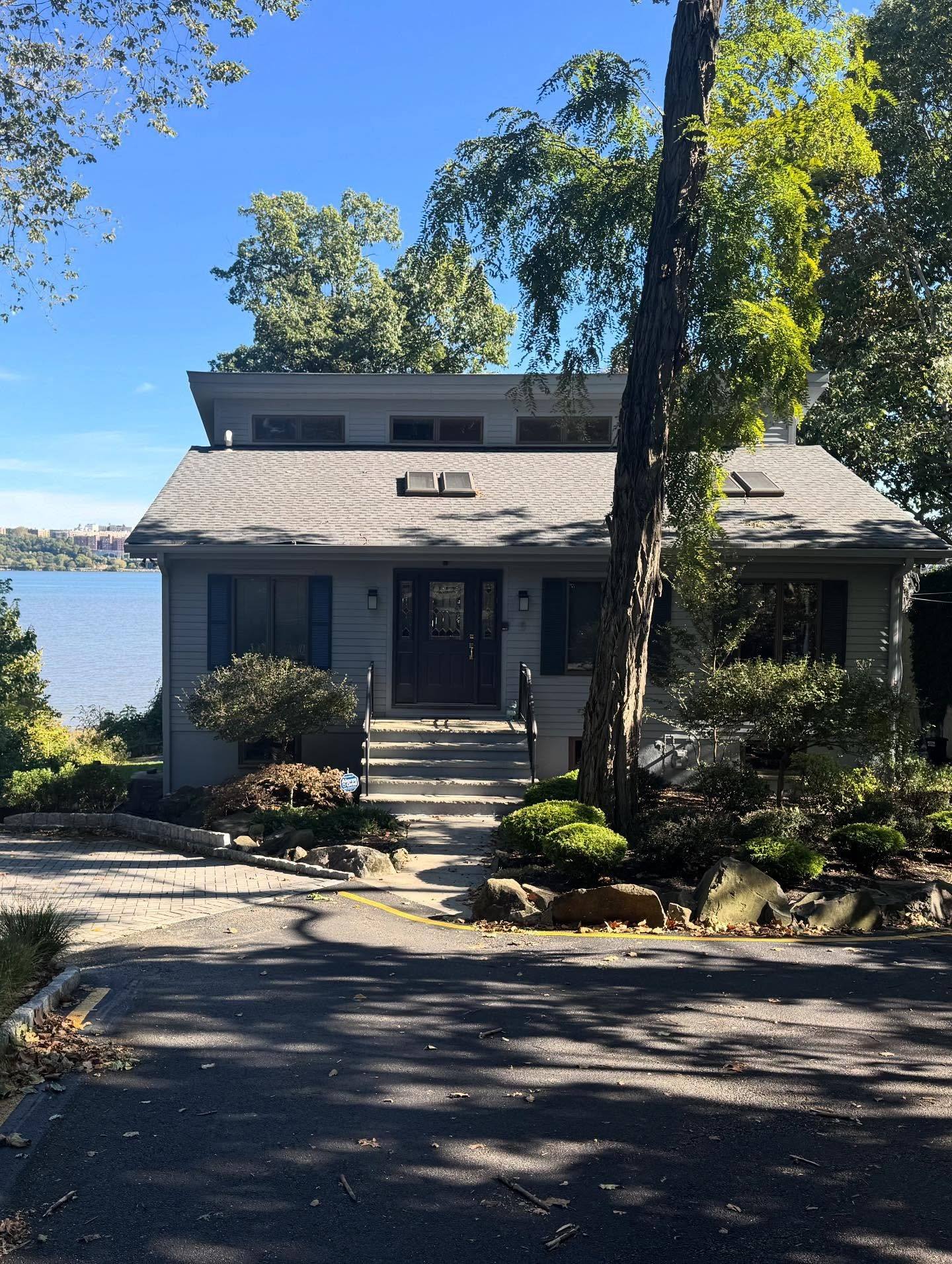
Can you replace one section of siding without re-siding the house?
Sometimes. A limited siding repair can be considered when the affected area can be isolated, a suitable material is available, and the surrounding wall can remain sound. Compare replacing a few pieces, one elevation (one side of the house), or a wider area. That takes an assessment of both the siding and what is behind it.
For a Glen Rock or wider Bergen County home, ask about the smallest workable scope, its appearance limits, and the findings that could change it.
1. Identify the siding before choosing a repair
Old invoices, product labels and leftover material can help identify the siding. Gather what you already have, but do not remove boards to look for a stamp. A contractor should confirm the material and the repair method appropriate to that product.
Record more than the color:
- Material and product name, if known
- Profile: the shape of the board or shingle
- Exposure: how much of each course is visible
- Surface texture, such as smooth or rough-sawn
- Finish type and any previous repainting
These distinctions matter. Real Cedar's siding options include different profiles and smooth or textured surfaces. “Cedar” alone does not identify a matching piece. James Hardie's product FAQ likewise distinguishes siding styles and finishes. A similar color on a different profile may still look noticeably different.
Mark uncertain details “unknown.” Photographs cannot confirm concealed wall conditions or every product detail.
2. Separate the visible defect from the repair boundary
A broken piece tells you where to start looking. It does not establish how much wall needs work. Describe what you can safely see: one impact mark, several damaged courses, staining near an opening, or similar deterioration on another side.
Ask the assessor which observations support a localized repair and which require further investigation. Where access is needed, the proposal should explain how the backing, sheathing and water-management details will be assessed, and what happens if unexpected damage is found. “Not yet inspected” is a useful record; “sound” should have an inspection basis.
Material-specific advice also has limits. James Hardie's FAQ describes patching small cracks, chips and dents in its fiber-cement products. That guidance does not establish that a broken board, a wet wall, or a different siding material is suitable for the same treatment. Have the contractor verify the current instructions for the identified product and finish.
Take photos from stable ground. Do not climb, pry off, cut or sand unknown siding for a closer look. Loose material or water entering the home warrants prompt professional attention.
3. Compare three possible scopes
Use this comparison to ask questions, rather than treating a photograph as a diagnosis. “Match confidence” and “wall condition” are separate decisions.
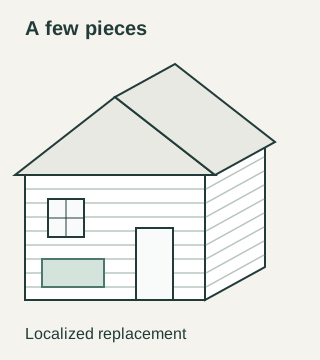
Localized replacement
- When to discuss it
- Damage appears limited to a few pieces
- Match question
- Can the profile, exposure, texture and finish be acceptably matched?
- Wall-condition check
- What was checked behind and beside the affected area?
- Stop and review if…
- Damage extends beyond the agreed boundary, or the replacement is unsuitable
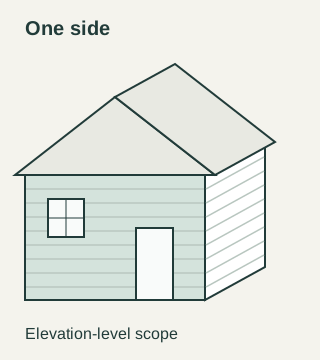
One elevation
- When to discuss it
- Several areas on the same side need work, or a small patch would look unacceptable
- Match question
- Would finishing the whole side give an acceptable result beside the remaining sides?
- Wall-condition check
- Does the assessment support retaining the other elevations?
- Stop and review if…
- Findings continue around a corner or into connected wall details
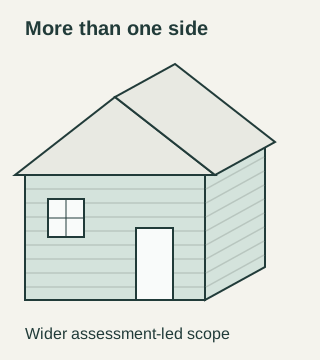
Wider replacement
- When to discuss it
- The assessment identifies problems on more than one elevation
- Match question
- Which existing areas, if any, can reasonably remain?
- Wall-condition check
- What evidence supports the additional areas in the proposal?
- Stop and review if…
- New findings change the agreed scope, price or repair method
Original scope illustrations. Shading shows the area under consideration, not diagnosed damage or an installation detail.
An appearance preference can support choosing a larger finish area. Record that reason separately from work needed to address documented damage. Ask for the two explanations to be clear in the proposal.
4. Set a realistic matching standard
Ask to see the proposed replacement beside the existing siding in daylight. Compare the board shape and shadow lines as well as the color. Clarify whether the proposal includes finishing only the new pieces, blending a defined area, or refinishing an elevation, where appropriate for the material.
Do not assume a new piece will look identical to a weathered surface, or that a current product with the same color name will provide an invisible match. Ask what can be sourced now and what appearance difference you would be accepting. Keep any agreed sample or product reference with the proposal.
5. Bring a written scope record
Use the one-page siding scope worksheet (PDF), or copy these fields into your notes:
- Affected section: side of house, nearby opening and visible damage
- Material/profile: confirmed identification or still unknown
- Match confidence: sample checked, available option, or unresolved
- Substrate findings: what was inspected and what remains concealed
- Proposed scope: localized replacement, one elevation, or wider work
- Exclusions: finishing, trim or other work outside the proposal
- Stop-and-review trigger: findings that require your approval before additional work
Town pages cover the walls in each place: siding in Ho-Ho-Kus, Glen Rock, Franklin Lakes, Wyckoff and Edgewater. Our siding service overview covers the existing service and material options.
Request a siding assessment focused on the affected section and whether limited work is practical. In the form, describe the damage and your town. Have photos ready and ask how to share them. The assessment should leave you with a clear scope and the unresolved questions, if any.
Partial siding replacement questions
Can one damaged siding board be replaced?
It may be possible after the material, surrounding pieces and wall condition are checked. Ask the contractor to confirm the appropriate repair method and whether suitable replacement material is available.
Does a poor color match mean the whole house needs new siding?
Appearance and damage are separate considerations. Compare the available material and finishing options, including an elevation-level scope where suitable, before deciding how much siding to replace.
What if hidden damage appears after work starts?
The proposal should identify a stop-and-review process. Ask how new findings will be documented and how changes to the scope and price will be approved before additional work proceeds.