The Certificate of Occupancy: What Has to Happen Before You Move In
In New Jersey, a new house, or an addition that makes a house taller or bigger, cannot be used until the town issues a certificate of occupancy. It is the last piece of paper in the permit, but most of what decides it happens months earlier, at each inspection.
The certificate of occupancy, usually called the CO, is the construction official’s signed statement that the work has passed every inspection and may be used. It is the end of the permit process the state runs under the Uniform Construction Code. Until it is issued, the new rooms may not be used, however finished they look.
This article explains which jobs need a CO and which get a certificate of approval instead, the inspections that come first, what the application asks for, the conditions the town checks, and when you can move in early on a temporary certificate. It is drawn from the regulation itself, N.J.A.C. 5:23-2, as current in November 2026. It is general information, not legal advice.
When do you need a certificate of occupancy?
The short answer: a new house and an addition that adds height or floor area both need a certificate of occupancy before anyone uses them. Work inside the existing house, such as a kitchen, gets a certificate of approval, which the town issues without an application.
| The work | The certificate | The rule |
|---|---|---|
| A new house | Certificate of occupancy | Not used or occupied, in whole or in part, until it is issued (2.23(a)) |
| An addition that increases the height or area of the house | Certificate of occupancy | Not used until it is issued (2.23(d)) |
| A renovation or alteration, such as a kitchen | Certificate of approval | Not occupied or used until it is issued; no application needed (2.23(b), (m)) |
So a rear extension, a second story, a dormer that adds floor area and a new house all end with a CO. A kitchen remodel inside the walls you already have ends with a certificate of approval. The regulation adds one detail for renovations: if you kept living in the space during the work, you have 30 days after the work is finished to get the certificate of approval or stop using it. Our kitchen permit guide covers which kitchen work needs a permit at all.
For an addition, the important words are “height or area”. If the project adds floor area or raises the roof, plan for a certificate of occupancy from the start.
Which inspections come before the certificate?
The certificate is earned one inspection at a time. For one- and two-family houses, the regulation lists the inspections where work has to stop until the inspector has seen it (N.J.A.C. 5:23-2.18(b)):
- Footings. The bottom of the footing trenches, before any concrete goes in.
- Foundation. The foundation and every wall up to grade, before anything is covered or backfilled.
- Utility services, including a septic system where there is one.
- Rough framing and systems. The building inspector checks the framing, its connections and the wall and roof sheathing. The electrical inspector checks the rough wiring, the panel and the service, and the plumbing inspector checks the rough piping.
- Insulation, after every other rough inspection and before any interior finish goes up.
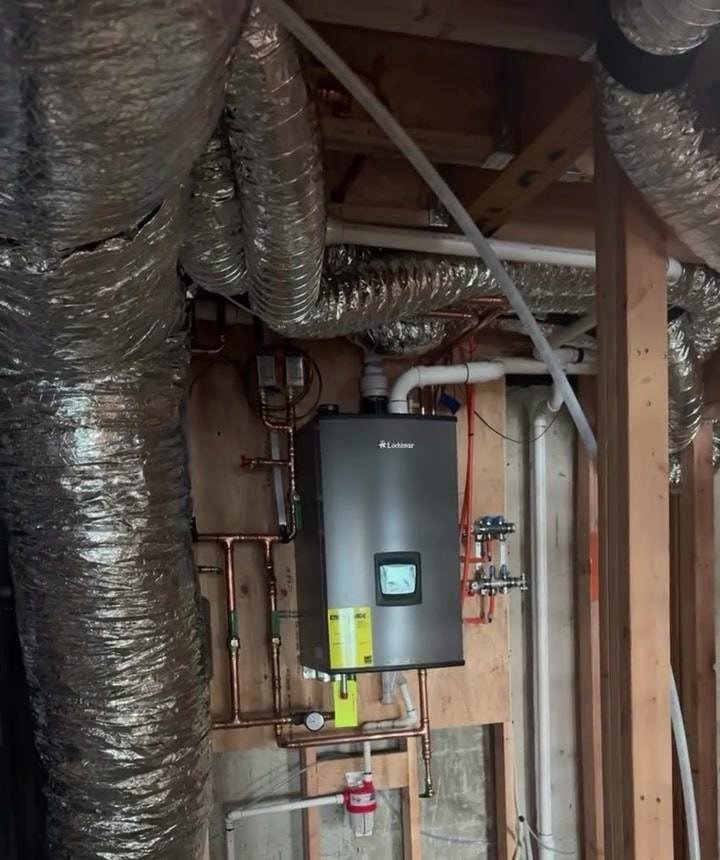
The order matters. The framing inspection comes only after the rough electrical and plumbing inspections, and after the heating and cooling ducts are in. Where the roof has trusses, they and their permanent bracing are inspected before any ceiling covers them. On a wood-frame house, the person in charge of the work also hands the inspector a signed framing checklist, the state’s Form F390, and it goes into the permit file.
Two surveys come into it as well. On a new house, a land surveyor licensed in New Jersey prepares a foundation location survey once the foundation wall is in. It shows every corner of the foundation and the elevation of the top of the wall, against what the plot plan proposed. Work does not have to stop while it is prepared, and an addition does not need one. In a flood hazard area, though, both a new house and an addition need the survey with the lowest floor elevation and the elevation certificates, filed before any further vertical construction.
Each inspection is requested in writing at least 24 hours ahead, by the owner or the person in charge of the work. That request is itself a statement that the work is finished and meets the code, so it should not be sent early. The town then has three business days from the requested time to inspect, or another time within 30 days that both sides agree. Until then, the work cannot carry on in a way that would hide what the inspector needs to see.
What happens at the final inspection?
When the work is finished, each subcode inspector comes back for a final inspection before any certificate is issued (N.J.A.C. 5:23-2.18(d)). It covers:
- Building and fire: the interior and exterior finishes, the sealing of exterior joints, the heating and cooling system and any other required equipment.
- Electrical: the wiring, devices and fixtures.
- Plumbing: the piping, trim and fixtures.
- Tests that any of the subcodes require.
Anything that does not meet the code is written up, and the construction official tells the permit holder what has to be fixed. Every violation has to be corrected before a certificate can be issued.
How do you apply, and how long does it take?
The certificate of occupancy is not automatic. The owner, or an agent for the owner, files a written application with the town’s construction office (N.J.A.C. 5:23-2.23(i)). For a house it includes:
- the owner’s name and address, and the location of the building;
- a statement from the person in charge of the work that, to the best of their knowledge, all of it was completed in line with the permit and the regulations;
- a statement of the final cost of the construction work, including the structure, the site improvements, the built-in furnishings and fixtures, and the equipment that is part of the building;
- amended drawings, if the construction official and subcode officials ask for them because the size, layout or look of the house differs substantially from the released plans.
Once the building is entitled to its certificate, the construction official has 10 business days from the written application to issue it (N.J.A.C. 5:23-2.23(j)). The official’s signature certifies that every subcode official has approved the building for occupancy.
A building is entitled to a certificate only when five conditions are met (N.J.A.C. 5:23-2.24(a)):
- The finished work meets the conditions of the permit and of every prior approval, and was built substantially in line with the code and the approved plans. Prior approvals are the ones other agencies give first, such as zoning and soil erosion and sediment control (N.J.A.C. 5:23-1.4).
- Every fee has been paid.
- Every required inspection has been done and passed.
- Every violation has been corrected, and any penalty paid.
- The protective devices and equipment the code requires will keep working.
One more rule catches people out: no certificate, temporary or final, can be issued until the required utilities, including water, sewer, electric and gas, are installed and in service (N.J.A.C. 5:23-2.23(k)). A house waiting on a gas meter or a sewer connection waits for its certificate too.
What extra paperwork does a new house need?
A new house carries the state’s new home warranty, and the certificate depends on it. If a builder built the house, no certificate of occupancy is issued until the builder files proof with the construction official that the home is enrolled in the State New Home Warranty Security Plan or an approved private plan. For the State Plan, that proof is a validated copy of the Certificate of Participation and proof that the premium was paid (N.J.A.C. 5:25 and 5:23-2.24(b)).
If the owner built the house, or did any of the design, construction, plumbing or electrical work, the owner files an affidavit instead (N.J.A.C. 5:23-2.24(c)). It certifies that the work meets the law and acknowledges that the owner’s work, and that of anyone working under the owner, is not covered by the new home warranty act. It also commits the owner to tell any buyer so for 10 years after the certificate is issued.
A teardown and rebuild ends in a new house, so the same rules apply to it.
Can you move in before everything is finished?
Sometimes, on a temporary certificate of occupancy. The permit holder asks for one in writing. The construction official issues it when the work covered by the permit is substantially complete and the house, or the part of it you want to use, can be occupied safely before the rest is finished (N.J.A.C. 5:23-2.23(g)).
- It lists the work still to be completed.
- It is valid for a reasonable time to finish that work, and it can be renewed.
- The municipal tax assessor is notified when it is issued.
- The utilities rule still applies: water, sewer, electric and gas have to be in service.
The town can refuse one when fees or penalties are outstanding, when the required warranties, licenses or registrations are not in place, or when the conditions of a prior approval that affect the occupants’ health and safety have not been met. If the project needed a soil erosion and sediment control certification, the soil conservation district has to issue its Report of Compliance, or a Report of Compliance with Conditions, first. Without it, the temporary certificate is denied.
A temporary certificate is a bridge, not a finish line. Plan the remaining work so it can be completed within the time the certificate allows.
What can hold up a certificate in Bergen County?
Most delays at the end of a job come from things that were set at the start. These are the ones to watch:
- Conditions of the zoning approval. Zoning is a prior approval. If the board attached conditions to a variance, the certificate depends on meeting them.
- Changes from the released plans. If the size, layout or look of the house changed substantially on site, the construction official can ask for amended drawings before the certificate.
- Utilities. Water, sewer, electric and gas all have to be in service first, so the connections belong early in the schedule, not at the end of it.
- Town rules that run to the certificate. In Wyckoff, for example, the protective fencing around trees that are staying has to stand at least 10 feet from each trunk and remain until the construction official authorizes its removal after the certificate or temporary certificate is issued. Landscaping after that is done with light machinery or by hand (Wyckoff Code §176-4A). Our page on additions in Wyckoff covers that town’s other rules.
- The paperwork for a new house. The warranty enrollment, or the owner’s affidavit, has to be on file.
Does the certificate last forever?
It lasts as long as the house stays the way it was approved. Under N.J.A.C. 5:23-2.23(q), a certificate of occupancy stays valid only while the level of code compliance that existed when it was issued is kept up, and while any orders from the construction official are followed. The town can revoke it if a condition of the certificate is broken (2.23(n)). Keep your copy with the house’s other papers. It is the record that the addition or the house was built under a permit and passed.
How we handle it
On an addition, we file the permits and book the inspections as part of the job, so the certificate arrives as the last step of the work rather than as a separate errand for you. On a new house, the final inspections across the subcodes, the certificate of occupancy and a walkthrough with you come before the house is handed over. As a registered New Jersey new home builder, filing the warranty enrollment the certificate depends on is our job.
The certificate is the end of the process. The start is the zoning check and the permit, and our guide to addition permits and zoning in New Jersey walks through that part.
Sources
- N.J.A.C. 5:23-2, Uniform Construction Code, administration and enforcement: 2.18(b), (c) and (d) (inspections, notice for inspection, final inspection); 2.23(a), (b), (d), (g), (i), (j), (k), (m), (n) and (q) (certificate requirements, temporary certificates, application, the 10-day rule, utilities, certificates of approval, revocation, continued validity); 2.24(a), (b) and (c) (conditions of the certificate, warranty enrollment, the owner’s affidavit). The Division of Codes and Standards’ copy, current through the New Jersey Register of August 17, 2026.
- N.J.A.C. 5:23-1.4, the definition of prior approvals (PDF), same date.
- Township of Wyckoff, Chapter 176, Trees and Shrubs, §176-4A (Ordinance No. 2016) (PDF).
- N.J.A.C. 5:25, the new home warranty regulations, as set out in our guide to the new home warranty.
Do I need a certificate of occupancy for an addition in New Jersey?
Yes, if the addition increases the height or the floor area of the house. Under N.J.A.C. 5:23-2.23(d), it may not be used until the construction official issues a certificate of occupancy certifying that the work meets the code. Renovation inside the existing house gets a certificate of approval instead.
What is the difference between a certificate of occupancy and a certificate of approval?
A certificate of occupancy is required for a new building, an addition that adds height or area, a reconstruction and a change of use, and the owner applies for it in writing. A certificate of approval is issued for every other job that needed a construction permit, such as a kitchen remodel, and no application is needed.
How long does it take to get a certificate of occupancy in New Jersey?
Once the building is entitled to one, the construction official has 10 business days from your written application to issue it. Before that, each inspection must be carried out within three business days of the time requested, or at another time within 30 days that you agree with the town.
Can I move into a new house before the certificate of occupancy is issued?
No. A new building may not be used or occupied, in whole or in part, until a certificate of occupancy has been issued. If the house is substantially complete and safe to live in, the permit holder can ask in writing for a temporary certificate of occupancy, which lists the work still to be done.
What is a temporary certificate of occupancy in New Jersey?
A certificate that lets you occupy a building, or part of it, before every item is finished. It is issued on the permit holder's written request when the work is substantially complete and the space can be occupied without endangering health or safety. It lists the remaining work, lasts a reasonable time to finish it, can be renewed, and the town's tax assessor is notified when it is issued.
Why would a town refuse a certificate of occupancy?
The regulations set the conditions: the work must meet the permit and every prior approval, all fees must be paid, all inspections passed, all violations corrected and penalties paid, and the water, sewer, electric and gas services must be in and working. A new house built by a builder also needs proof that it is enrolled in a new home warranty plan.
Tell us about the house and the lot.
The town, the street and what you want the room for. We will tell you what the first steps look like. We work across Bergen County and the Hudson waterfront.